A full-length mirror is the one piece of furniture people buy on looks alone and then discover has a footprint, a tipping risk and a lighting problem.
The choice between a cheval, a leaner and a wall-mounted mirror is really a choice about floor space and how often you want to move it.
Here is how the types differ, what size you actually need, and the safety part nobody mentions in the showroom.
The Four Types
| Type | Floor space used | Adjustable angle? | Best for |
|---|---|---|---|
| Cheval | 10–16″ deep with the stand | Yes — tilts on a pivot | Bedrooms with floor to spare |
| Leaning | 6–10″ at the base | Fixed lean only | A relaxed look; renters |
| Wall-mounted | None | No | Small rooms; permanent placement |
| Over-the-door | None | No | Dorms, closets, tight bedrooms |
The cheval is the only one that tilts, which matters more than it sounds. A fixed vertical mirror shows you accurately from five feet away and distorts badly closer up.
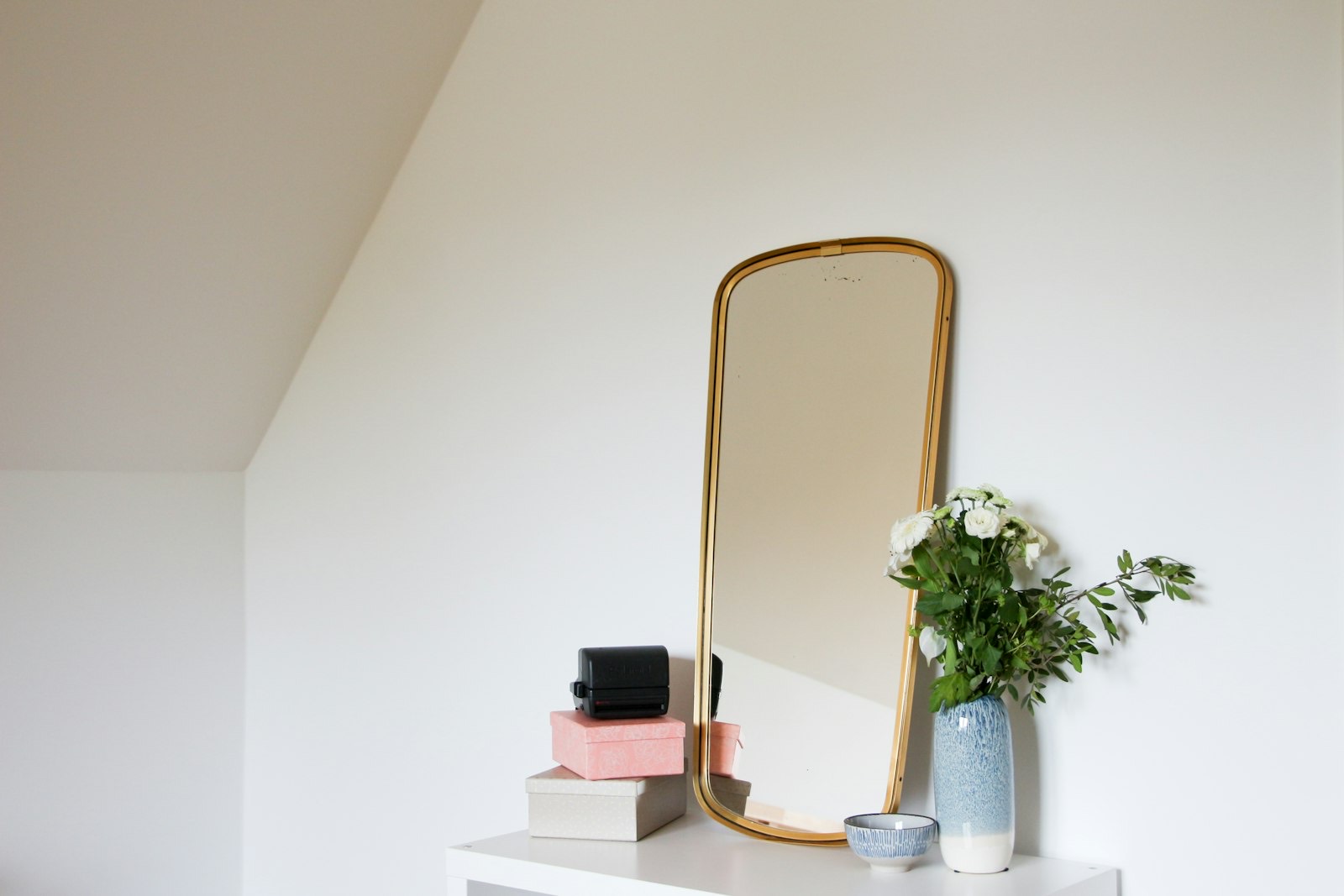
Leaning mirrors read as effortless and are anything but — an unsecured leaner is the single most common way a large mirror ends up broken.
For mirrors that hang above furniture rather than stand on the floor, our wall mirror sizing guide covers proportions and hanging heights.
What Size You Actually Need
To see yourself head to toe, a mirror needs to be about half your height — and it needs to be positioned so the top edge sits at eye level or just above.
| Your height | Minimum glass height | Comfortable size |
|---|---|---|
| 5′0″ | 30″ | 48–54″ |
| 5′6″ | 33″ | 54–60″ |
| 6′0″ | 36″ | 60–65″ |
| 6′4″ | 38″ | 65–70″ |
The physics is simple: light reflects at an equal angle, so a mirror half your height covers your whole body. Everything above that minimum is comfort and margin, not necessity.
Width is more forgiving. Anything from 20 to 30 inches wide shows a full outfit; wider is a design decision rather than a functional one.
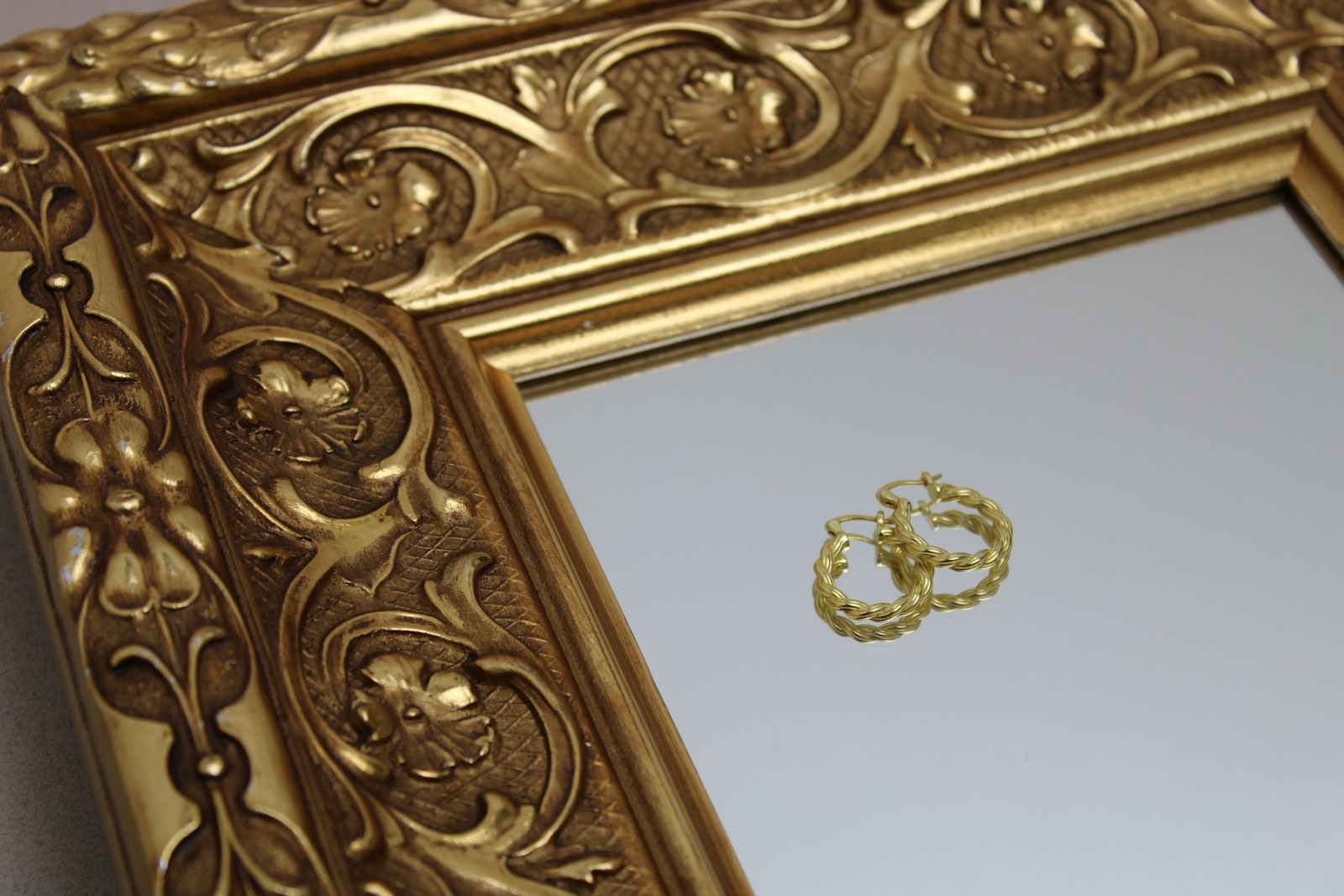
Frame width counts as well. A heavy ornate frame adds four or five inches per side, so a mirror listed at 30 inches wide may only give you 20 inches of usable glass.
Standing back matters too. You want six to eight feet of clear floor in front to see a full outfit properly, which is often the real constraint in a small bedroom.
Securing It Is Not Optional
- Anchor a leaning mirror to the wall with a strap or D-ring, even though it is “just leaning”
- A cheval on a hard floor can walk out of position — check the pivot bolts twice a year
- Never lean a large mirror in a child’s room or a hallway with a door swing
- Mount wall mirrors into studs, not drywall anchors, above about 30 pounds
- Look for safety-backed glass, which holds together rather than showering the floor if it breaks
- Carry it vertically, never flat — a large sheet of glass carried horizontally flexes and cracks
A 60-inch mirror is a heavy sheet of glass at head height. The National Glass Association covers safety glazing and how backed or laminated glass behaves under impact, which is worth knowing before choosing one for a bedroom.
The same anchoring logic applies to any tall, narrow piece — our kids’ and teen vanity guide and bookcase guide both cover finding studs and using the restraint that comes in the box.
Where to Put It, and the Light
| Placement | Result |
|---|---|
| Facing a window | Best — even daylight on your face |
| Perpendicular to a window | Good; slight side shadow |
| Back to a window | Worst — you become a silhouette |
| Opposite a doorway | Makes a small room read deeper |
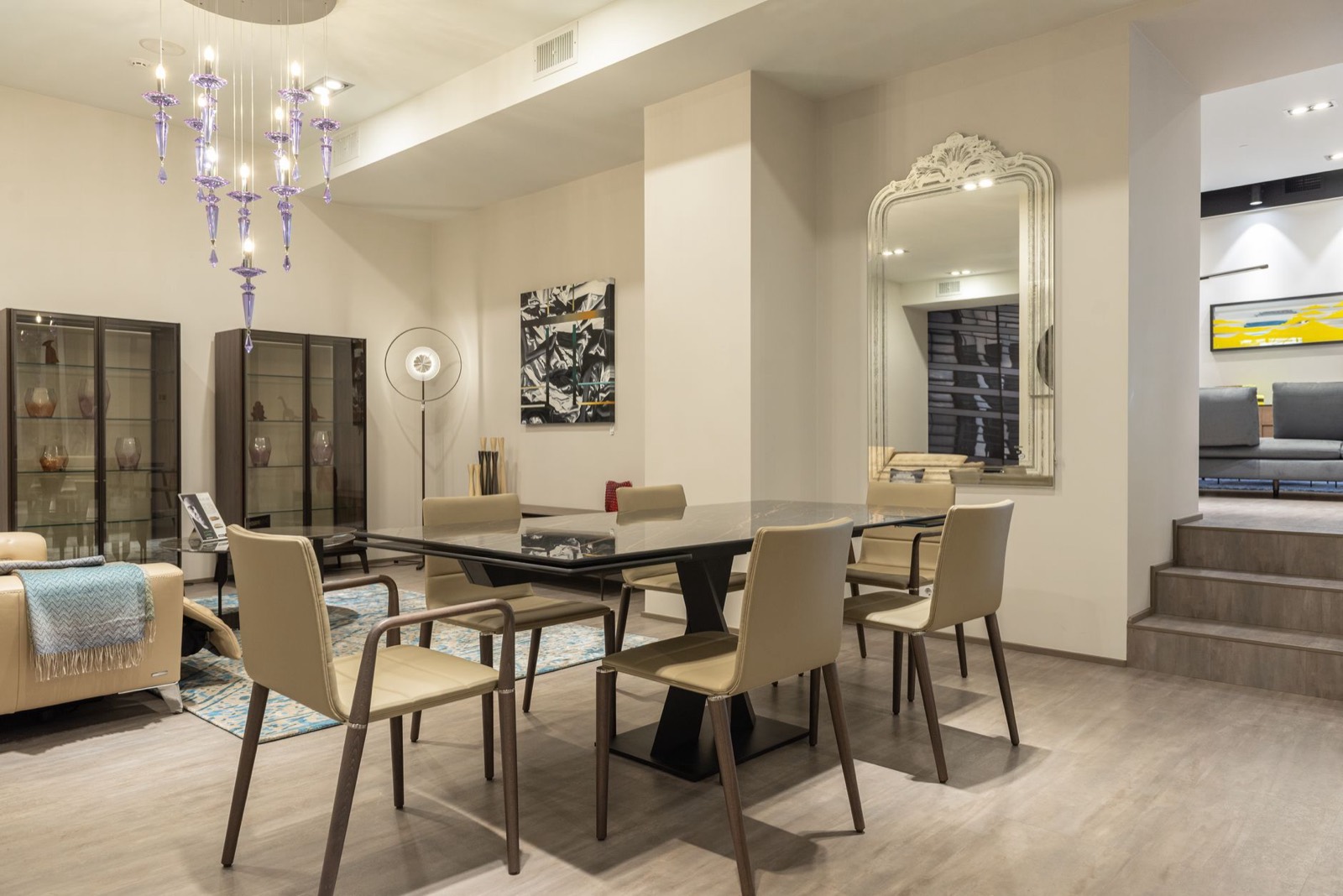
| Reflecting clutter | Doubles it; the most common placement error |
A mirror shows the room twice, so what it faces matters as much as where it stands. Facing a window is both the most flattering light and the most useful trick for a dark bedroom.
Overhead ceiling light alone is the least flattering option, casting shadows downward from your brow. Light from the front or the side is what you want, which our home lighting guide covers in detail.
In a bedroom that also has a dressing area, our vanity sizing guide covers pairing a seated mirror with a standing one.
Frames, Glass and What You Are Paying For
| Feature | What it affects | Worth paying for? |
|---|---|---|
| Glass thickness | Distortion and rigidity | Yes — 4mm and up stays flat |
| Backing board | Whether it bows over time | Yes on anything over 50″ |
| Frame material | Weight and appearance | Solid wood on a cheval; less critical wall-mounted |
| Bevelled edge | Appearance only | Aesthetic preference |
| Pivot hardware | Whether the tilt holds | Yes — the first thing to fail on a cheval |
Thin glass over a weak backing is where cheap full-length mirrors give themselves away. Stand to one side and look along the surface — any wave in the reflection means the glass is bowing.
On a cheval, work the tilt several times in the showroom. Loose pivot hardware is the most common failure, and a mirror that will not hold its angle is a mirror that stares at the ceiling.
Frequently Asked Questions
What size full-length mirror do I need?
About half your height as a minimum — 33 inches of glass for someone 5′6″ — positioned with the top edge at or just above eye level. Most people find 54 to 65 inches comfortable in practice.
What is a cheval mirror?
A full-length mirror mounted in a freestanding frame on a pivot, so it tilts to the angle you want. It is the only floor-standing type that adjusts, at the cost of 10 to 16 inches of floor depth.
Is a leaning mirror safe?
Only if it is anchored to the wall with a strap or D-ring. A leaning mirror relies entirely on friction with the floor, and a bump, a pet or a vacuum cleaner is enough to bring it down.
Where should a full-length mirror go in a bedroom?
Facing a window if possible, with six to eight feet of clear floor in front of it. Avoid placing it with a window behind you, which turns you into a silhouette.
Cheval or wall-mounted mirror?
Wall-mounted if floor space is tight and the position is permanent. Cheval if you want an adjustable angle, plan to move it, or are renting and cannot drill into the wall.
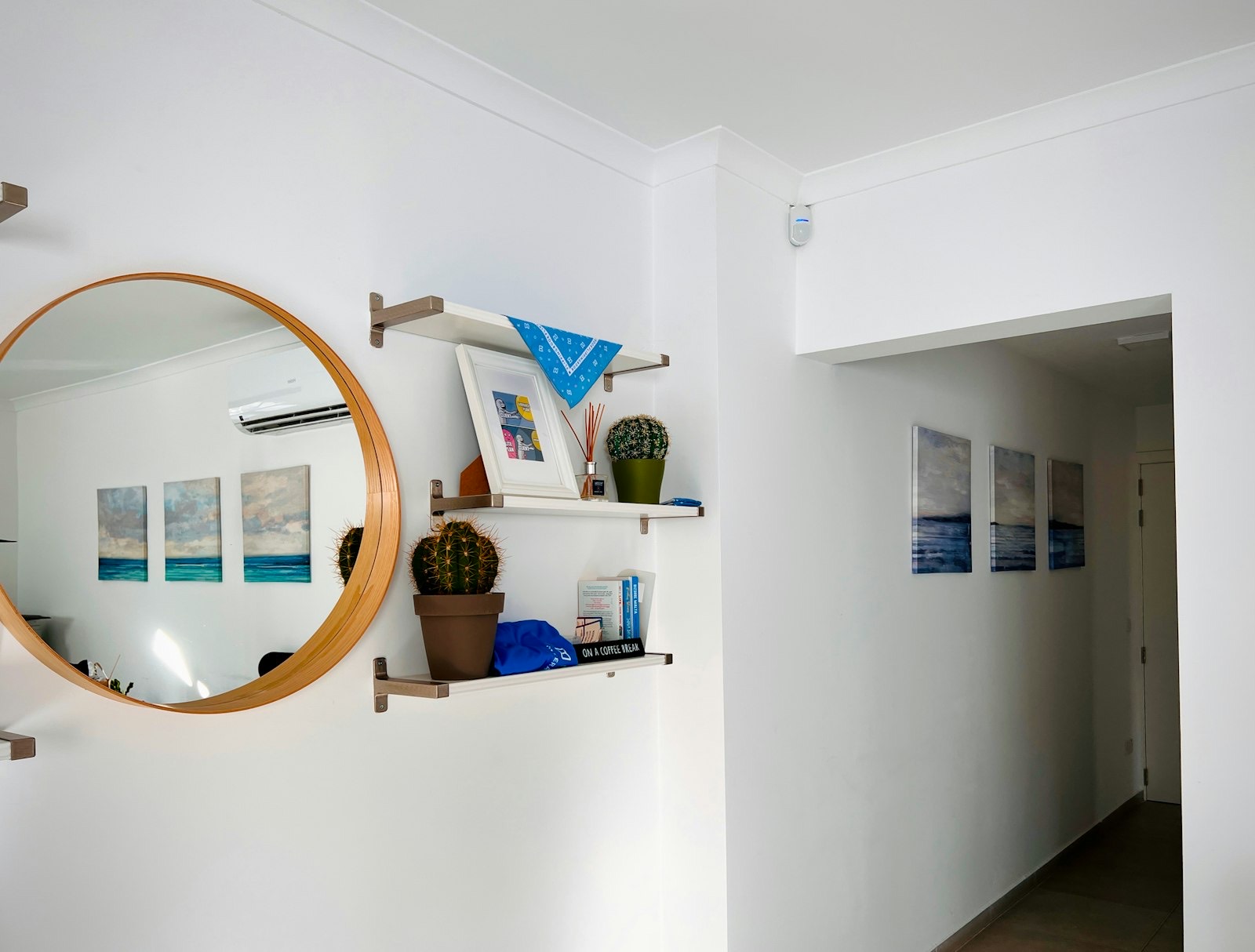
Stand Six Feet Back
Before buying, check you have six feet of clear floor where the mirror will go. Plenty of small bedrooms can hold a 65-inch mirror but not the space needed to stand back and use it.
Our accessories range in Newport News covers mirrors, and our bedroom furniture range covers the dressers and vanities they usually sit beside.
Working on the room? See our guides to choosing a dresser, wardrobes and armoires, and arranging frames on a wall.
A large mirror is awkward to transport — see our delivery guide and our moving guide on carrying glass safely.
Check clearance and specials, or ask our Newport News team which mirrors come with wall restraints.