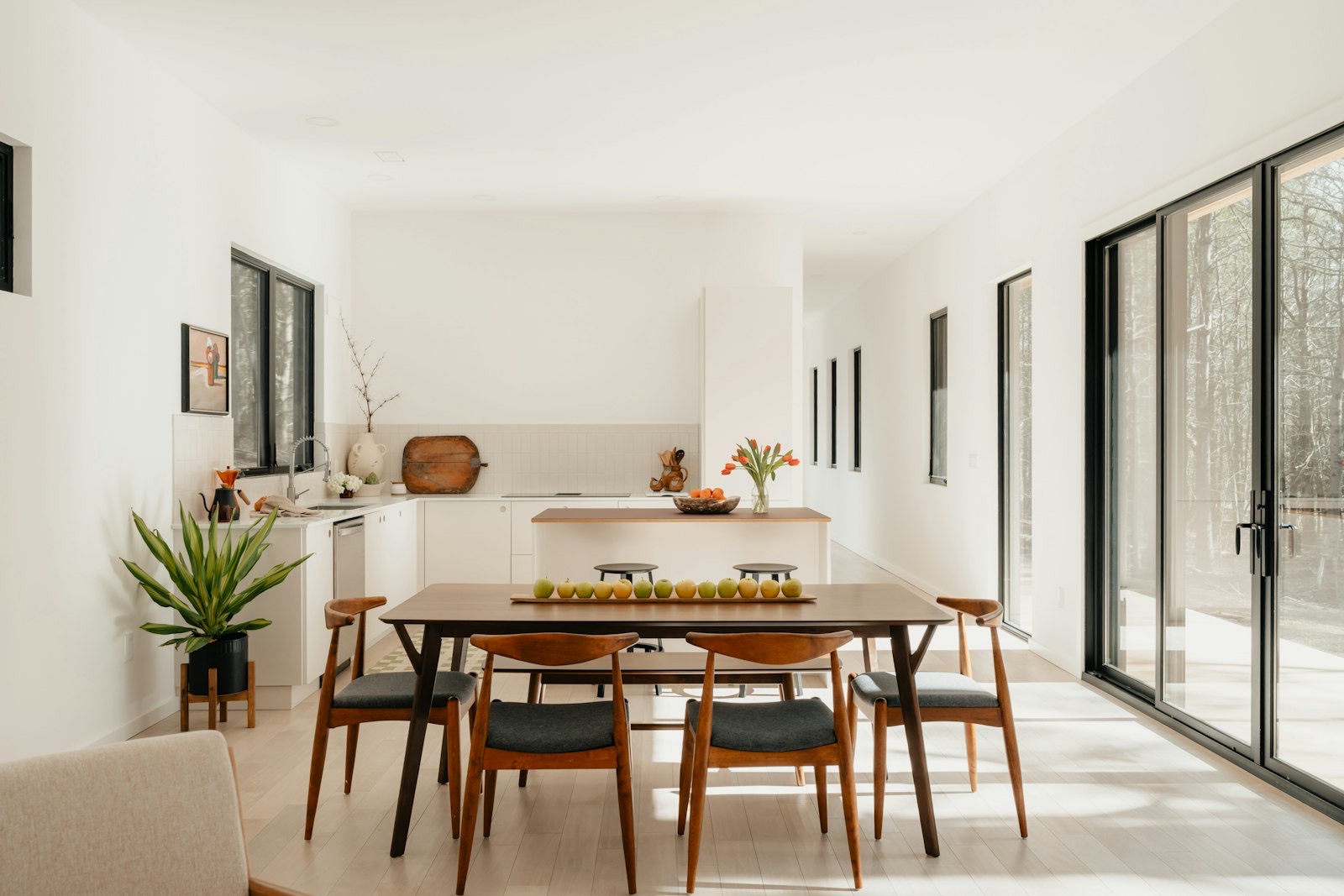
Dining chairs are usually chosen to match a table and judged on how they look. Then people sit in them for two hours at Thanksgiving and discover what actually matters.
Three numbers decide whether a chair is comfortable at a table: seat height, the gap to the underside of the table, and how much width each person gets.
Here is how to get all three right, and how many chairs your table will genuinely take.
Seat Height and Legroom
Standard dining chairs have a seat between 17 and 19 inches from the floor, designed to pair with a table around 30 inches high.
| Table height | Seat height | Resulting legroom |
|---|---|---|
| 28″ | 16–18″ | 10–12″ |
| 30″ (standard) | 17–19″ | 11–13″ |
| 32″ | 19–21″ | 11–13″ |
| 36″ (counter) | 24–26″ | 10–12″ |
| 42″ (bar) | 28–30″ | 12–14″ |
The consistent figure across all of them is 10 to 12 inches between the top of the seat and the underside of the table. Less and your thighs press upward; more and you are reaching up to eat.
Counter and bar height chairs follow the same logic with different numbers — our bar stool height guide covers those in detail.
Watch the apron
Many tables have an apron — the decorative rail running under the tabletop — and it eats into the legroom the height figures promise.
Measure to the bottom of the apron, not the tabletop. You want at least seven inches between the seat and the apron, or your knees will hit it every time you pull in.
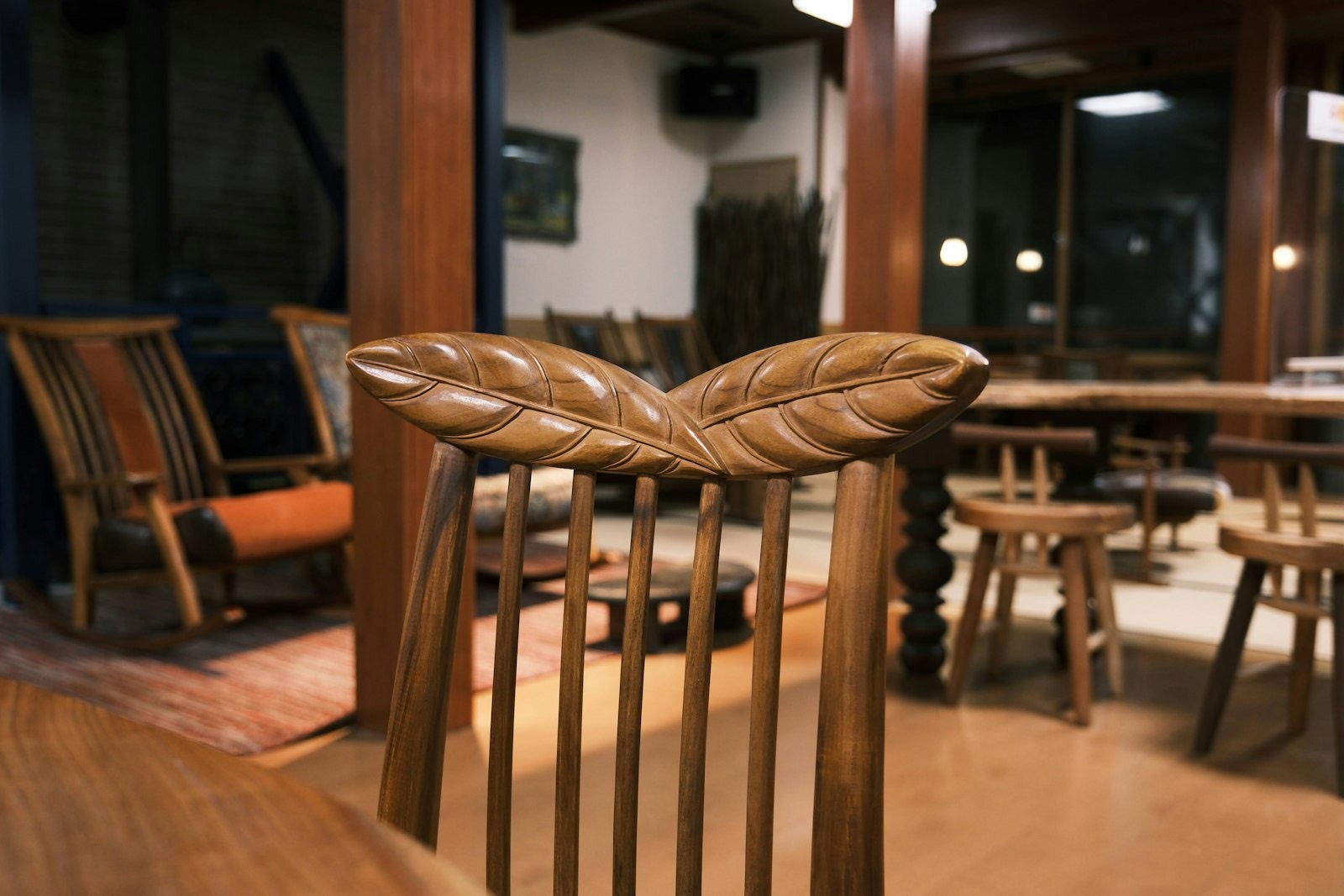
How Much Width Each Person Needs
| Measurement | Allow | What it covers |
|---|---|---|
| Eating space per person | 24–26″ | Place setting and elbow room |
| Gap between chairs | 6″ | Getting in and out without knocking |
| Total per person | 30–32″ | The figure to plan seating around |
| Clearance behind a pulled-out chair | 36″ | Standing up and walking past |
Thirty to thirty-two inches per person is the honest figure, and it is why tables seat fewer people in practice than the marketing suggests. A 72-inch table comfortably takes two chairs per side, not three.
Our dining table size guide works through capacity by table length and shape, using the same spacing.
Chair Widths and Armchairs
| Chair type | Width | Notes |
|---|---|---|
| Side chair (armless) | 16–20″ | The standard; fits the most people |
| Upholstered side chair | 18–22″ | Padding adds width as well as comfort |
| Armchair / carver | 22–24″ | Usually only at the head and foot |
| Bench | Table length minus 12″ | Seats two or three; tucks fully under |
Armchairs are the detail that catches people out. Check the arm height against the underside of the table — you want around seven inches of clearance, or the chair will not slide in at all.
The traditional arrangement puts armchairs at the two ends and side chairs along the sides. It costs nothing and solves the width problem, since the ends have room the sides do not.
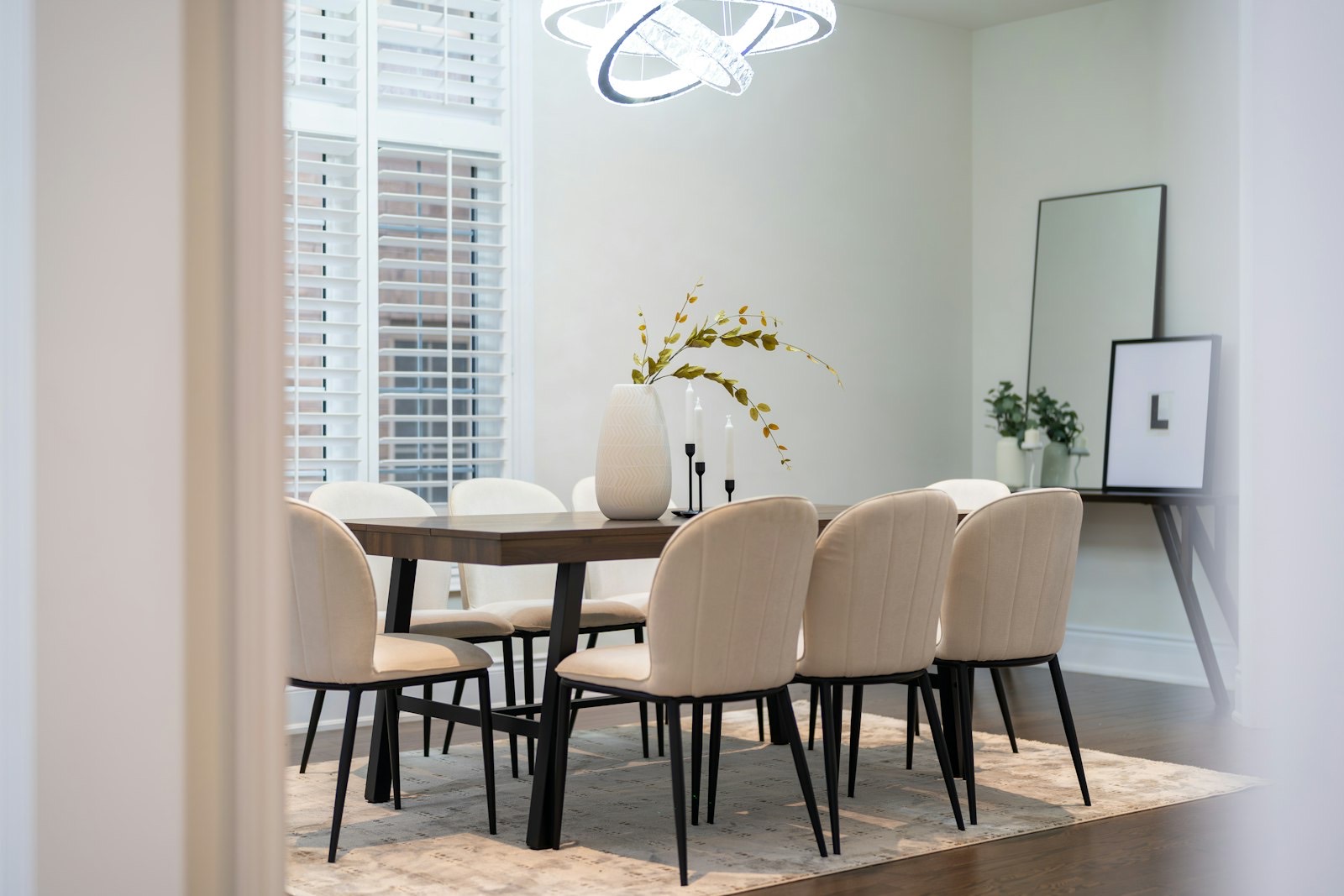
Upholstered, Wood or Mixed?
| Type | Comfort for long meals | Cleaning | Best for |
|---|---|---|---|
| Solid wood | Firm; fine for an hour | Wipes clean instantly | Households with young children |
| Wood with a padded seat | Good balance | Seat pad usually removable | The most practical all-rounder |
| Fully upholstered | Best for long dinners | Hardest — check the cleaning code | Formal dining; adults |
| Performance fabric | Very good | Wipes clean | Families who want padding anyway |
| Metal or moulded | Firm | Effortless | Casual and modern rooms |
Fully upholstered dining chairs sit directly under where food is served, which is the argument against them with small children. If you want the padding, performance fabric is the sensible compromise — our furniture care guide explains the cleaning codes worth checking before buying.
Mixing is entirely acceptable and increasingly common: upholstered armchairs at the ends, simpler wooden side chairs along the length. Keep the seat heights identical and the mixture reads as deliberate.
How Many Should You Buy?
Dining chairs take more abuse than any other seating in the house — dragged across floors, leaned back on, and sat in by everyone who visits.
- Buy for everyday use, not for the largest dinner you host once a year
- Extra chairs stored in a garage warp in humidity and rarely come back looking the same
- Folding or stacking chairs handle occasional overflow better than four spare dining chairs
- If the set is discontinued later, matching a broken chair becomes impossible — buy one spare if the design matters to you
- Check whether seat pads can be recovered; that extends a set by years
Felt pads under the feet are worth fitting on day one. Dining chairs move constantly, and they are the leading cause of scratches on hardwood floors in a dining room.
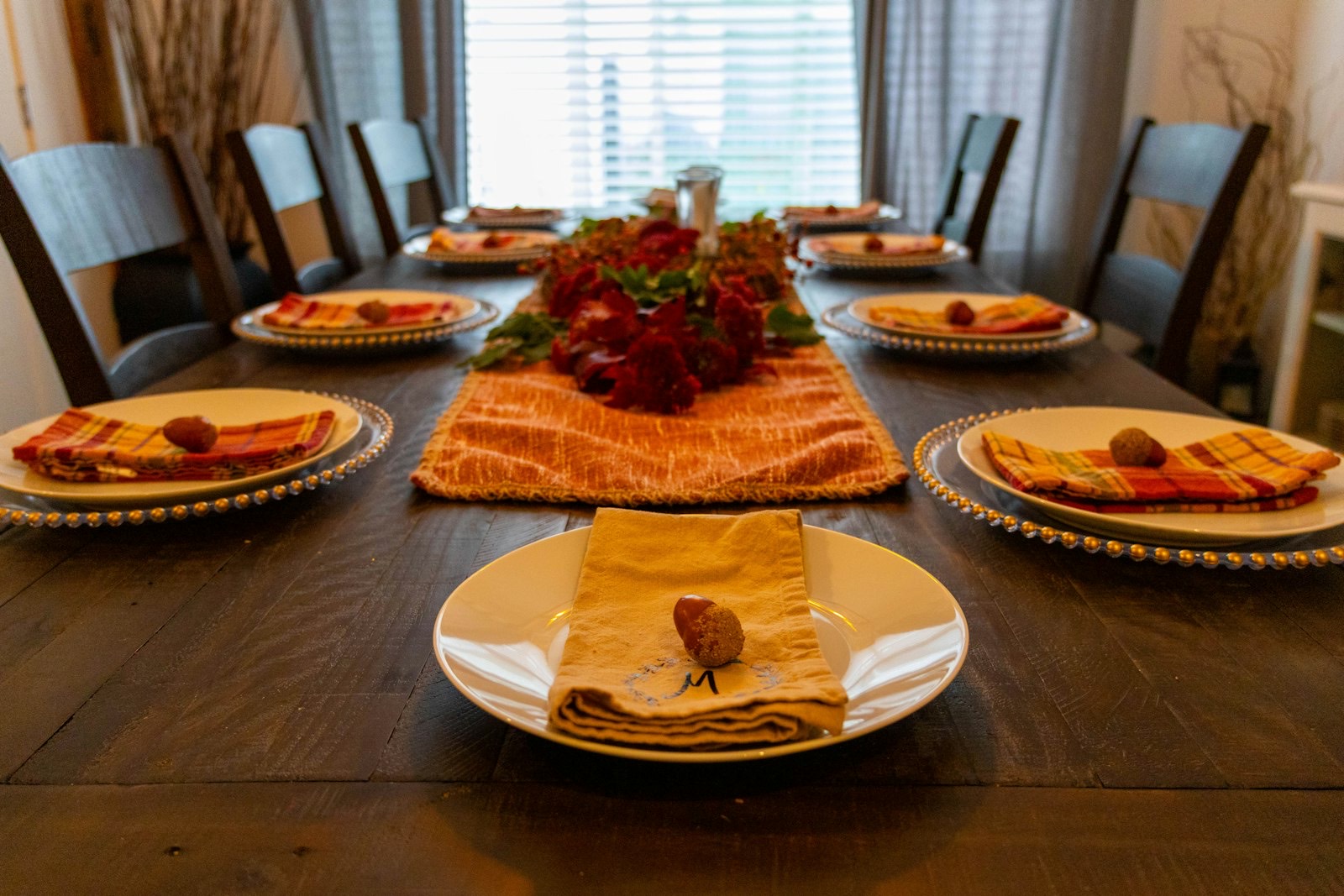
Testing a Chair Properly
- Sit at an actual table, not on a chair standing alone on a showroom floor.
- Check your feet rest flat and your thighs are level, not angled up or down.
- Slide the chair fully in — knees should clear the apron.
- Lean back. The backrest should support your lower back, not just your shoulder blades.
- Rock gently side to side; any creak means the joints are already loose.
- Lift it. You will be moving it daily, and a heavy chair becomes tiresome.
- If upholstered, press the seat — you should feel support, not a board under thin foam.
Seat depth matters more than most people check. Around 16 to 18 inches suits most adults; deeper and shorter sitters cannot reach the backrest without perching forward.
Seating dimensions are a well-studied field — the Human Factors and Ergonomics Society is the professional body behind much of the research that produces the standard figures above.
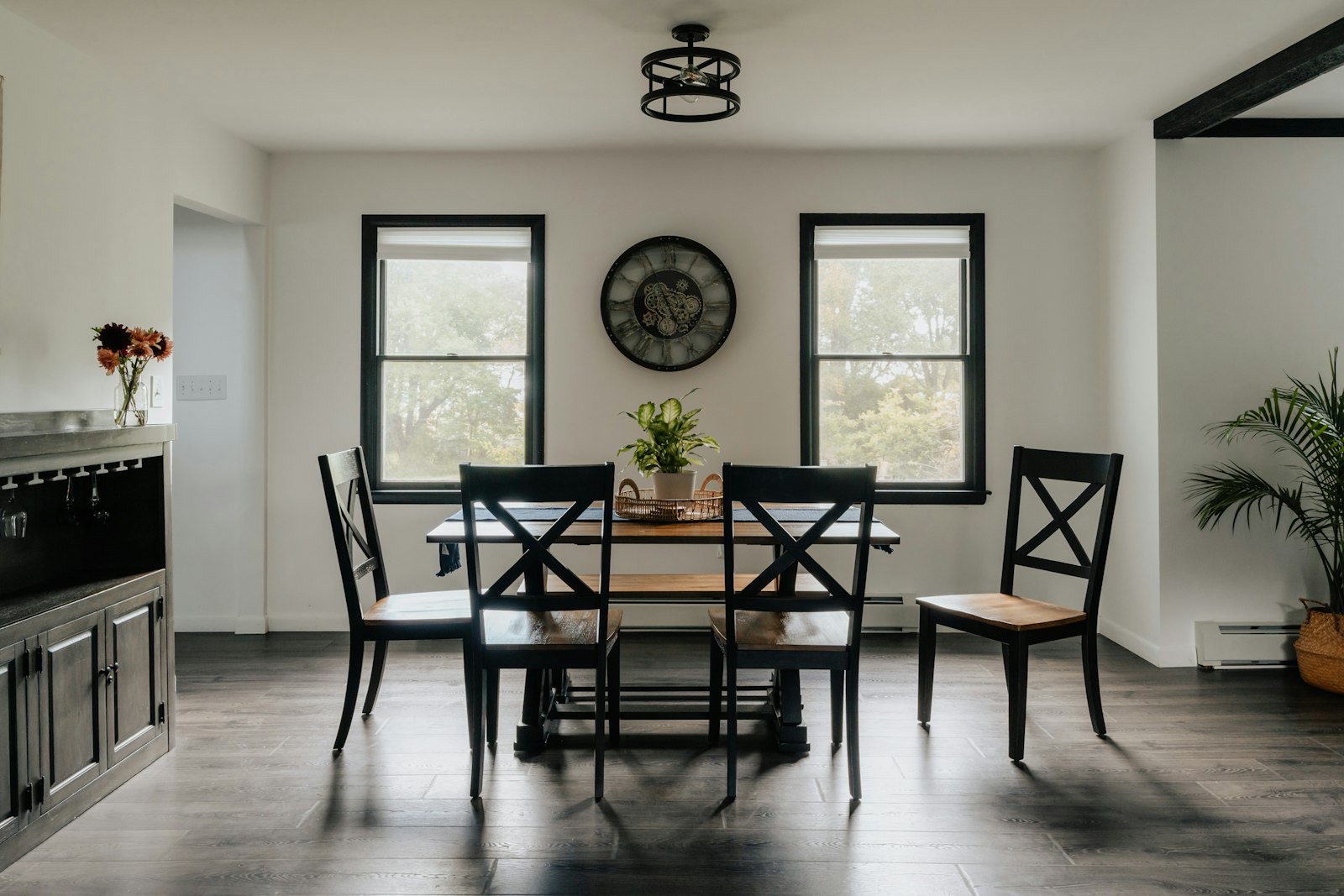
Frequently Asked Questions
What is the standard dining chair seat height?
Between 17 and 19 inches from the floor, paired with a table around 30 inches high. That leaves the 10 to 12 inches of legroom most adults find comfortable.
How much space does each person need at a table?
Around 30 to 32 inches in total — 24 to 26 inches of eating space plus roughly 6 inches between chairs. That is the figure to use when working out how many chairs a table really takes.
Will armchairs fit under my dining table?
Only if there is about seven inches between the top of the arms and the underside of the table or its apron. Measure before buying — armchairs that will not slide in are a common and irritating mistake.
Do dining chairs have to match the table?
No. Matching sets are fine but increasingly unfashionable. Share one element — a wood tone, a leg shape, a finish — and keep all seat heights identical, and a mixed set looks intentional.
Are upholstered dining chairs practical?
They are the most comfortable for long meals and the hardest to clean. Performance fabric or a removable seat pad gives you most of the comfort without the anxiety about spills.
Sit at a Real Table
A dining chair cannot be judged in isolation. Sitting at a table of the right height for ten seconds tells you more than any specification.
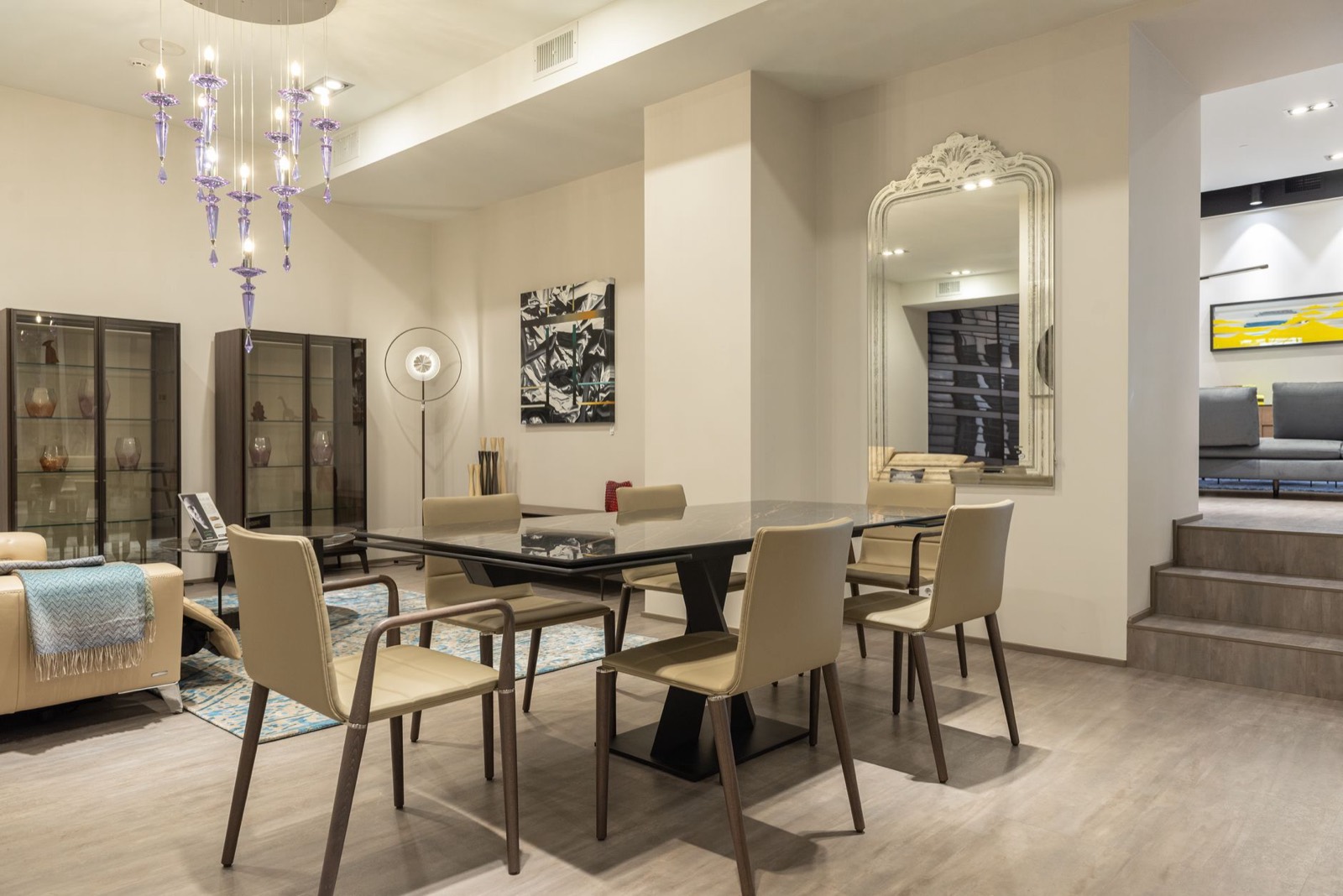
Our dining room furniture range in Newport News has chairs paired with tables on the floor, so you can check legroom and apron clearance against your own proportions.
Sizing the table first? See our dining table size guide, and if bench seating appeals, our bench sizing guide covers how it changes capacity.
For counter or bar seating, see the bar stool height guide. For a sideboard alongside, our accent cabinet guide and home bar guide cover dining storage.
Check clearance and specials, spread the cost with no-credit furniture financing, and see our delivery guide. Unsure how many chairs your table takes? Send our Newport News team its dimensions.