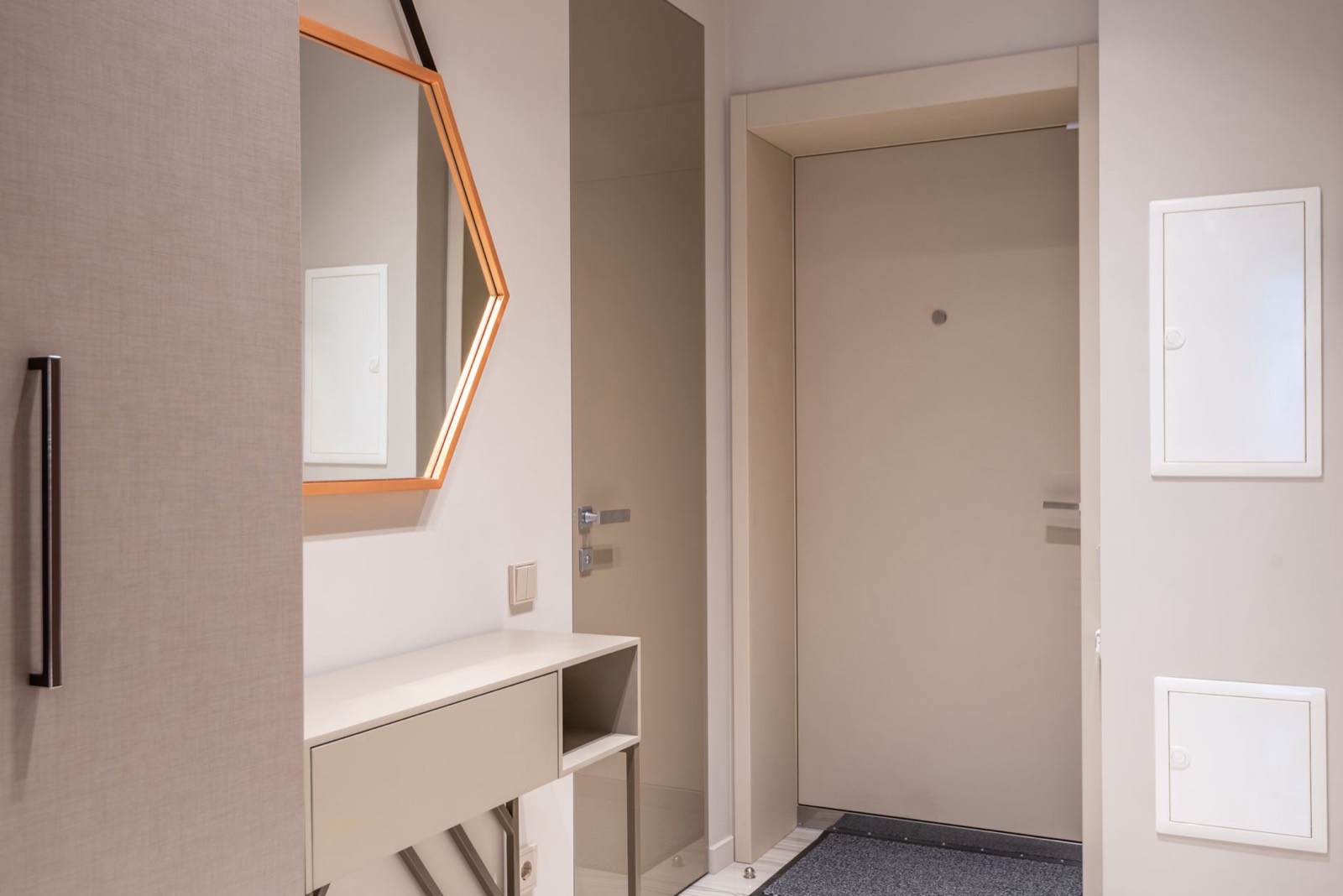
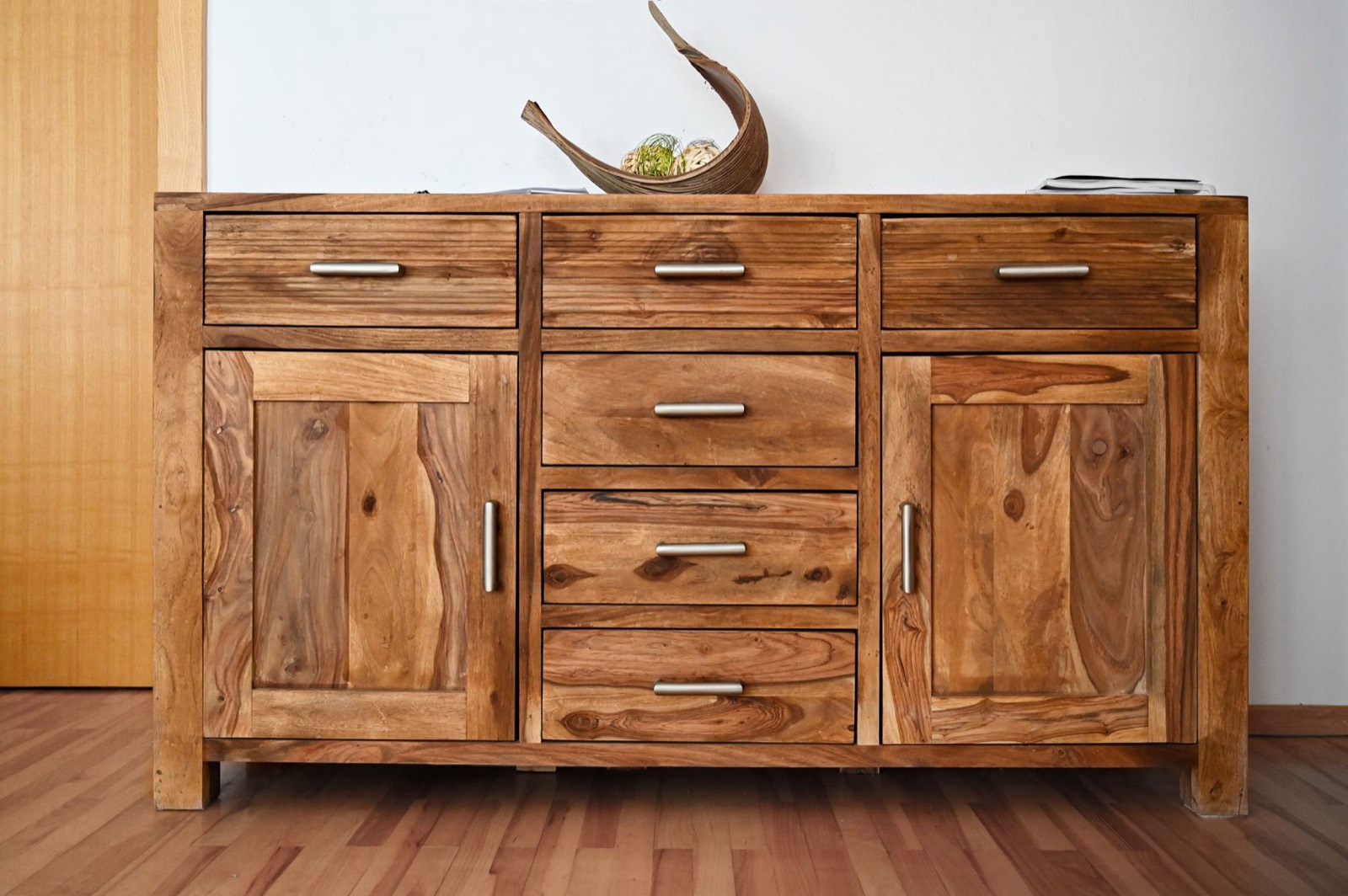
An accent cabinet is the one piece of furniture bought to be looked at first and used second. That is not a criticism — it is the entire brief.
Where a dresser or credenza is sized around what it must hold, an accent cabinet is sized around the wall it sits on and the room it has to lift.
Here is how to size one, where it works in each room, and how to style the top without it turning into a dumping ground for keys and post.
What Separates It From Everything Similar
Four pieces of furniture occupy roughly the same space and get used interchangeably in catalogues. They are not the same thing.
| Accent cabinet | Sideboard | Console table | Credenza | |
|---|---|---|---|---|
| Width | 24–42″ | 50–72″ | 36–60″ | 60–72″ |
| Depth | 12–18″ | 18–20″ | 10–16″ | 20–24″ |
| Height | 28–36″ | 32–36″ | 30–34″ | 25–34″ |
| Storage | Enclosed, modest | Enclosed, generous | Often none | Enclosed, extensive |
| Primary job | Visual focal point | Dining storage | Surface only | Office storage |
The distinguishing number is depth. At 12 to 18 inches an accent cabinet is shallow enough to sit in a hallway or against a wall in a small room without becoming an obstacle.
If you need serious storage, you want a sideboard or a credenza rather than an accent cabinet. Accent cabinets hold a respectable amount, but capacity is not what they are optimised for.
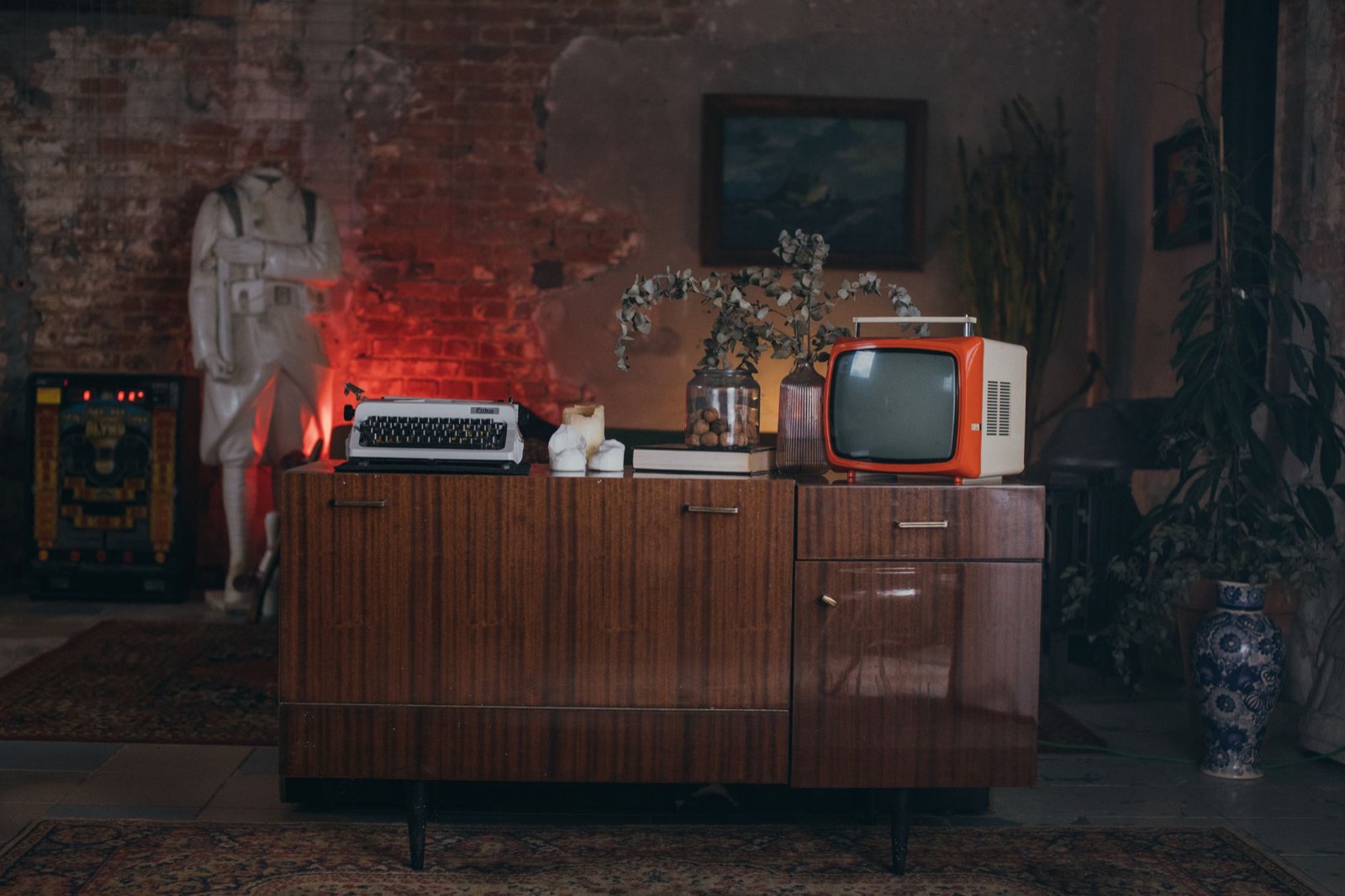
Where They Work, Room by Room
| Room | Job it does | Size that suits |
|---|---|---|
| Entryway | Keys, post, bags; first impression of the house | 24–36″ wide, 12–14″ deep |
| Living room | Media console, or a focal point on a blank wall | 36–42″ wide |
| Dining room | Serving surface; linen and glassware storage | 36–42″ wide |
| Hallway | Breaks up a long corridor | Under 14″ deep — critical |
| Bedroom | Alternative to a second dresser | 30–36″ wide |
| Home office | Printer housing; supply storage | 32–42″ wide |
Hallways are where depth matters most. Anything over 14 inches starts to narrow the walking route, and building codes generally assume a clear corridor width you do not want to eat into.
Sizing It to the Wall
An accent cabinet should occupy between half and two-thirds of the wall space it sits on. Below half it looks stranded; above two-thirds it stops reading as an accent.
| Available wall | Cabinet width | Effect |
|---|---|---|
| 4 ft (48″) | 24–32″ | Fits a small entry or alcove |
| 6 ft (72″) | 36–48″ | The most common proportion |
| 8 ft (96″) | 48–64″ | Consider a sideboard instead |
| Under 3 ft | Under 24″ | A narrow cabinet or console is the only option |
Leave at least six inches of clear wall on each side. Furniture pushed hard into a corner looks wedged rather than placed.
Styling the Top Without Clutter
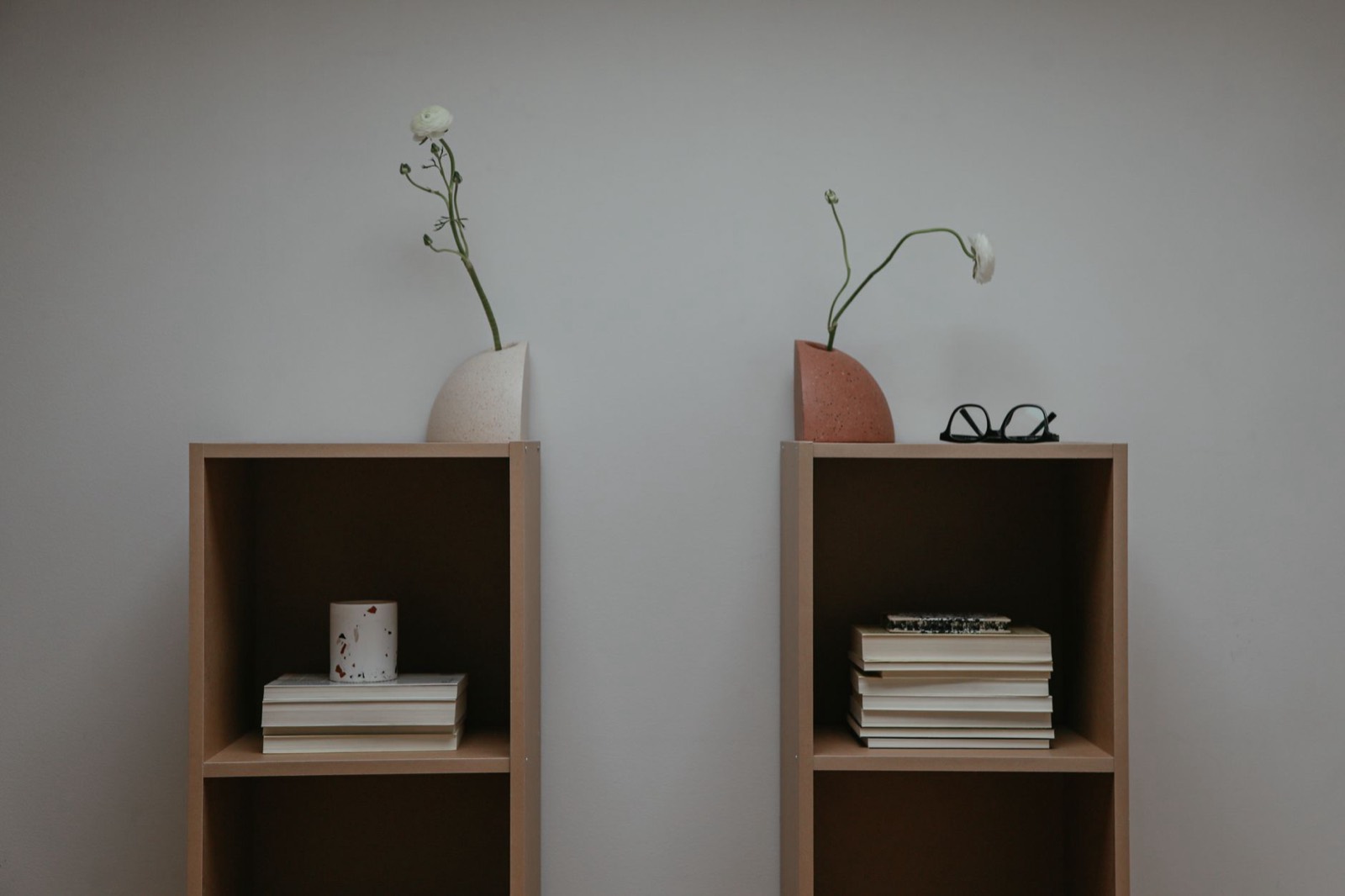
The surface is the reason you bought the piece. There are a few reliable formulas.
- Rule of three — group objects in odd numbers at three different heights
- Anchor one end with something tall: a lamp, a vase, a stack of books
- Leave a third of the surface empty — the negative space is what stops it reading as clutter
- Add a tray for the small items that inevitably land there; corralled clutter reads as intentional
- Vary texture — ceramic, glass, greenery and metal in the same vignette
- Hang something above it to connect the piece to the wall
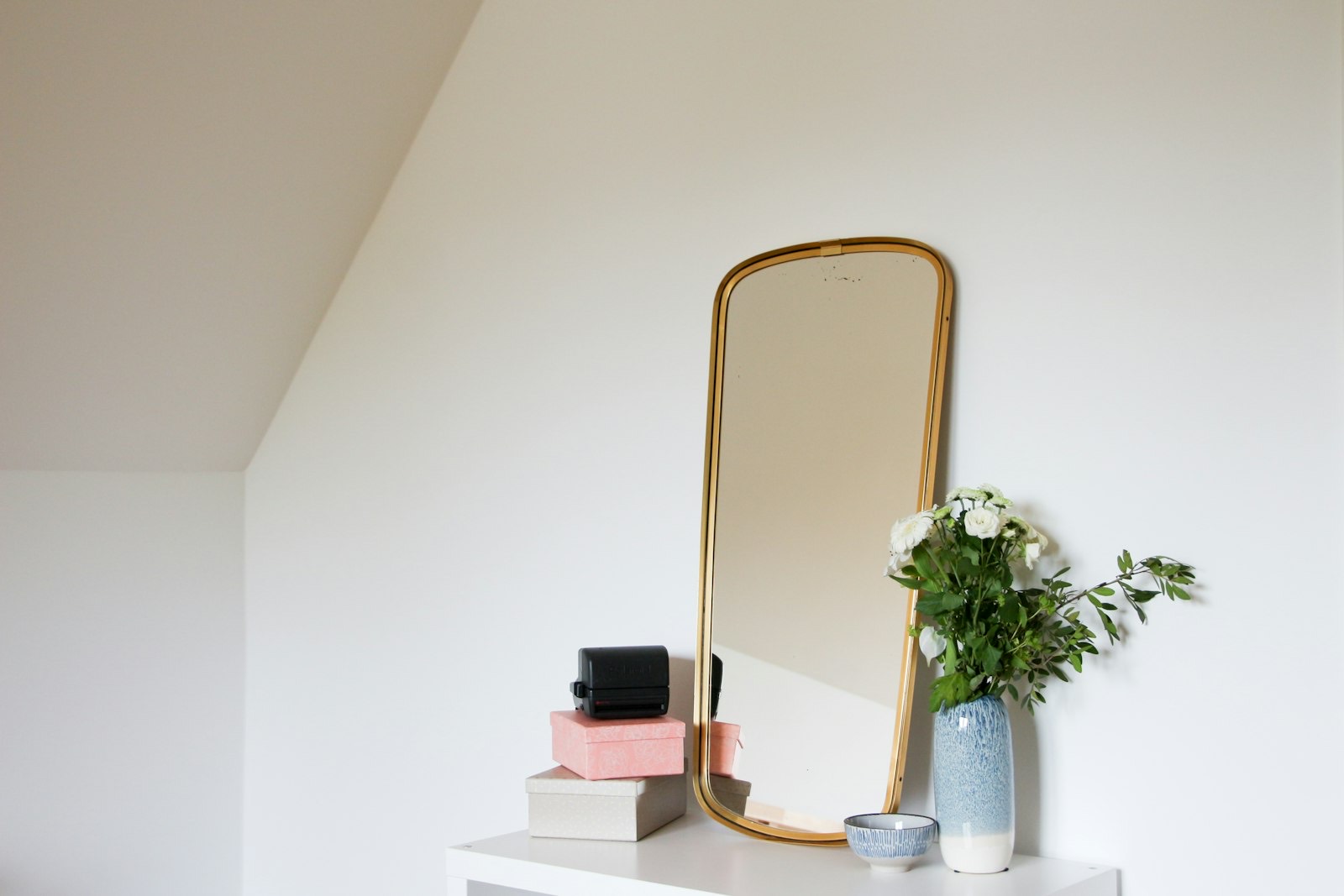
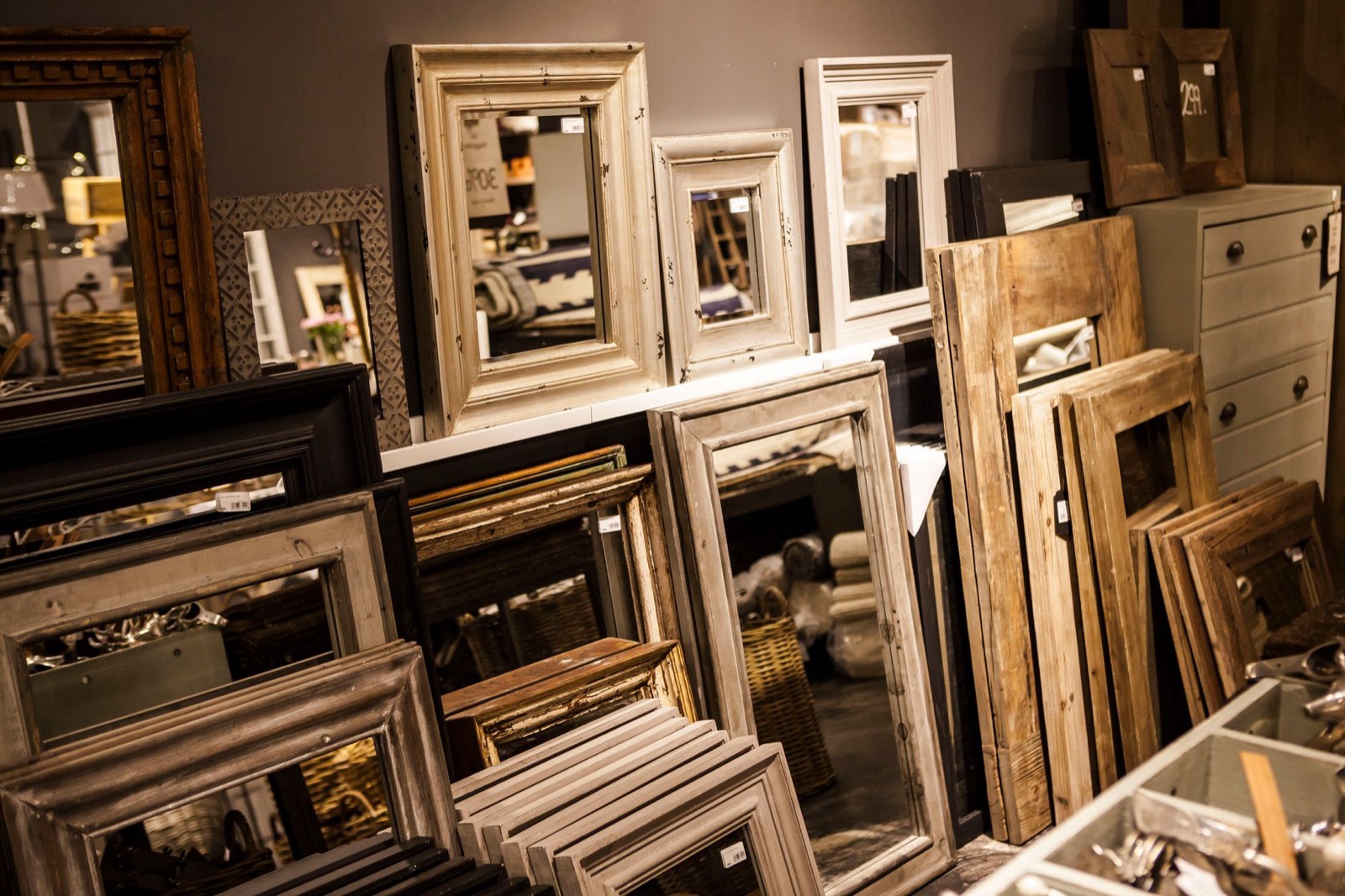
A mirror above an accent cabinet is the most effective pairing there is, particularly in a dark entryway. Our wall mirror sizing guide covers the proportion — roughly 25 to 50 percent narrower than the cabinet, hung four to six inches above the surface.
Doors, Drawers or Both?
| Configuration | Best for | Watch out for |
|---|---|---|
| Two doors, adjustable shelf | Bulky or awkward items | Needs door swing clearance in a hallway |
| Drawers only | Small items; entryway use | Limited height inside each drawer |
| Mixed drawer and doors | The most versatile everyday choice | Slightly less of each |
| Open shelving | Display and books | Everything on show must stay tidy |
| Glass-fronted | Displaying glassware or ceramics | Fingerprints; contents must be curated |
In a corridor, check the door swing before anything else. A cabinet with two hinged doors needs roughly 18 inches of clear space in front to open properly, which a narrow hallway may not have.
Choosing a finish that lasts
Accent cabinets lean heavily on finish, because the finish is the product. Some wear far better than others.
- Painted — the widest colour choice, but chips at corners and edges show white underneath
- Stained wood — hides knocks well and can be touched up with a matching pen
- High-gloss lacquer — dramatic, and shows every fingerprint and dust mote
- Metal or mixed media — the most durable in a high-traffic entryway
- Cane or rattan panels — currently popular; check the weave is backed rather than open if you have cats
For an entryway that takes daily knocks from bags and shoes, a stained or metal finish will look better in three years than a painted one.
Looking After a Wood Cabinet
Accent cabinets are frequently placed in entryways, which are the harshest spots in a house — direct sun through a door, temperature swings, and damp from wet coats.
- Keep wood out of direct sunlight, which bleaches finishes unevenly
- Avoid placing one directly over a heating vent
- Wipe spills immediately; water rings set permanently in some finishes
- Use felt pads underneath if it sits on hardwood
- In a humid coastal climate, expect slight seasonal movement in solid wood doors
Museum conservators deal with exactly these problems at scale, and the National Park Service’s Conserve O Gram series on collection care is a surprisingly practical free reference for anyone looking after wood furniture long term.
Frequently Asked Questions
What is an accent cabinet used for?
Modest enclosed storage combined with a decorative focal point. It works as an entryway drop zone, a living room media console, a dining sideboard or a hallway feature.
What size should an accent cabinet be?
Typically 24 to 42 inches wide and 12 to 18 inches deep. Aim for a width between half and two-thirds of the wall it occupies, and keep depth under 14 inches in a hallway.
What is the difference between an accent cabinet and a sideboard?
Size and intent. A sideboard is wider and deeper, built primarily for dining storage. An accent cabinet is smaller, shallower, and chosen mainly for how it looks in the room.
Can an accent cabinet be used as a TV stand?
Yes, provided the top is wider than the television’s base and rated for its weight. Check for cable access at the back — many accent cabinets have fully closed panels.
How high should a mirror hang above one?
Four to six inches above the surface, and 25 to 50 percent narrower than the cabinet. That gap keeps the two pieces reading as a single composition rather than two separate objects.
See How It Sits
Accent cabinets are chosen on looks, and looks do not survive translation into a product photograph. Finish, grain and scale all read differently in person.
Our home accents, cabinets and decor range in Newport News covers narrow entryway pieces through to wider statement cabinets, with mirrors and lamps alongside to build the pairing.
Using one as a media unit? Compare against our TV stands and entertainment centers. As a dining sideboard, see dining room furniture, and our dining table sizing guide for the clearances around it.
For a living room focal point, browse living room furniture, and if bedroom storage is the real need, our dresser buying guide covers the higher-capacity option.
Check clearance and specials, and use our free home delivery service for anything with glass doors. Measuring an awkward hallway? Send our Newport News team the wall length and depth.