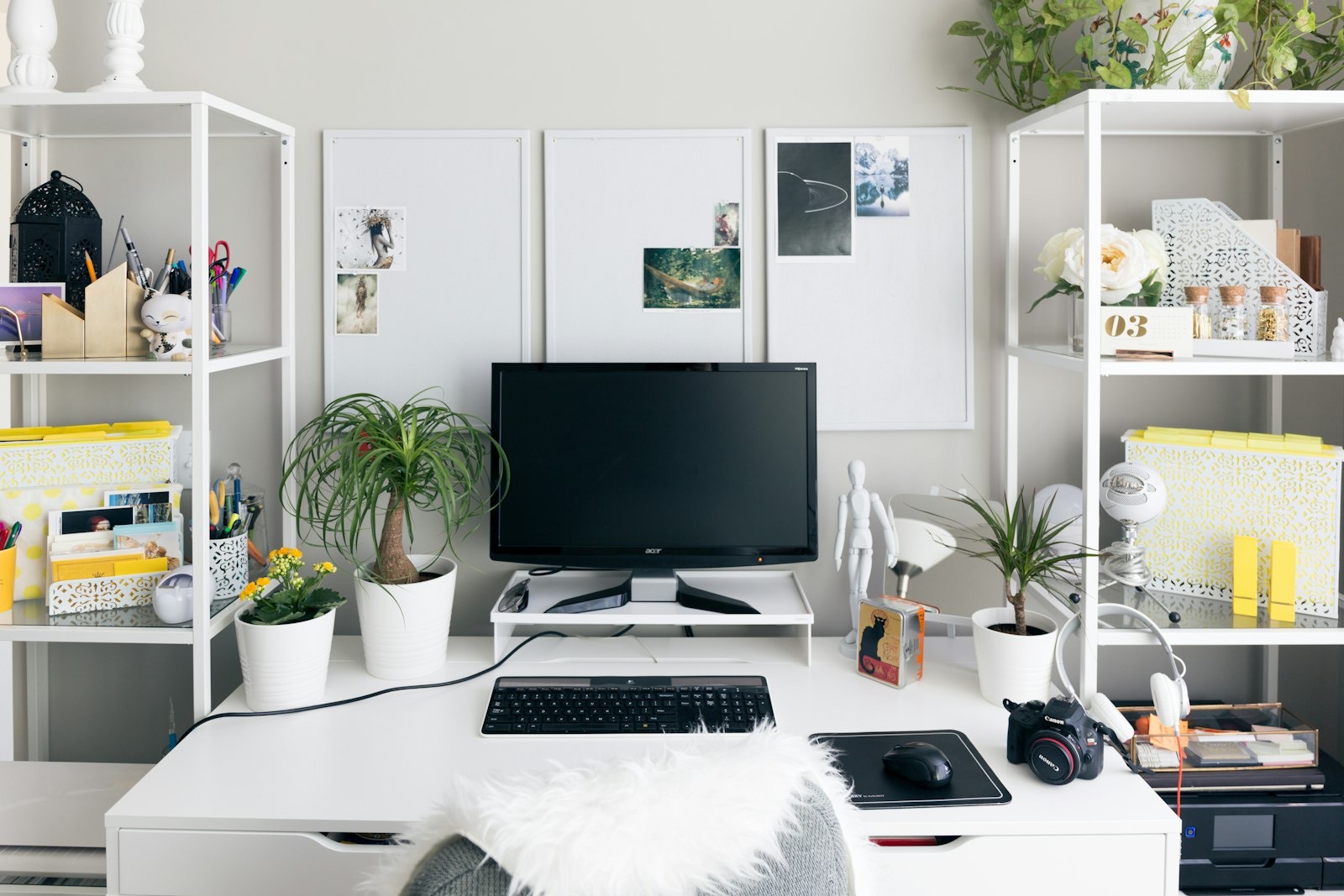
Ask ten people what a credenza is and you will get several confident, contradictory answers. It is one of the vaguest words in furniture retail.
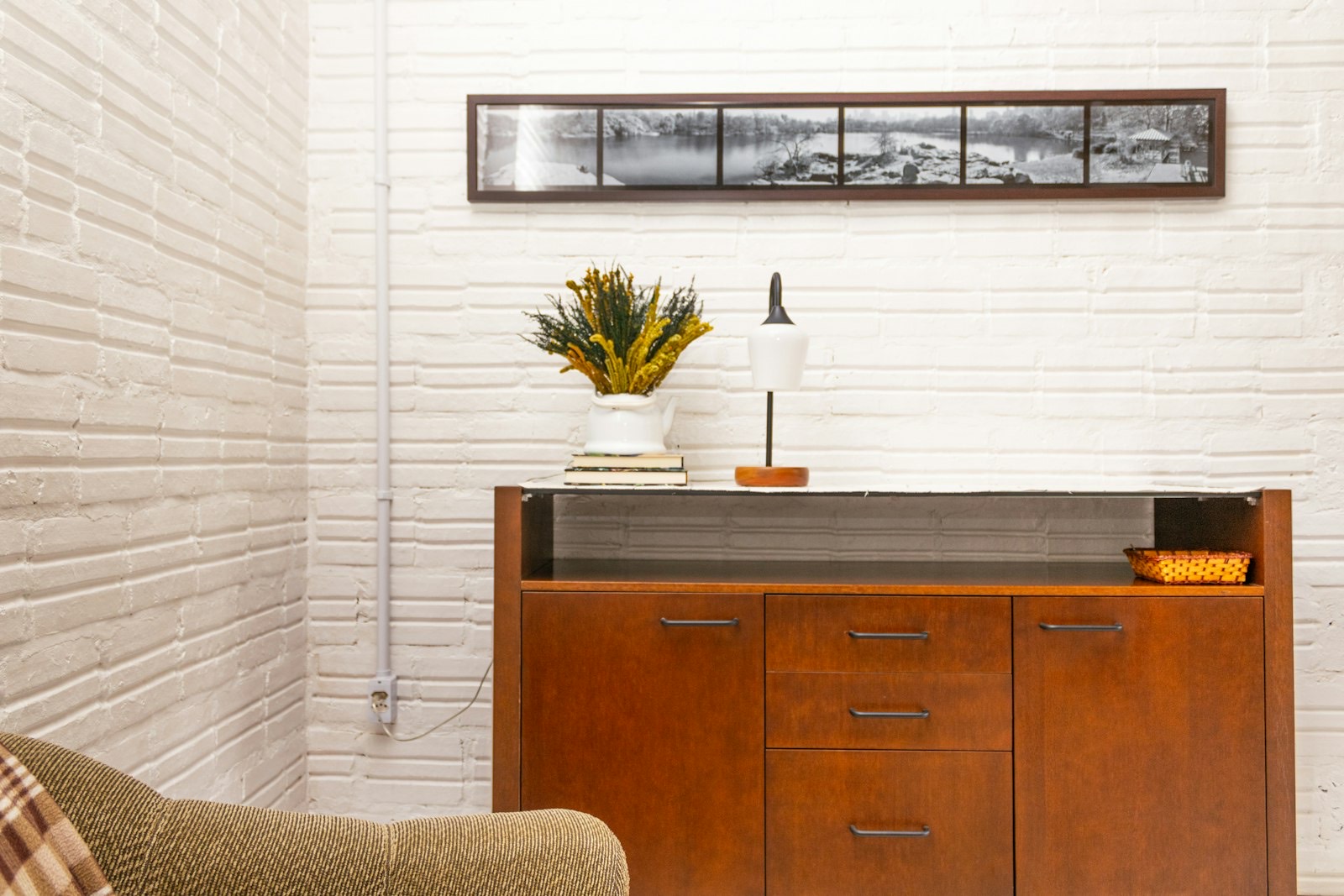
In a home office it means something quite specific: a long, low storage cabinet that sits at roughly desk height and doubles as a second work surface.
Here is how a credenza differs from a desk, when it is the better buy, and how to lay one out in a room that also has to function as a bedroom or spare room.
Credenza vs. Desk vs. Bookcase
| Credenza | Desk | Bookcase | File cabinet | |
|---|---|---|---|---|
| Typical width | 60–72″ | 48–72″ | 30–36″ | 15–36″ |
| Typical depth | 20–24″ | 30″+ | 12–16″ | 18–24″ |
| Typical height | 25–34″ | 29–30″ | 48–84″ | 28–52″ |
| Legroom underneath | Partial or none | Full | None | None |
| Enclosed storage | Extensive | Limited | Usually open | Files only |
| Works as a work surface | Standing or perched | Seated, primary | No | No |
Depth is the real dividing line. A credenza is roughly six to ten inches shallower than a desk, which is exactly why it fits along a wall in rooms where a desk would intrude.
The trade-off is legroom. Most credenzas have storage running the full width, so there is nowhere to put your knees for long stretches of seated work.
When a Credenza Is the Better Choice
| Your situation | Better option | Why |
|---|---|---|
| Full-time desk work | Desk | You need proper legroom and depth for a monitor |
| Laptop use plus lots of paperwork | Credenza | Storage is the constraint, not surface area |
| Office doubles as a guest room | Credenza | Shallower footprint; reads as furniture, not office kit |
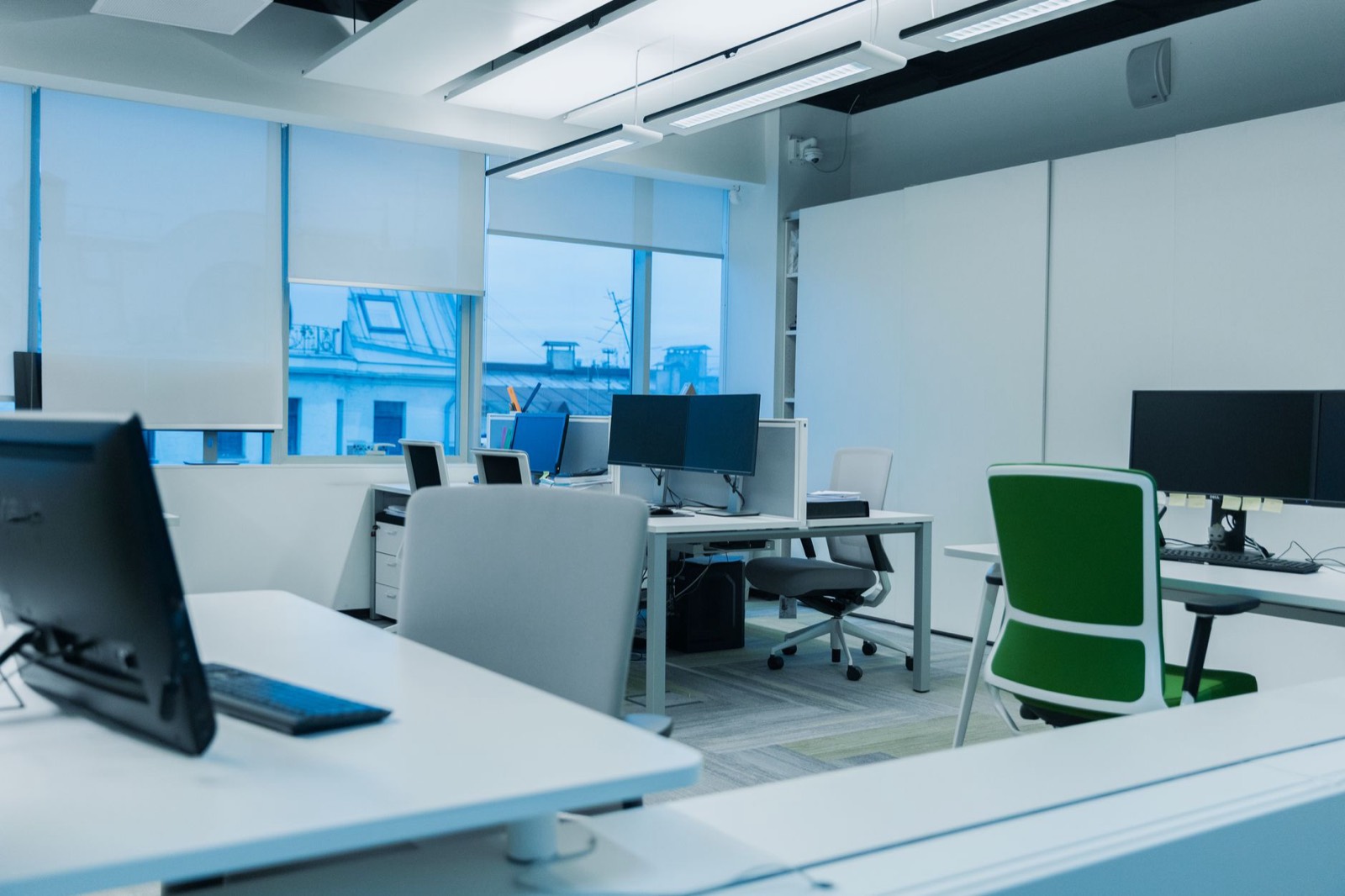
| Executive setup, plenty of space | Both | Desk forward, credenza behind — the classic layout |
| Occasional standing work | Credenza | At 34″ it sits near standing-desk height |
| Living room needing storage | Credenza | Doubles as a sideboard or media unit |
That last row explains why credenzas outsell most other office storage. A well-chosen one does not look like office furniture at all, which matters enormously when the office is a corner of another room.
Four Layouts That Work
- Credenza behind the desk — swivel to reach files without standing; needs about 42″ between the two
- L-configuration — credenza at right angles to the desk, forming a corner workstation
- Credenza along the wall, desk floating — best when the desk faces a window
- Credenza alone — for laptop-only work in a room that cannot spare desk depth
The behind-the-desk layout is the most efficient of the four, but it is also the most space-hungry. Allow the desk depth, plus 42 inches for the chair, plus the credenza depth — comfortably over eight feet in total.
Getting the Height Right
Credenzas span 25 to 34 inches, and that nine-inch range changes what the piece is actually good for.
| Height | Best use | Notes |
|---|---|---|
| 25–28″ | Media console; low display surface | Too low for comfortable standing work |
| 29–30″ | Matches desk height exactly | Ideal for an L-shaped or behind-desk pairing |
| 31–34″ | Perching, standing tasks, printer stand | Approaches counter height |
If it will sit alongside your desk, match the heights. A two-inch step between adjoining surfaces is visually obvious and irritating to work across.
For seated work, the surface height matters less than your chair and screen position. OSHA’s computer workstation guidance sets out the neutral posture worth aiming for, and it is a useful sanity check on any home setup.
Storage Configurations
| Configuration | Holds | Best for |
|---|---|---|
| Double doors, adjustable shelves | Boxes, printers, bulky items | Hiding equipment out of sight |
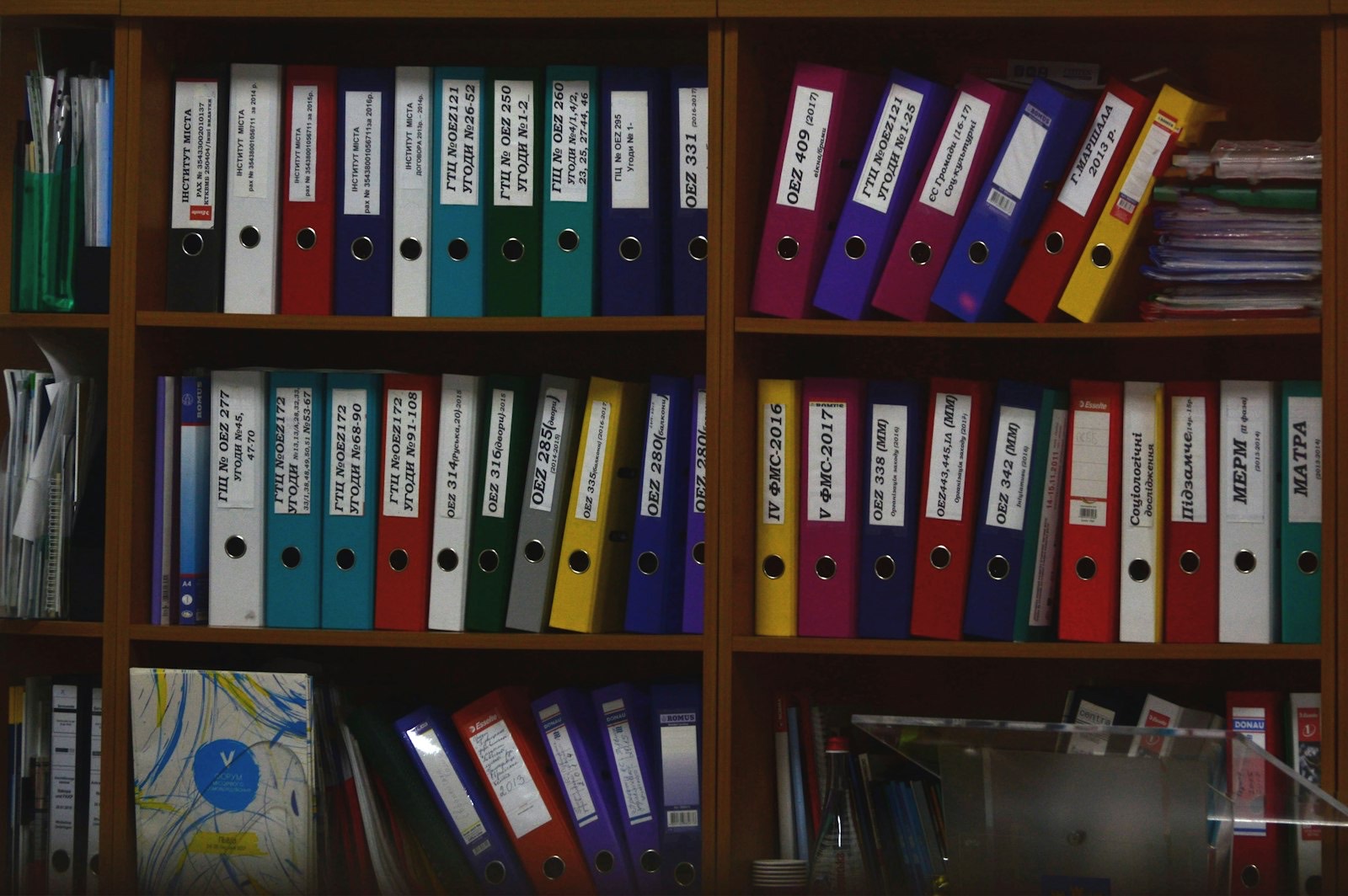
| Lateral file drawers | Letter or legal files hanging sideways | Genuine paperwork volume |
| Mixed drawers and doors | A bit of everything | The most versatile home-office choice |
| Open shelving | Books and display items | Rooms where it doubles as a living-room piece |
| Drawer bank plus knee space | Files, with room to sit | Credenza used as the primary desk |
If you file paper regularly, check that the drawers take hanging folders in the orientation you actually use. Letter files run 12 inches wide, legal files 15 — a drawer built for one is awkward for the other.
Also check cable access. A credenza intended to house a printer or router should have grommets or a cut-out at the back; a fully sealed cabinet will cook electronics.
What to Check Before You Buy
Credenzas carry more weight than most furniture of their size — files are dense, and a full lateral drawer can hold thirty pounds of paper.
- Pull a loaded drawer fully out and check it does not sag or tip the cabinet forward.
- Confirm the drawer glides are metal ball-bearing, not plastic, on anything holding files.
- Look for an anti-tip interlock that stops two heavy drawers opening at once.
- Check whether the back panel is finished, if the piece will float rather than sit against a wall.
- Measure your doorway — a 72-inch credenza is one of the least flexible items to manoeuvre.
- Confirm the top surface is rated for a printer’s weight if that is the plan.
An unfinished back is common and perfectly acceptable against a wall. It only becomes a problem when you later decide to use the piece as a room divider.

Frequently Asked Questions
What is the difference between a credenza and a desk?
A desk is deeper, typically 30 inches or more, and has open legroom for seated work. A credenza is shallower at 20 to 24 inches, packed with enclosed storage, and usually has little or no knee space.
Can a credenza be used as a desk?
For laptop work, yes — particularly models with a knee-space section. For full-time seated work with a monitor, the shallow depth and missing legroom become uncomfortable within a few hours.
How tall is an office credenza?
Between 25 and 34 inches. Around 29 to 30 inches matches standard desk height, which is what you want if the two pieces will sit next to each other.
How much space do I need between a desk and a credenza?
About 42 inches, so a chair can be pushed back and swivelled between the two without catching. Thirty-six inches is workable but tight for a chair with arms.
Can a credenza be used outside an office?
Frequently. The same proportions work as a dining room sideboard, a hallway storage piece or a media console beneath a wall-mounted television.
Match It to Your Room
Bring the wall length and the depth you can spare, and the choice between a desk, a credenza or both usually makes itself.
Our home office furniture range in Newport News covers desks, credenzas, bookcases and file storage, and you can check drawer sizes against your own filing before deciding.
If the office shares a room, it is worth reading how we size other storage: our guides to choosing a dresser and sizing a wall mirror use the same proportional logic. For a vanity that doubles as a desk, see choosing a makeup vanity for a small bedroom.
Using a credenza as a media unit instead? Compare it against our TV stands and entertainment centers, or as a sideboard alongside dining room furniture.
Check clearance and specials, spread the cost with no-credit furniture financing, and use our free home delivery service — a 72-inch credenza is a two-person lift. Questions on layout? Ask our Newport News team.