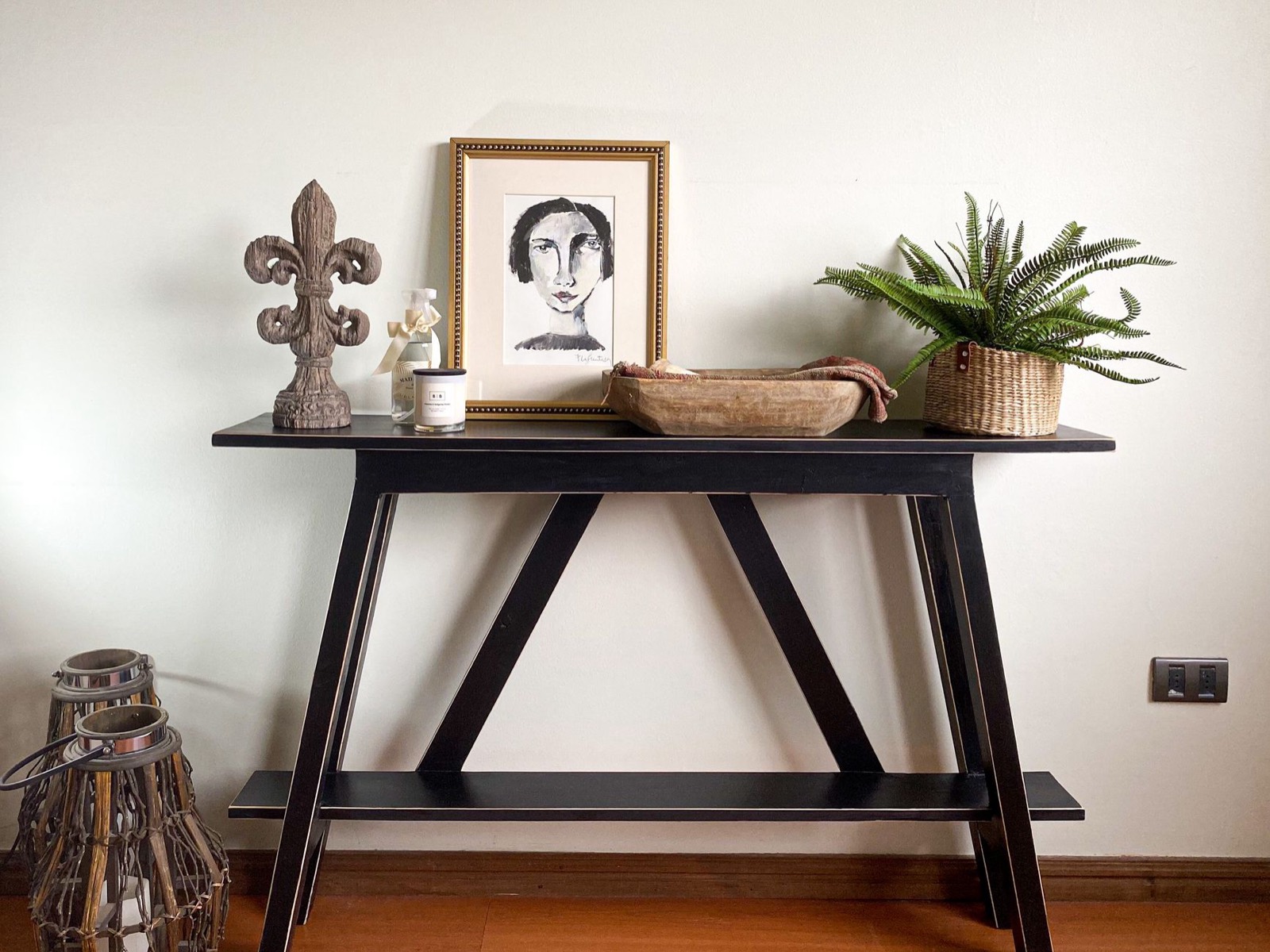
A console table is the narrowest useful piece of furniture there is. It turns a corridor, a bare wall or the back of a sofa into somewhere you can put something down.
It is also height-sensitive in a way most furniture is not. Two inches too tall behind a sofa and it looks like a mistake.
Here is how to size one for each of the three places it usually goes.
Standard Dimensions
The most common console table measures 48 inches long, 14 inches deep and 30 inches high. Everything else is a variation on that.
| Where it goes | Height | Depth | Length |
|---|---|---|---|
| Behind a sofa | Match sofa back, or 0–2″ lower | 10–14″ | ⅔–¾ of sofa length |
| Entryway | 32–34″ | 12–14″ | ⅔ of the wall |
| Narrow hallway | 30–34″ | 10–12″ | Whatever leaves the corridor clear |
| Dining room (serving) | 34–36″ | 14–18″ | ⅔ of the table length |
| Under a wall-mounted TV | 24–30″ | 14–16″ | Wider than the screen |
Depth is what makes a console a console. Anything past about 16 inches stops being a slim surface and starts behaving like a sideboard.
If you need enclosed storage rather than a surface, a different piece is the answer — our accent cabinet guide covers those, and they run deeper at 12 to 18 inches.
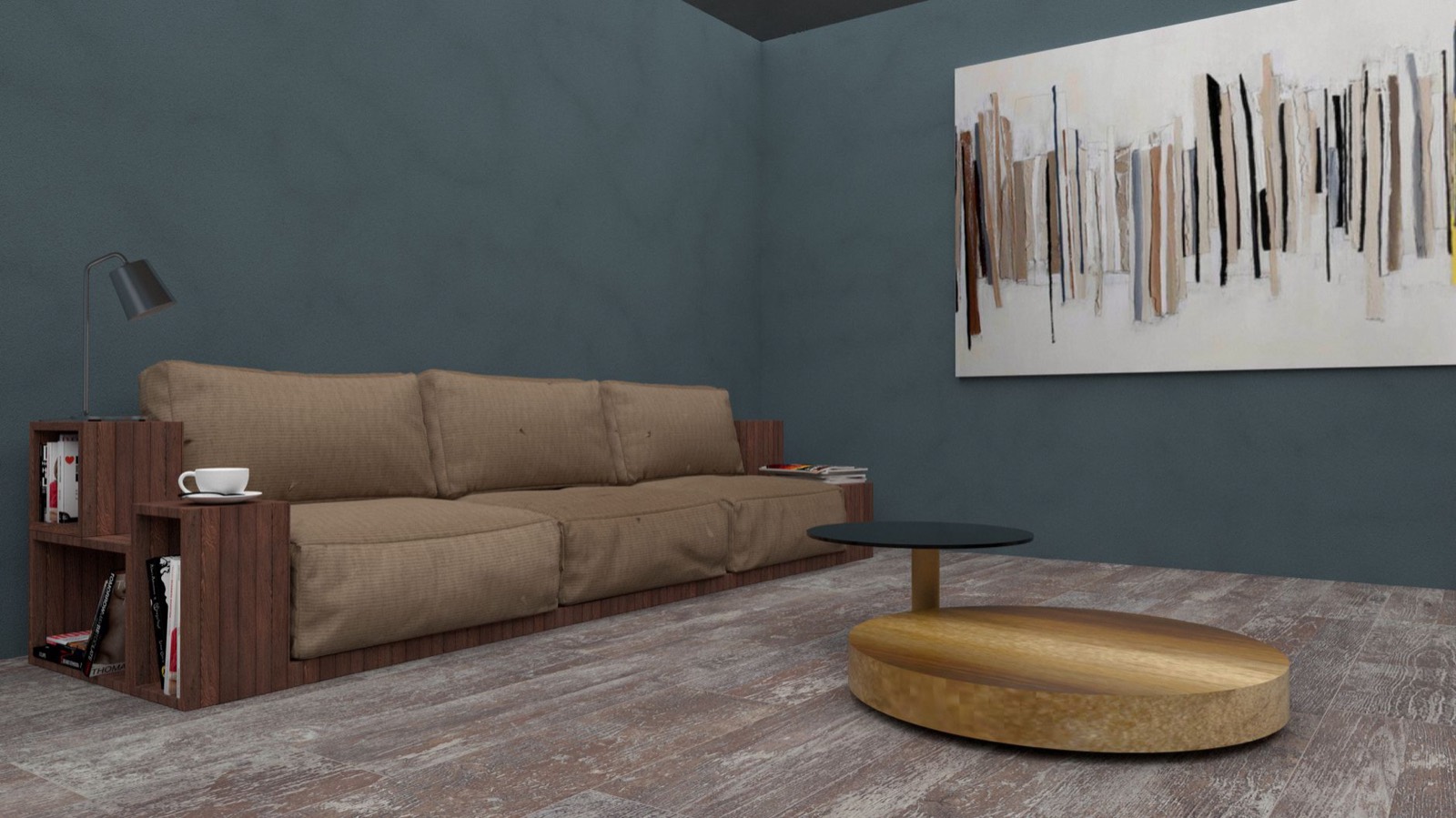
Behind a Sofa: Measure the Frame, Not the Cushions
This is the single most common error in the category.
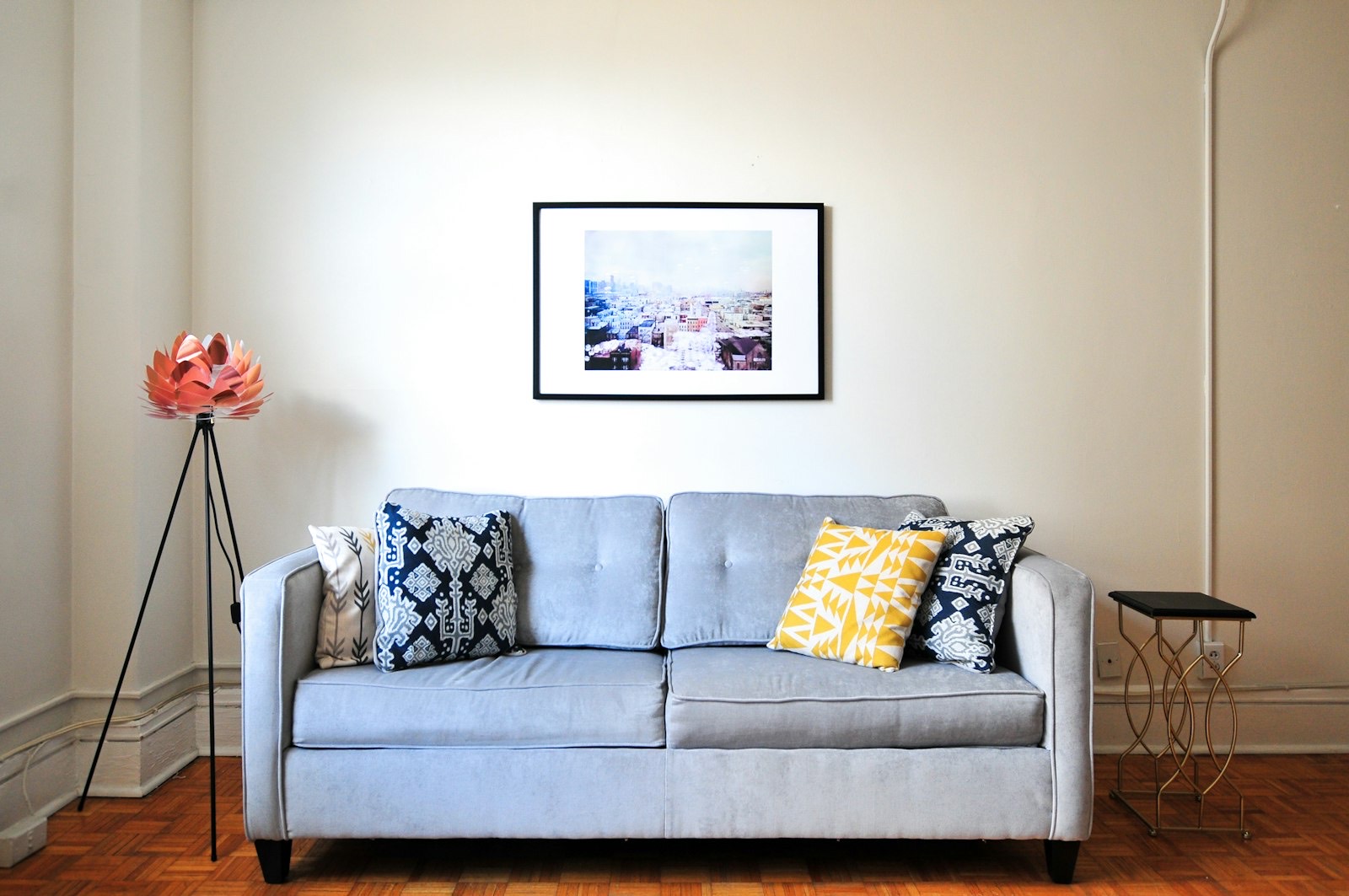
Measure to the top of the sofa’s back frame, not to the top of the back cushions. Cushions sit two to four inches proud of the frame, and matching the cushion height gives you a table that towers over the sofa once someone sits down and compresses them.
| Sofa back frame height | Console height | Effect |
|---|---|---|
| 28″ | 26–28″ | Low modern sofa; console sits flush |
| 30″ | 28–30″ | The standard pairing |
| 32″ | 30–32″ | Traditional high-back sofa |
| 34″+ | 32–34″ | Check the console is not taller |
The rule is absolute: never taller than the sofa back. Level or slightly below reads as deliberate; above it reads as furniture that ended up in the wrong place.
For length, two-thirds to three-quarters of the sofa is the proportion that works. Our sofa measuring guide covers how to find those figures if you do not have them.
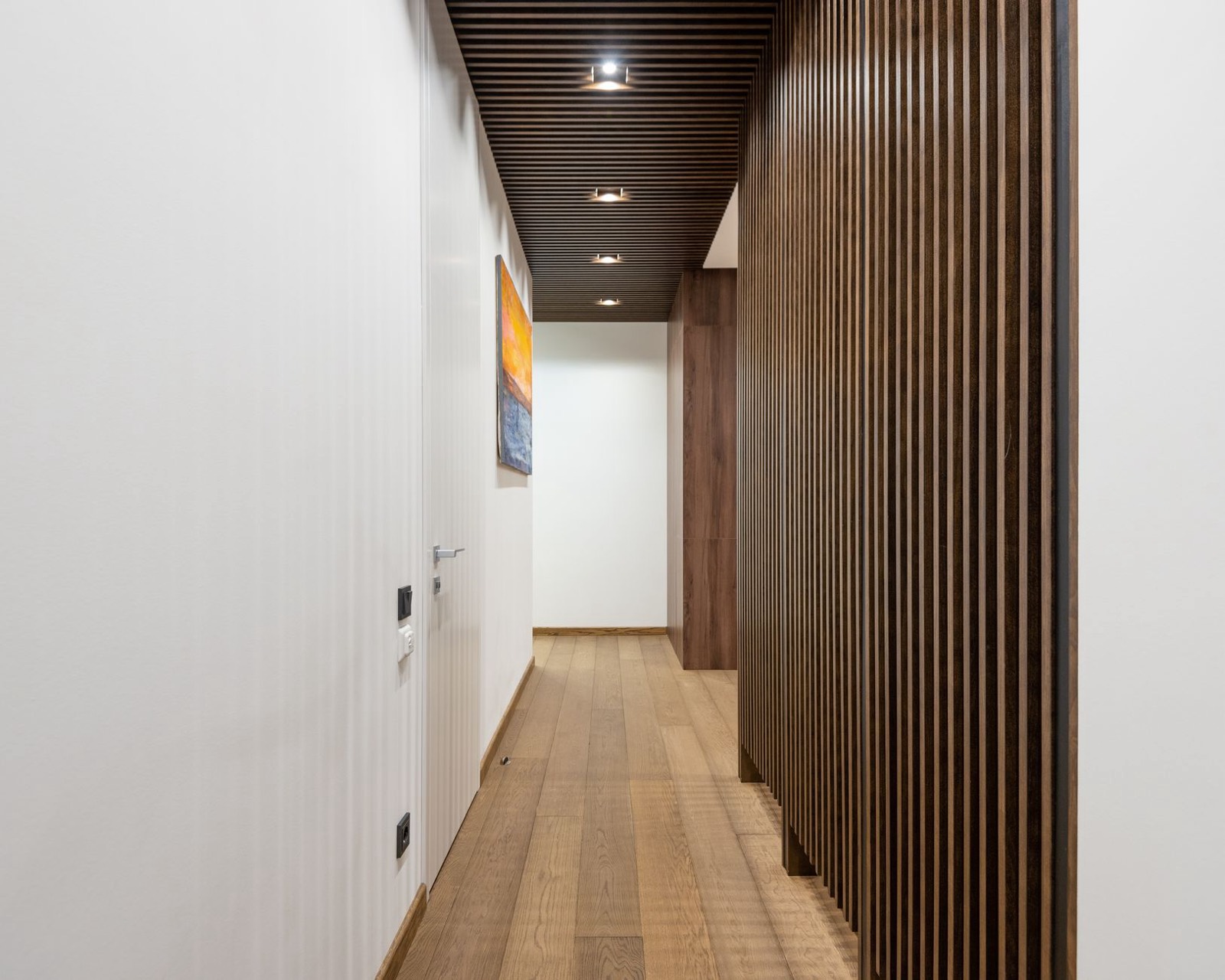
Hallways: Mind the Code Minimum
A console in a corridor is a genuinely good use of dead space, provided it does not narrow the route below what the corridor needs to be.
Residential hallways are built to a minimum clear width of 36 inches under the model codes published by the International Code Council. That figure is not a decorating suggestion — it is what the corridor was designed to provide.
- Measure your hallway width, then subtract the console depth
- In a 36-inch hall, a 12-inch console leaves 24 inches — passable, but tight
- In a 42-inch hall, a 12-inch console leaves a comfortable 30 inches
- Never place one where it narrows the route to a bedroom or exterior door
- Wall-mounted floating consoles free the floor entirely and are easier to clean around
If the arithmetic is marginal, a floating shelf at console height gives you the surface without the legs, and keeps the full floor width available.
Base Styles and What They Suit
The underside of a console does more visual work than the top, because in a narrow space you see straight through it.
| Base style | Visual weight | Storage | Best in |
|---|---|---|---|
| Four slim legs | Lightest — you see the floor | None | Small entryways; narrow halls |
| Legs with a lower shelf | Light | Baskets, shoes, books | The most practical all-rounder |
| Trestle or X-base | Medium | None | Rustic and farmhouse rooms |
| Drawers | Heavier | Keys, post, small items | Entryways that collect clutter |
| Solid panel base | Heaviest | Enclosed | Larger halls only |
| Wall-mounted | Lightest — no floor contact | Minimal | Tight corridors; easy cleaning |
In a genuinely narrow hall, open legs are worth more than drawers. Seeing floor beneath the piece is what stops a corridor feeling blocked, even though the physical clearance is identical.

Styling the Top
Console tables are shallow, which means clutter shows immediately. A few conventions keep them looking intentional.
- Anchor one end with height — a lamp, a tall vase, a stack of books
- Hang something above it to connect it to the wall
- Add a tray or bowl for keys; corralled clutter reads as deliberate
- Leave a third of the surface clear
- Vary heights across the objects; three at different levels beats five at the same
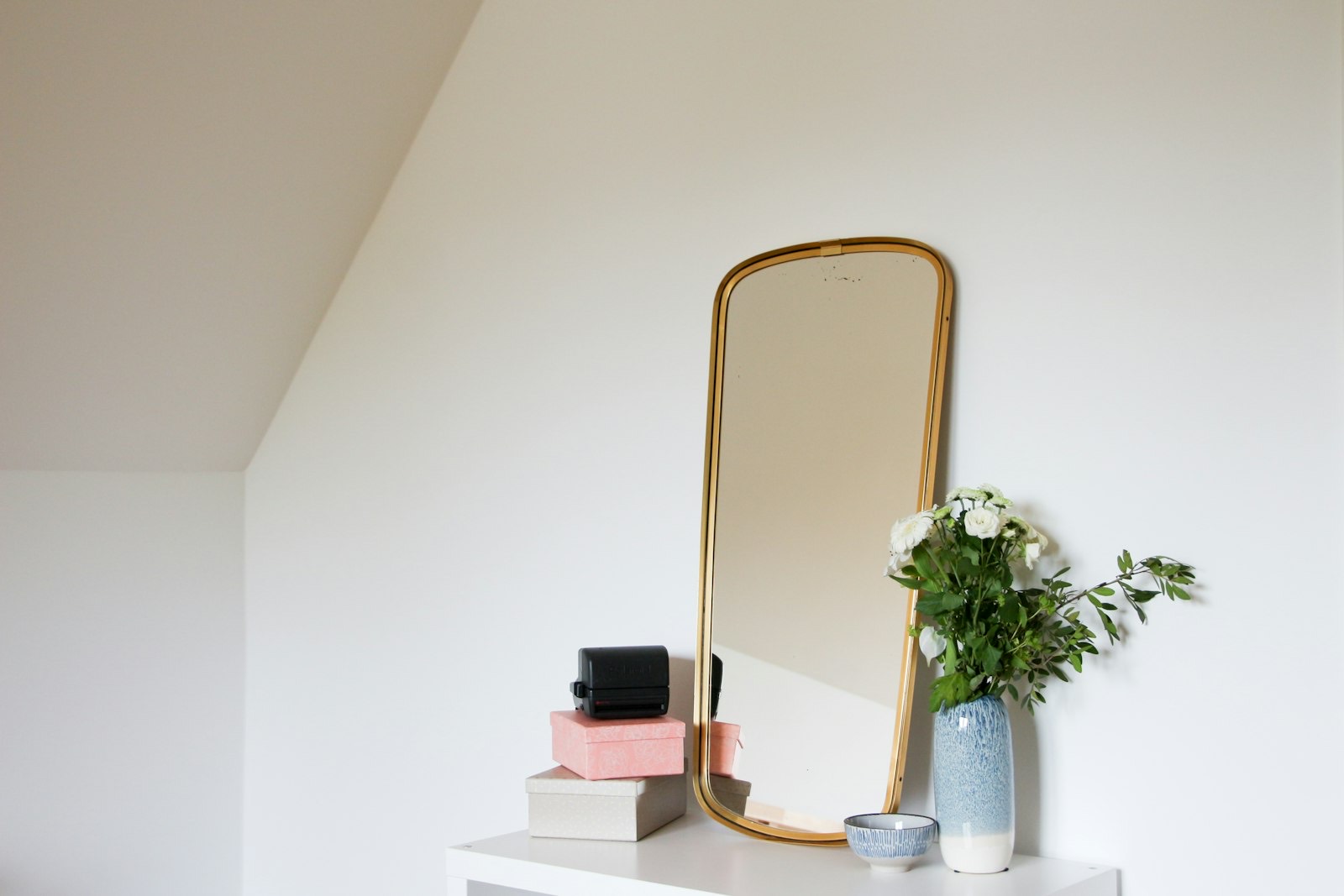
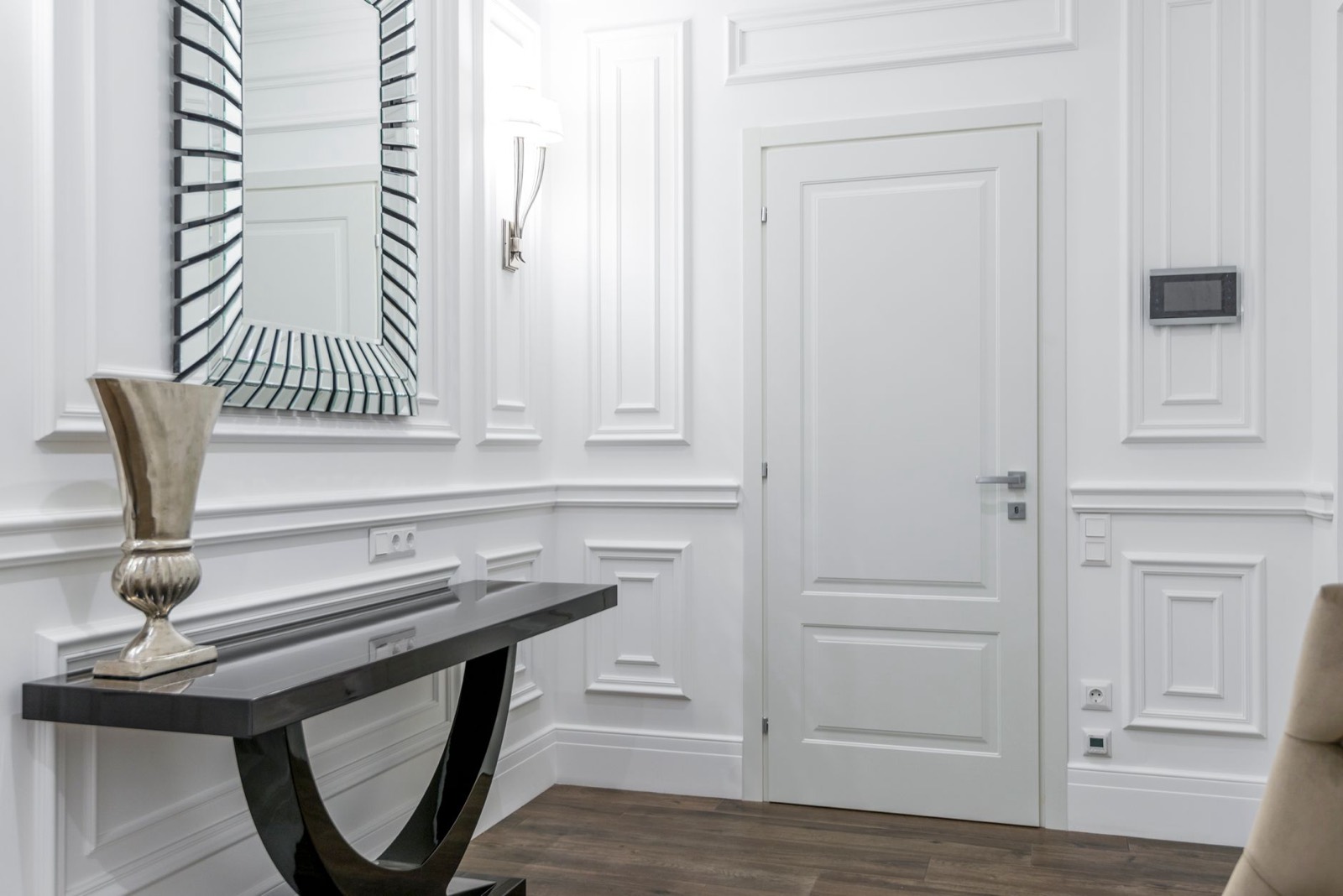
A mirror above an entryway console is the most reliable pairing there is. Size it 25 to 50 percent narrower than the table and hang it four to six inches above the surface — our wall mirror sizing guide covers the proportions.
If a lamp is going on it, remember the combined table-and-lamp height should land around 58 to 64 inches — see our home lighting guide.
Frequently Asked Questions
How tall should a console table behind a sofa be?
Level with the sofa’s back frame or up to two inches below it, and never above. Measure to the frame rather than the cushions, which sit two to four inches proud.
What is a standard console table size?
Around 48 inches long, 14 inches deep and 30 inches high. Entryway versions run slightly taller at 32 to 34 inches; hallway versions run shallower at 10 to 12 inches.
How deep should a console table be?
Ten to fourteen inches behind a sofa, and twelve to fourteen in an entryway. Past about sixteen inches it stops functioning as a slim console and becomes a sideboard.
Can a console table go in a narrow hallway?
Yes, if it leaves enough clear width. Residential hallways are built to a 36-inch minimum, so measure your corridor and subtract the console depth before buying — or use a wall-mounted version.
What is the difference between a console table and a sofa table?
Very little — the terms are used interchangeably. “Sofa table” usually implies one sized specifically to sit behind a sofa, while “console” covers the same piece used anywhere else.
Two Measurements Settle It
Your sofa’s back frame height, or your hallway width. One of those two numbers answers almost every question above.
Our home accents and occasional furniture range in Newport News includes console and sofa tables in a spread of depths, alongside the mirrors and lamps that go with them.
Building a living room? See our guides to measuring for a sofa, coffee and end tables and area rug sizing for the rest of the proportions.
For an entryway, pair a console with a bench and shoe storage, or choose an accent cabinet instead if you need enclosed storage. Browse the full living room range.
Check clearance and specials, spread the cost with no-credit furniture financing, and see our delivery guide. Measuring a tight hallway? Send our Newport News team the width.