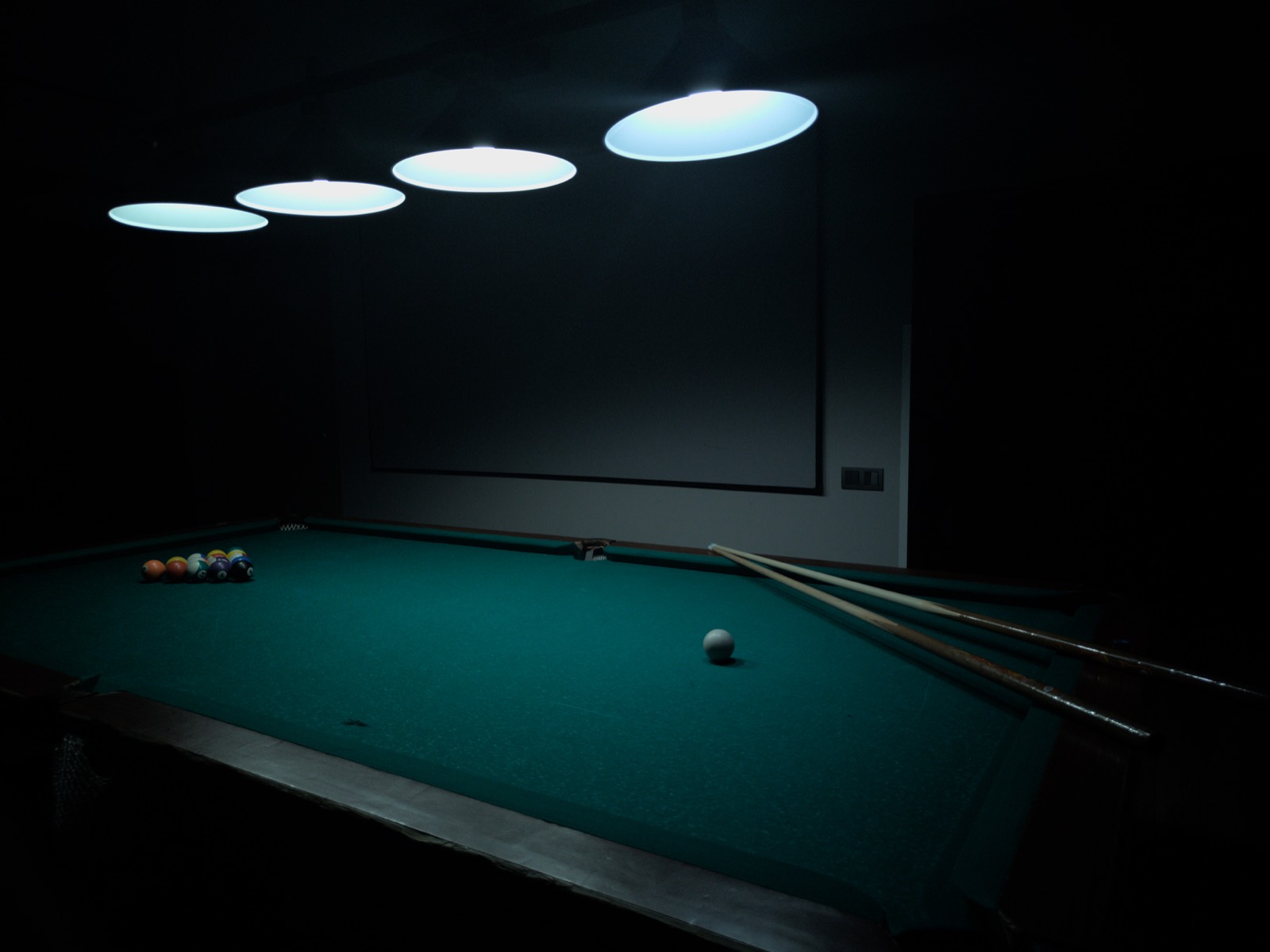
Game tables are the one furniture purchase where the table’s own dimensions are almost irrelevant. What matters is the space around it, and that space is set by the length of a cue.
People measure the room, measure the table, find it fits, and discover afterwards that half the shots cannot be played because a wall is in the way.
Here is how much room each game genuinely needs, and what a slate table asks of your floor.
Pool Tables: Measure the Cue, Not the Table
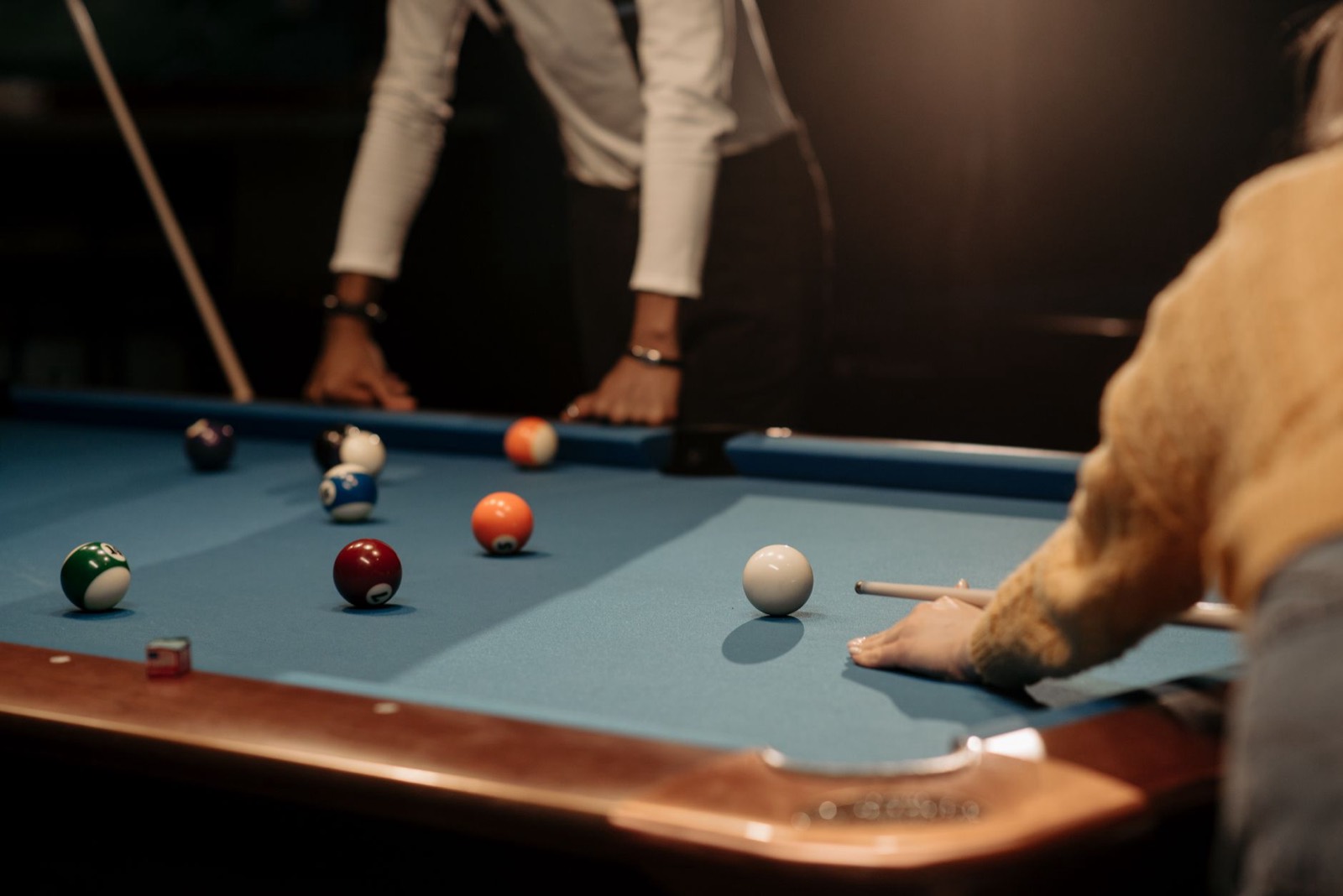
A standard two-piece cue is 58 inches long. You need enough clear space on every side to draw it back fully, which works out at five feet minimum and five and a half to six for unrestricted play.
| Table size | Room needed (58″ cues) | Room needed (48″ cues) |
|---|---|---|
| 7 ft | ~16′2″ × 12′9″ | ~15′2″ × 11′9″ |
| 8 ft | ~17′ × 13′4″ | ~16′ × 12′4″ |
| 8.5 ft | ~17′8″ × 13′8″ | ~16′8″ × 12′8″ |
| 9 ft | ~18′4″ × 14′ | ~17′4″ × 13′ |
Those figures are why most home pool tables are seven feet. A nine-foot tournament table needs a room larger than many living rooms, and it is the room that decides, not the budget.
Short 48-inch cues buy back roughly a foot in each direction. They are a legitimate solution for a tight room, though shots along a rail become awkward.
Other Game Tables
| Game | Table footprint | Clearance needed | Suits |
|---|---|---|---|
| Shuffleboard | 9–22 ft long; 12–14 ft typical at home | ~2 ft at each end, little at the sides | Long narrow rooms — its real advantage |
| Air hockey | ~7 × 4 ft | 3 ft at each end | Family rooms; needs power |
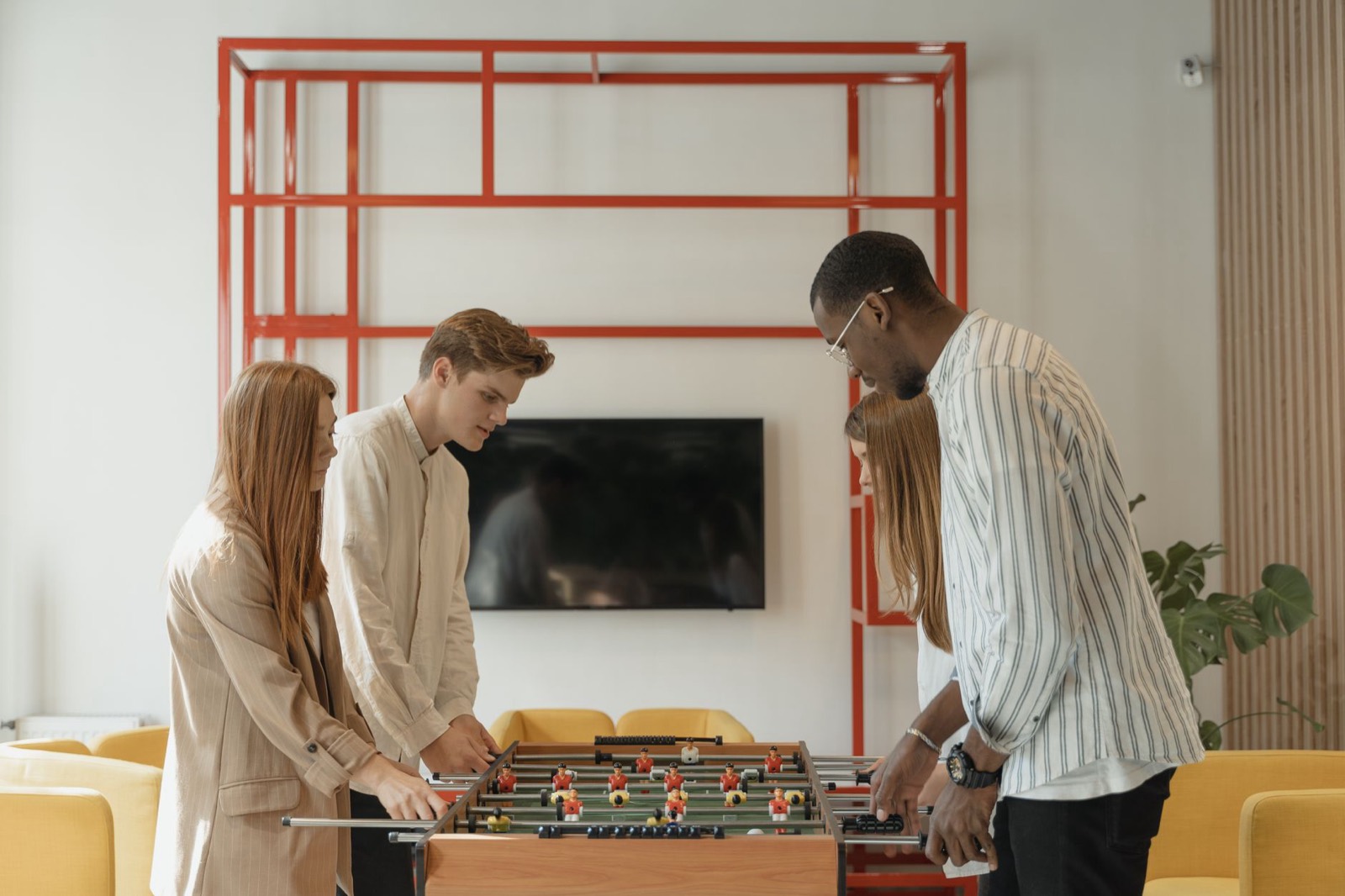
| Foosball | ~5 × 2.5 ft | 3 ft at the sides for rod travel | Smaller rooms; rods extend outward |
| Ping pong | 9 × 5 ft | 5 ft at the ends, 3 ft at the sides | Larger rooms; folding models store away |
| Poker / card table | 48–84″ across | 3 ft for chairs | Doubles as a dining table when topped |
Shuffleboard is the underrated choice for a home. It uses length rather than width, so a long narrow basement or bonus room that cannot take a pool table will often take a fourteen-foot shuffleboard comfortably.
Foosball catches people out for the opposite reason. The table is small but the rods extend well beyond it on both sides, and a rod against a wall stops the game.
Weight and Floors
A slate pool table is among the heaviest objects most people put in a house. A three-piece slate bed alone can weigh several hundred pounds, and a full table commonly runs from around 700 to 1,000 pounds.
- Ordinary residential floors are designed to a code-specified load, and a concentrated point load is different from a spread one
- Upper floors and older joists warrant a professional opinion before installing a slate table
- Basement slabs are the safest location, and the usual answer
- Slate tables arrive disassembled and are levelled on site — this is not a self-install
- Moving one later means dismantling it again
Residential floor loading is set by the model codes published by the International Code Council. If a slate table is going anywhere other than a ground-floor slab, that is a question worth asking a builder rather than a retailer.
Non-slate tables weigh a fraction as much and are genuinely portable. They play differently — the bed can warp over time — but for a family games room rather than serious play, that trade is often the right one.
The Rest of the Room
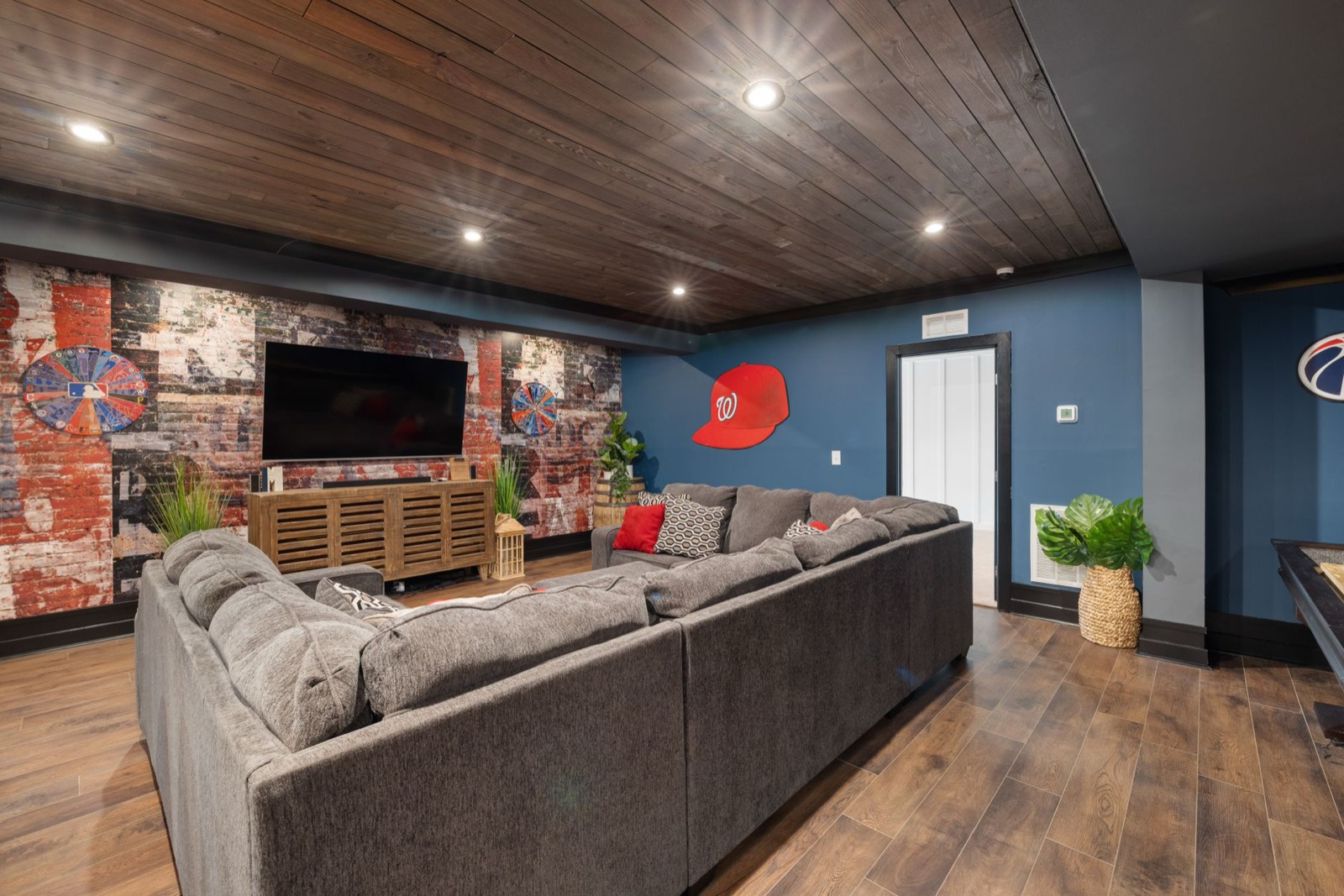
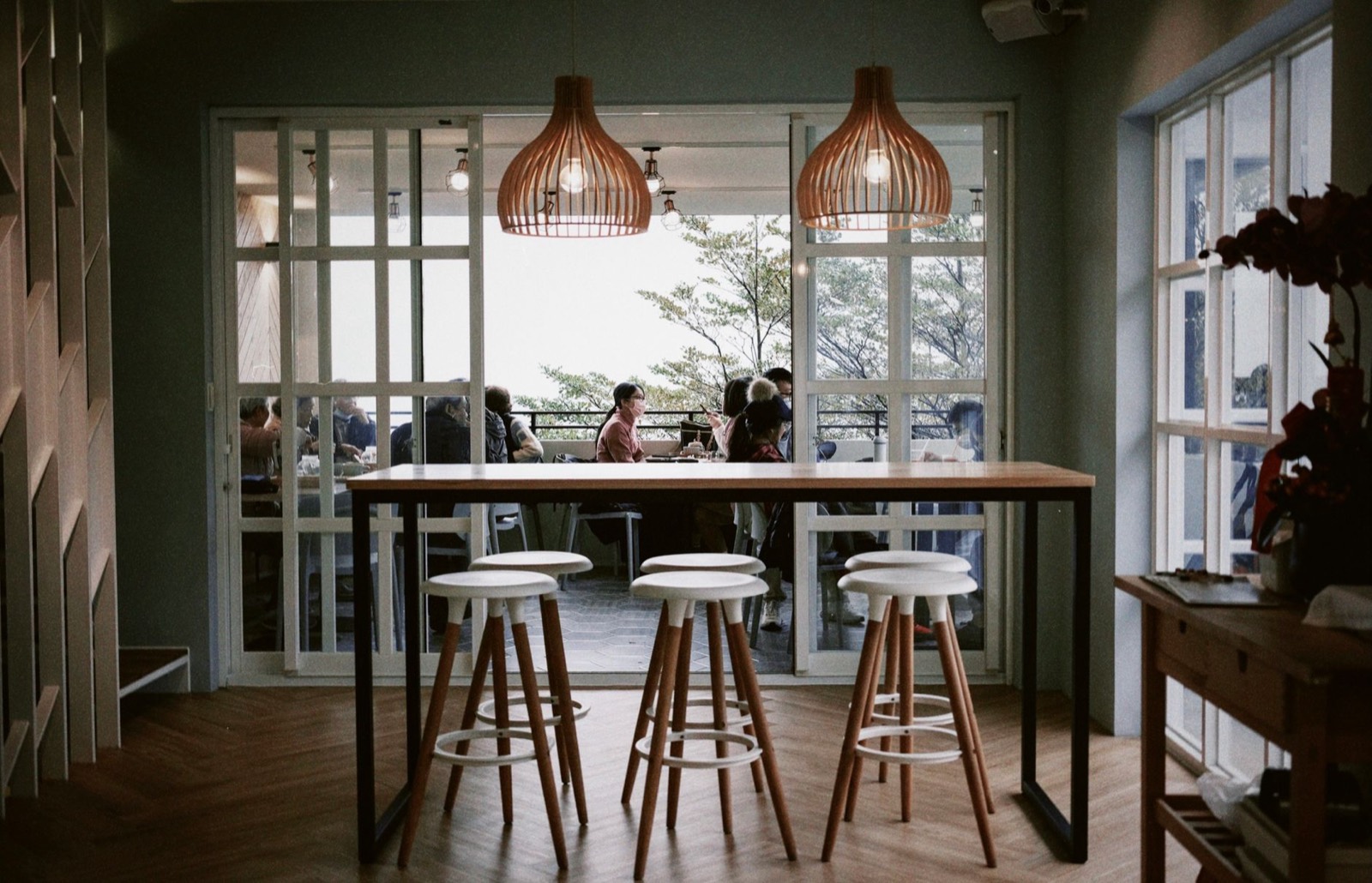
- Lighting matters more than in any other room. A pool table wants a low fixture over the table, not general ceiling light
- Hang the light so the bottom sits roughly 32 to 36 inches above the table bed
- Seating should sit outside the clearance zone — bar stools against a wall work well
- A rug under a games table is usually a mistake; it interferes with stance and chair movement
- Wall-mounted cue racks keep cues out of the play area and straight
Seating is the most common mistake after clearance. Chairs placed within the five-foot zone get moved every time somebody takes a shot, which quickly becomes the reason nobody uses the table.
Our bar stool guide covers seat heights for perching against a wall, and our home bar guide covers the storage that usually goes with a games room.
When the Room Will Not Take a Full Table
Plenty of houses simply do not have a room with fifteen clear feet in both directions. There are three honest answers, and buying a full-size table anyway is not one of them.
| Option | What you gain | What you give up |
|---|---|---|
| Convertible dining table | A dining table with a removable top over a playing surface | Clearing the table every time you want to play |
| Folding or rollaway table | Stores upright against a wall between uses | Lighter build; setup effort each time |
| Switch games entirely | Shuffleboard or foosball fits where pool cannot | It is not the game you wanted |
Convertible dining tables are the most underused of the three. A dining-height table with a conversion top gives you a games table in a room that already exists, and our dining table sizing guide covers the clearance those need around the edge.
The one thing worth avoiding is squeezing a table into a room that cannot hold it. A table you can only play half the shots on gets used for a month and then becomes an expensive surface for laundry.
Frequently Asked Questions
How much room do I need for a pool table?
Five feet of clear space on every side as a minimum, and five and a half to six for comfortable play. A seven-foot table with standard 58-inch cues needs a room of roughly 16 by 13 feet.
Can I use shorter cues in a small room?
Yes. Forty-eight-inch cues reduce the room requirement by about a foot in each direction. Shots along the rails become more awkward, but it is a legitimate way to fit a table into a tighter space.
What game table fits a narrow room?
Shuffleboard. It needs length rather than width — around two feet of clearance at each end and very little at the sides — which suits long narrow basements that cannot take a pool table.
How heavy is a slate pool table?
Commonly 700 to 1,000 pounds assembled. That is a significant concentrated load, so anywhere other than a ground-floor slab is worth checking with a builder first.
How high should a pool table light hang?
With the bottom of the fixture around 32 to 36 inches above the table surface. Higher and it lights the room rather than the table; lower and players hit it.
Tape the Clearance Out
Mark the table footprint on the floor, then mark five feet beyond it on all four sides. If that outer rectangle hits a wall, the table is too big for the room — whatever the table itself measures.
Do it with painter’s tape and leave it down for a day. Walking around the marked zone tells you things a tape measure will not, including whether a doorway opens into it.
Our home entertainment range in Newport News covers the media and seating side of a games room, and our team can talk through what a room will genuinely take.
Planning the whole space? See our guides to home theater seating, home bar and wine storage and lighting a room properly.
Delivery is a serious consideration with anything slate — see our delivery guide on access routes, and our measuring guide for getting large items through doorways.
Check clearance and specials, spread the cost with no-credit furniture financing, or send our Newport News team your room dimensions.