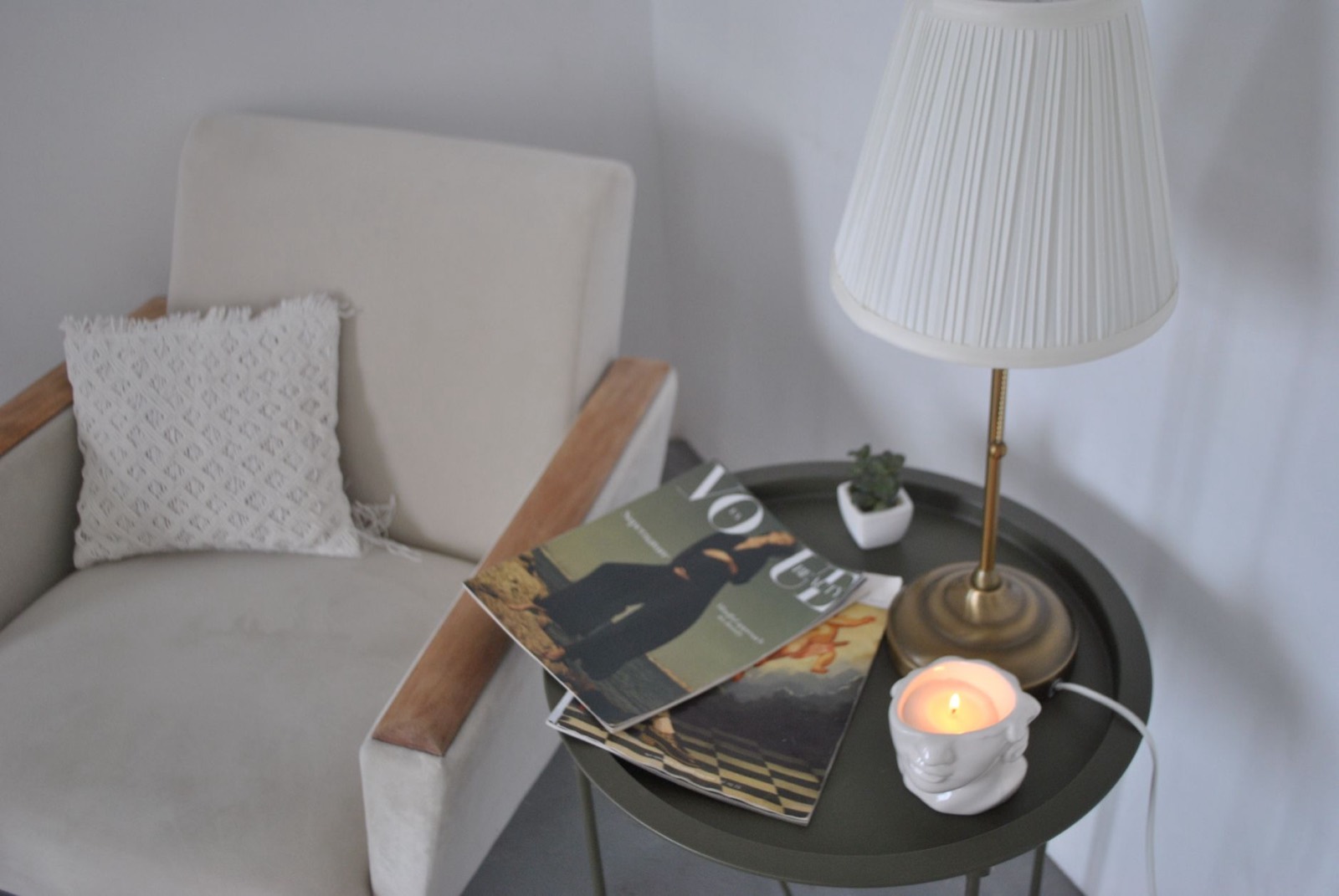
An accent chair is the piece people buy last and regret first. It is usually chosen on looks, in isolation, without reference to the sofa it has to sit beside.
The result is a chair that is too tall, too deep, or — in the case of swivels — jammed into a corner where it cannot actually swivel.
Here is how to size one to the room and to the seating already in it.
The Numbers That Matter
| Dimension | Typical range | Aim for | Why |
|---|---|---|---|
| Seat height | 17–19″ | Within 4″ of your sofa seat | Mismatched heights make conversation awkward |
| Seat depth | 20–22″ | 21″ for general use | Deeper suits lounging; shallower suits upright sitting |
| Overall width | 25–35″ | 28–32″ in a small room | Width is what dominates a small space |
| Overall height | 30–40″ | At or below the sofa back | A taller chair pulls the eye away from the sofa |
The seat-height rule is the one worth writing down. Keep the chair within four inches of the sofa’s seat height and the group reads as one arrangement; go beyond that and people are literally looking up or down at each other.
Our sofa measuring guide explains how to find your sofa’s seat height if you do not already know it.
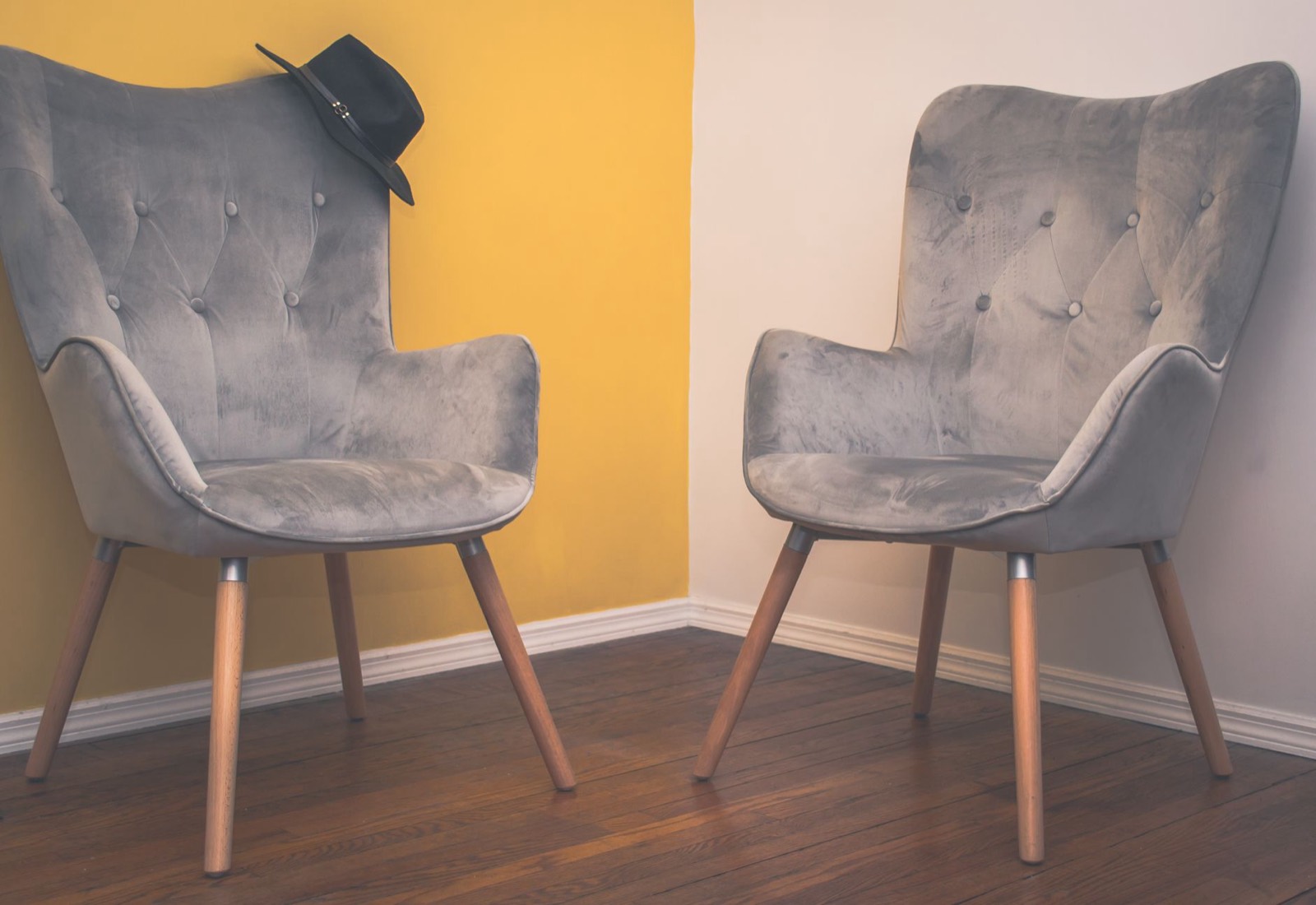
Chair Styles and What They Do
| Style | Footprint | Best for | Watch for |
|---|---|---|---|
| Club / armchair | Large | Genuine comfort; a proper reading seat | Dominates a small room |
| Barrel chair | Medium | Curved rooms; softening square layouts | Rounded backs waste some usable width |
| Slipper chair | Small — no arms | Tight corners; extra seating that disappears | Less comfortable for long sitting |
| Wingback | Large | Formal rooms; draught-prone corners | Tall back blocks sightlines |
| Swivel accent chair | Medium plus rotation | Open plans; rooms with two focal points | Needs clearance to turn, not just to sit |
| Chair and a half | Very large | Curling up; sharing with a child | Check it fits through the door |
Slipper chairs are the most underused option in small rooms. Removing the arms takes six to ten inches off the width without materially reducing the seat.
If you want the chair to recline or rock, those are different categories with their own clearance requirements — see our recliner buying guide and our comparison of rockers and gliders.
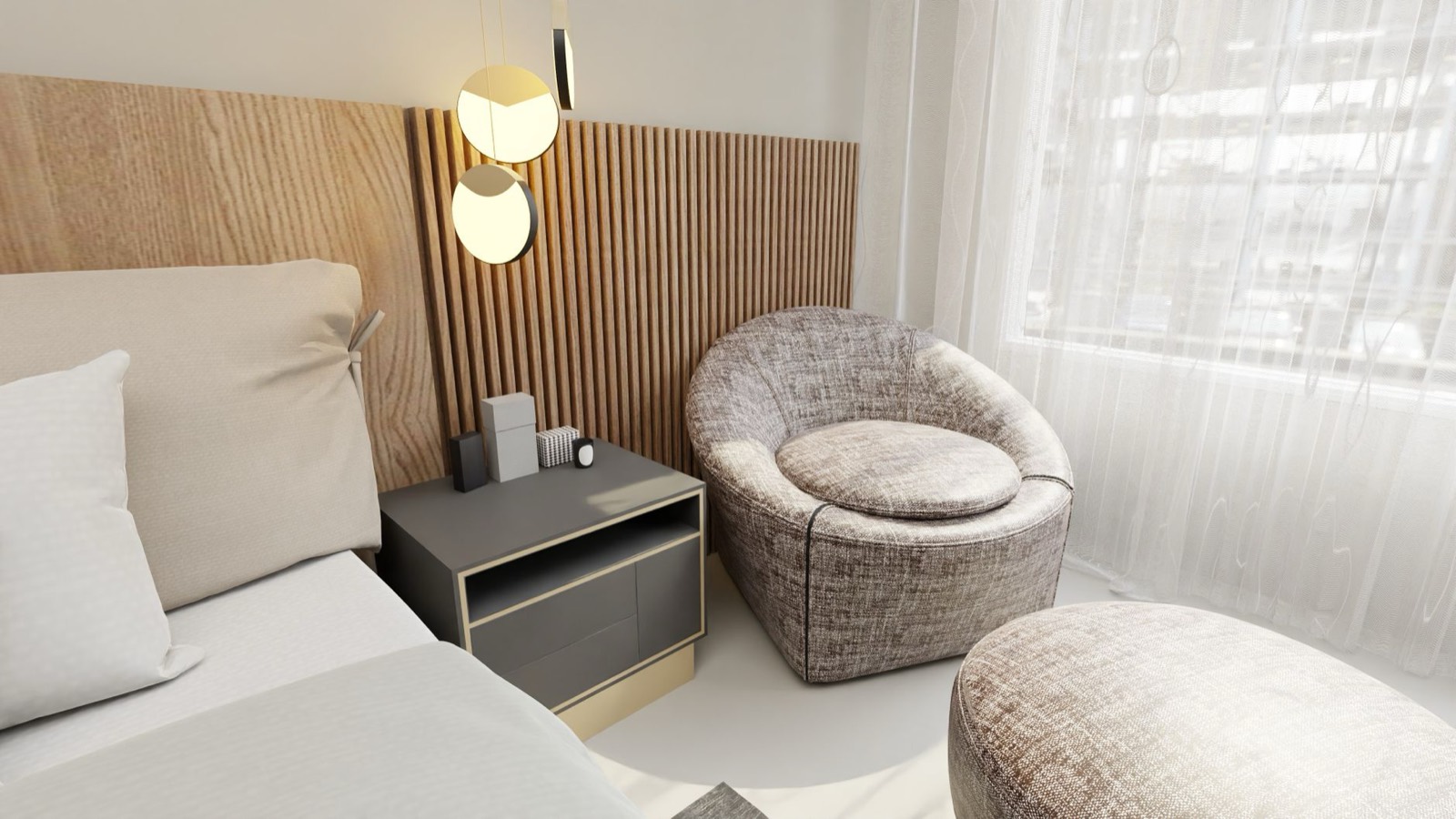
Swivel Chairs Need Room to Turn
This is where swivel chairs go wrong. People measure the footprint and forget the arc.
- A swivel needs clearance equal to its widest dimension in every direction — the corners sweep as it turns
- Allow 4 to 6 inches beyond that so knees and armrests do not clip furniture
- Never push a swivel into a corner; two walls remove most of its usefulness
- Check whether it returns to centre automatically — some do, some stay where you leave them
- On hard floors, confirm the base has felt pads; swivel bases mark timber quickly
A swivel earns its cost in an open-plan room where the seating has to face a television sometimes and the dining area at others. In a small closed room facing one sofa, a fixed chair is usually the better buy.
Placement and Clearances
| Gap | Distance | Notes |
|---|---|---|
| Chair to coffee table | 14–18″ | Same as the sofa; keeps everything reachable |
| Chair to sofa (conversation) | Under 8 ft apart | Beyond this people raise their voices |
| Main walkway past the chair | 30–36″ | Below 30″ people turn sideways |
| Swivel rotation clearance | Full width + 4–6″ | In every direction it can turn |
| Chair to wall | 3–6″ | A small gap looks deliberate; flush looks pushed |
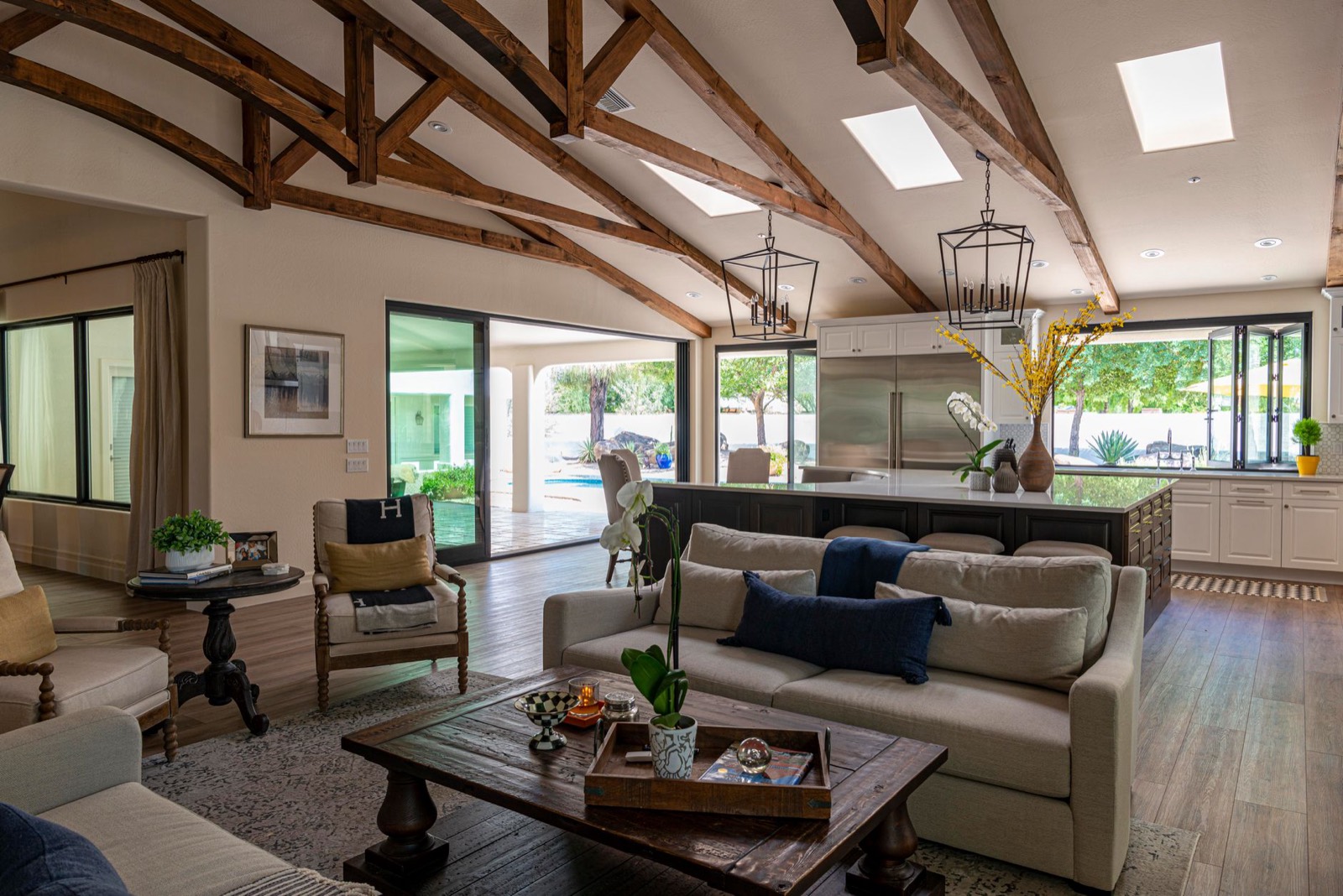
Two chairs angled toward a sofa is the arrangement that works most reliably in a rectangular room. Facing them straight at each other is more formal and considerably less comfortable for watching anything.
The American Society of Interior Designers is the professional body whose members work to these kinds of spatial conventions, and worth knowing about if you ever want a room planned properly rather than assembled piece by piece.
Fabric: Where the Accent Actually Lives
An accent chair is the one place in a living room where a bold fabric is low-risk. It is a single piece, and it is far cheaper to change than a sofa.
- Performance fabric — the sensible default with children or pets; wipes clean
- Boucle and textured weaves — currently popular, but check the loop is tight if you have cats
- Velvet — dramatic and surprisingly durable, though it shows pressure marks
- Leather — wears in rather than out; the longest-lived option
- Linen blends — beautiful and the least forgiving of spills
If the sofa is neutral, the chair is where colour belongs. If the sofa is already a statement, keep the chair quiet — two focal points in one seating group cancel each other out.
Judging Build Quality Quickly
Accent chairs span an enormous price range for pieces that look broadly similar. The differences are mostly hidden, but a few are testable in the showroom.
- Lift one front corner a few inches. A well-built frame lifts as one unit; a weak one twists and the opposite leg stays down.
- Press the seat firmly. You should feel springs or webbing resist, not a flat board under thin foam.
- Rock it gently side to side. Any creak means the joints are already loose.
- Check the legs are part of the frame or bolted in, rather than screwed into a corner block.
- Look underneath — a finished dust cover suggests the rest was built with the same care.
- Sit for two full minutes. Most uncomfortable chairs feel fine for twenty seconds.
The corner-lift test is the fastest of these. Frame rigidity is what determines whether a chair is still sound in ten years, and it takes three seconds to check.

Frequently Asked Questions
What size accent chair fits a small living room?
Around 28 to 32 inches wide with a seat depth of 20 to 22 inches. An armless slipper chair is narrower still and works where a club chair would overwhelm the space.
Should an accent chair match the sofa?
No — matching sets look dated. Keep the seat heights within four inches of each other and share one element such as leg finish or a colour tone, then let the fabric differ.
How much space does a swivel chair need?
Its widest dimension in every direction it can turn, plus four to six inches. The corners sweep outward as it rotates, so the footprint when stationary is misleading.
What is a good seat height for an accent chair?
Seventeen to nineteen inches suits most adults, and it should sit within four inches of your sofa’s seat height so the group works as one arrangement.
How far apart should chairs and a sofa be?
Close enough for normal conversation — under about eight feet between seats. Beyond that people start raising their voices, which is the clearest sign a seating group is too spread out.
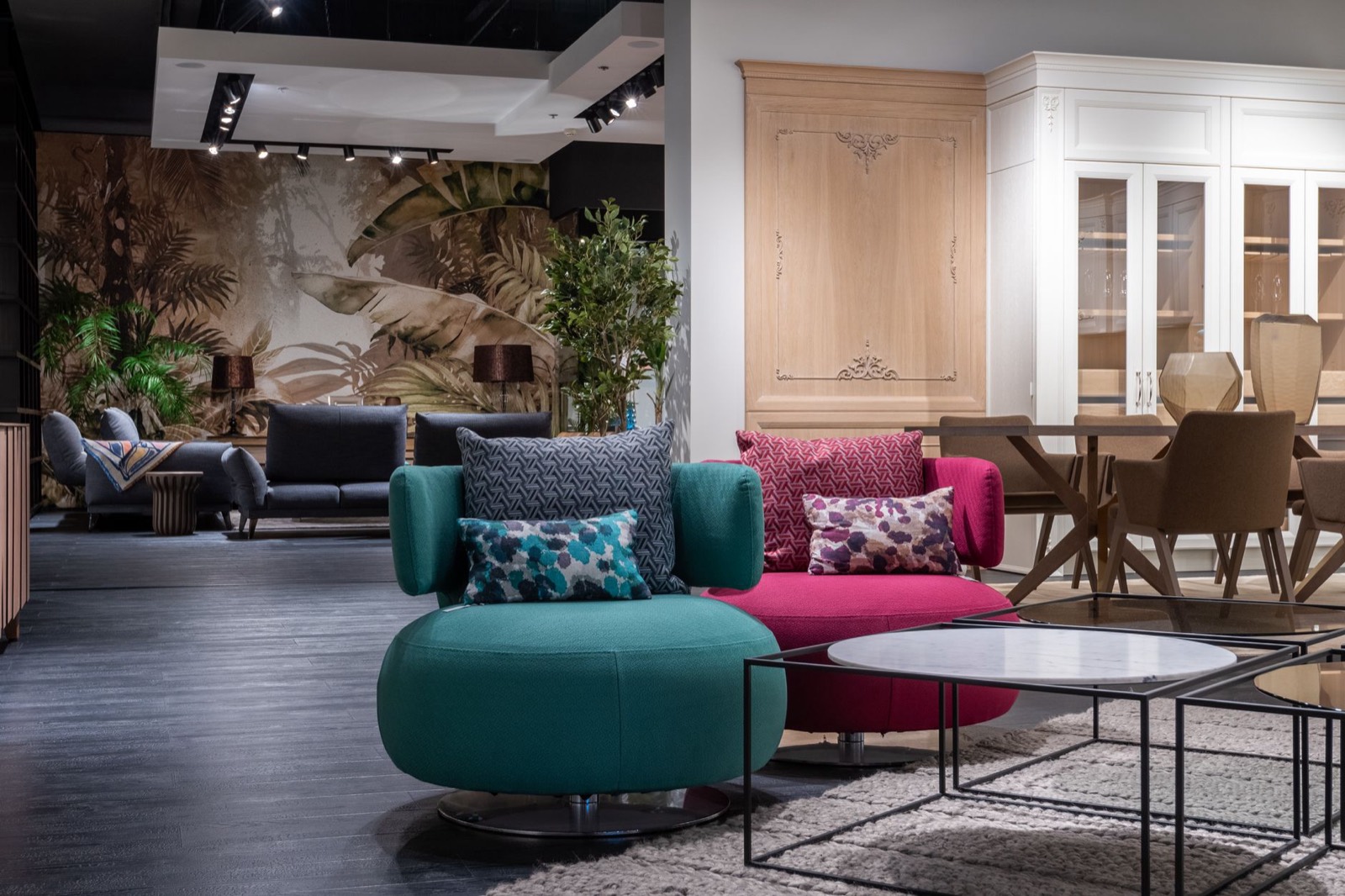
Sit in It Beside a Sofa
Seat height mismatch is invisible in a photograph and obvious the moment two people sit down. A showroom lets you test the pairing rather than guess it.
Our living room furniture range in Newport News carries accent chairs, swivel chairs and slipper chairs alongside the sofas they need to sit with.
Planning the whole arrangement? Our guides to measuring a room for seating, coffee table proportions and viewing distances cover the clearances around the chair.
A reading corner needs light as well as a seat — see our home lighting guide for lamp heights, and side tables and accents to finish it.
Check clearance and specials, spread the cost with no-credit furniture financing, and see our delivery guide. Unsure what will fit? Send our Newport News team your room and sofa dimensions.