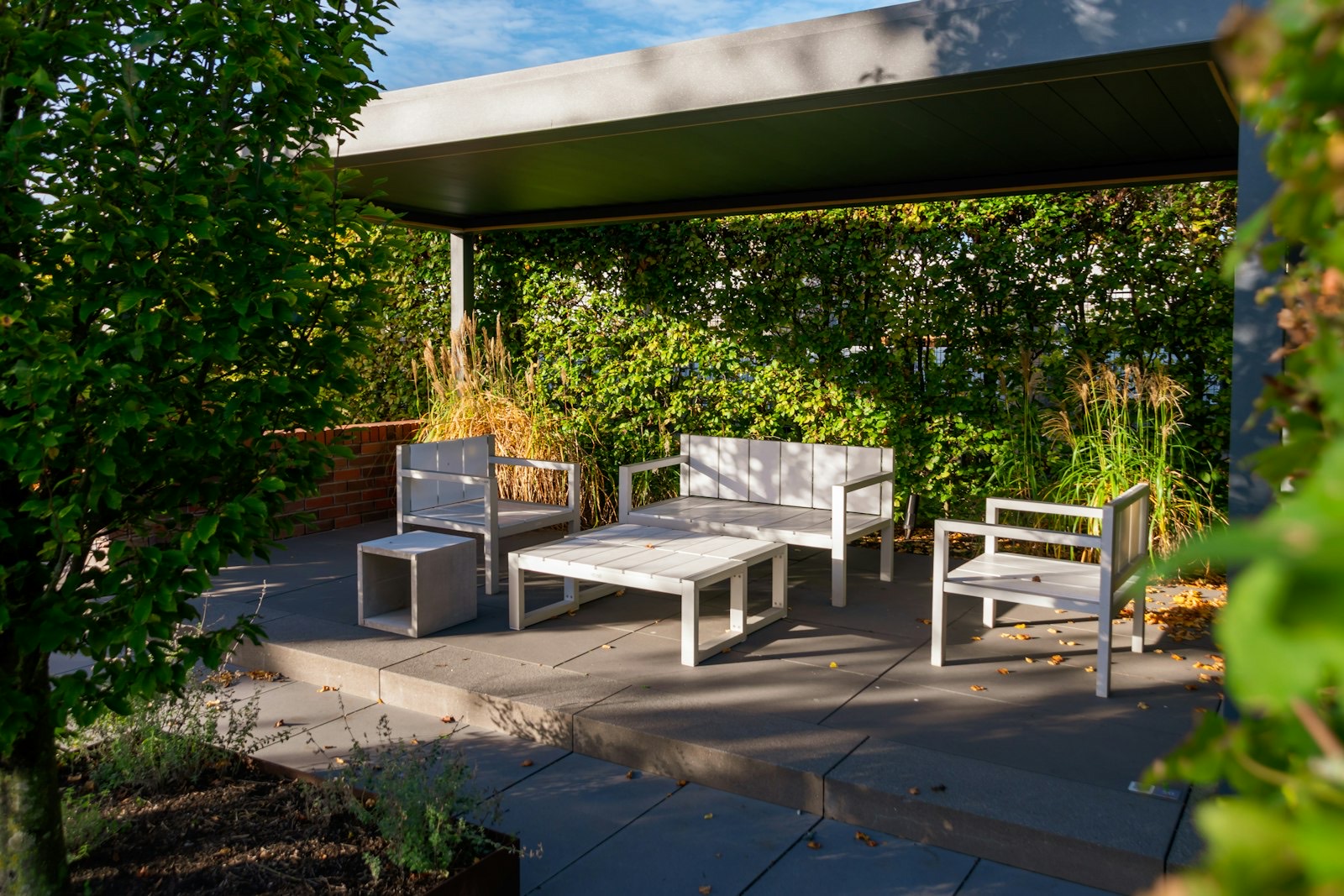
Outdoor furniture is one of the few purchases where the local climate matters more than the design. A set that lasts twenty years in Arizona can fail in five on the Virginia coast.
Salt air, summer humidity and strong UV are the three forces at work here, and materials handle them very differently.
Here is what actually survives on the Peninsula, and what to avoid buying twice.
Materials Compared
| Material | Salt-air resistance | Weight | Maintenance | Realistic lifespan |
|---|---|---|---|---|
| Powder-coated aluminium | Excellent | Light | Minimal — wipe down seasonally | 15–25 years |
| Teak | Excellent | Heavy | Annual clean; optional sealing | 25–50+ years |
| Resin wicker (HDPE) on aluminium | Excellent | Light | Rinse; check the weave | 10–20 years |
| HDPE recycled lumber | Excellent | Heavy | Almost none | 20+ years |
| Wrought iron / steel | Poor near the coast | Very heavy | Rust treatment; repainting | 5–10 years |
| Natural wicker or rattan | Poor outdoors | Light | Must be stored indoors | Indoor use only |
Two clear winners for anywhere near the water: powder-coated aluminium and teak. Aluminium forms its own protective oxide layer so it cannot rust through, and teak’s natural oil content resists moisture, rot and insects without treatment.
Steel is the one to think twice about. It is heavy enough to stay put in wind, which is genuinely useful here, but salt air will find any chip in the coating and work underneath it.
Reading a Wicker Set Properly
“All-weather wicker” describes a very wide quality range, and the differences are visible if you know what to look at.
- Look for HDPE resin rather than unspecified “PVC” or “synthetic” wicker
- Confirm the frame is aluminium, not steel — the frame outlives the weave
- Check the weave is UV-stabilised; cheap resin turns brittle and cracks within a few seasons
- Squeeze a strand: it should flex, not feel hard and glassy
- Check strands are woven around the frame rather than stapled to it
A resin weave over an aluminium frame is the practical sweet spot for coastal patios — the look of wicker with nothing in it that can rust.
Sizing a Patio Set
Outdoor spaces get over-furnished more often than indoor ones, usually because a patio looks larger when it is empty.
| Patio size | Realistic set | Leave room for |
|---|---|---|
| Under 10 × 10 ft | Bistro table and two chairs | A clear path to the door |
| 10 × 12 ft | Four-seat dining set, or a loveseat and two chairs | 36″ behind pulled-out chairs |
| 12 × 16 ft | Six-seat dining set, or a small conversation set | Umbrella base and its swing |
| 16 × 20 ft and up | Separate dining and lounge zones | A walking route between the two |
The clearances are the same as indoors: 36 inches behind dining chairs, 14 to 18 inches between seating and a low table. An umbrella base also needs its own floor space, which is easy to forget until the set arrives.
Cushions and Fabrics
Frames rarely fail first. Cushions do, and the fabric type is what decides that.
| Fabric | Fade resistance | Notes |
|---|---|---|
| Solution-dyed acrylic | Excellent | Colour runs through the fibre; the durable choice |
| Solution-dyed olefin | Very good | Good value alternative |
| Printed polyester | Poor | Colour sits on the surface and fades quickly |
The distinction is simple. Solution-dyed means the colour is part of the fibre; printed means it is applied to the outside. On a south-facing patio the difference shows within a single season.
Also check the foam. Open-cell quick-dry foam drains after rain; ordinary upholstery foam holds water and grows mildew in Virginia humidity.
Sun Exposure Cuts Both Ways
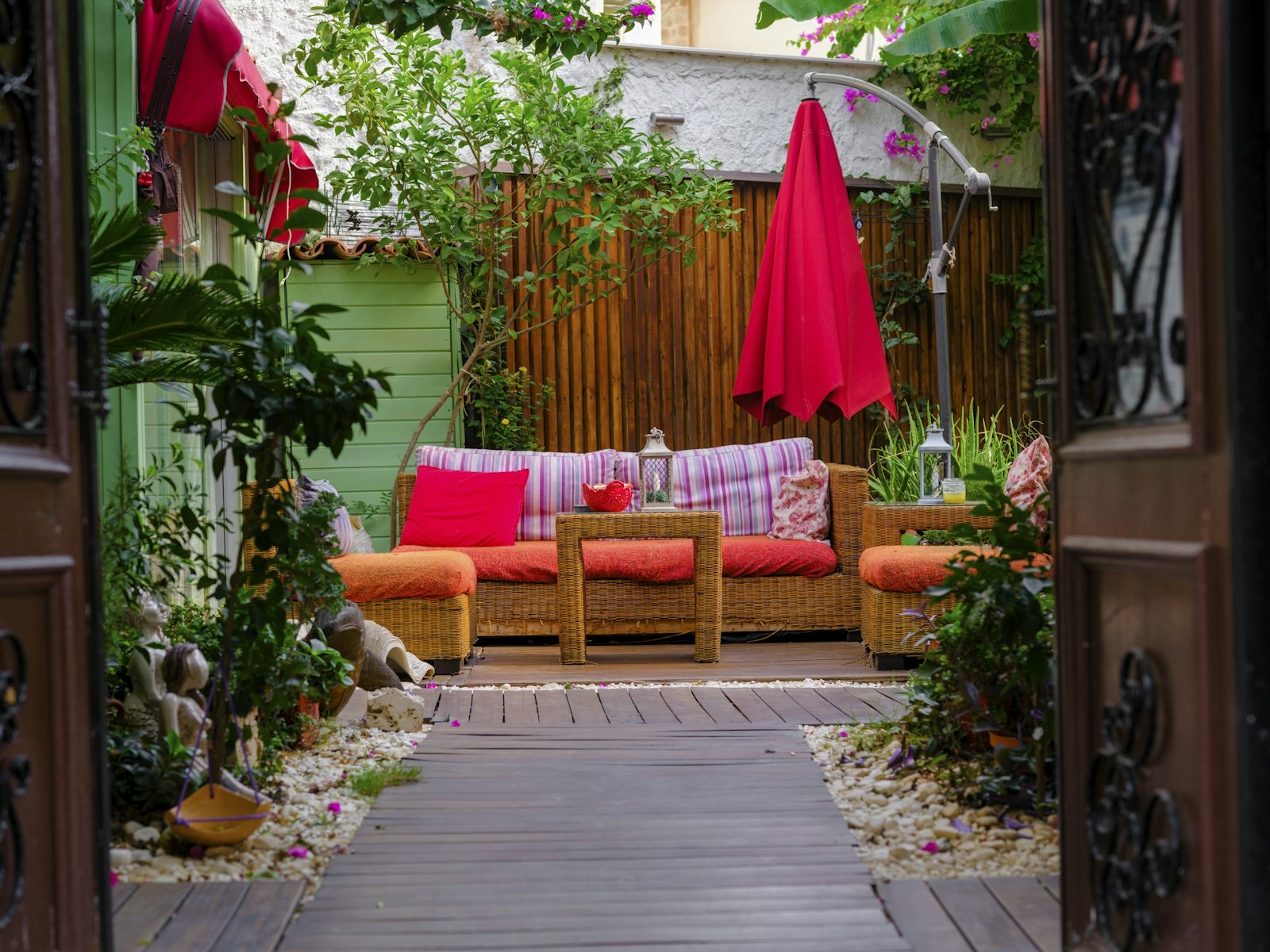
UV is what degrades resin, bleaches fabric and greys untreated timber. It is also the reason shade should be part of the furniture budget rather than an afterthought.
- An umbrella or pergola extends the life of everything underneath it
- Position seating so the sun is behind you in the afternoon, not in your eyes
- Cover or store cushions when not in use — they degrade faster than frames
- Rotate cushions periodically so they fade evenly rather than in patches
Shade matters for the people as much as the furniture. The EPA’s sun safety guidance is a reasonable reminder that a patio used through a Virginia summer benefits from real shade rather than just a parasol angled once at noon.
Living With It Through the Seasons
| When | What to do |
|---|---|
| Spring | Wash frames with mild soap; check and tighten all fixings |
| Summer | Rinse salt residue off periodically if you are near the water |
| Storm warnings | Stack or store lightweight furniture; umbrellas down and stowed |
| Autumn | Clean and dry cushions completely before storing |
| Winter | Cover, or store frames under shelter; keep covers ventilated |
Two points specific to this coast. Rinsing salt off is genuinely worth doing — it is the cheapest maintenance there is. And a sealed, unventilated cover traps humidity and causes exactly the mildew it was bought to prevent, so choose covers with vents.
Lightweight aluminium is easy to move ahead of a storm, which matters during hurricane season. Our delivery guide covers the seasonal weather considerations that affect deliveries here too.
Frequently Asked Questions
What outdoor furniture is best for coastal areas?
Powder-coated aluminium and teak. Aluminium cannot rust through because of its natural oxide layer, and teak’s oil content resists moisture and rot. Resin wicker over an aluminium frame is a strong third option.
Does teak furniture need to be sealed?
Not structurally. Left untreated it weathers to a silver-grey patina and remains perfectly sound. Sealing is purely about keeping the original honey colour, and it needs redoing periodically.
How long should outdoor furniture last?
Well-made aluminium or resin sets last 15 to 25 years with basic care, and teak considerably longer. Cushions are the shorter-lived component and are usually replaceable separately.
What is the most fade-resistant outdoor fabric?
Solution-dyed acrylic, where the colour is built into the fibre rather than printed on the surface. Printed polyester is the cheapest option and fades noticeably within a season or two.
Can I leave patio furniture out all winter?
Aluminium, teak and HDPE frames cope well. Bring cushions indoors regardless, and if you cover the frames use a ventilated cover — a sealed one traps moisture and encourages mildew.

Buy for the Climate You Have
On the Peninsula, the question is not which set looks best in a catalogue. It is which one will still look good after three summers of salt, sun and humidity.
Our outdoor and patio furniture range in Newport News is selected with that in mind, and we serve Hampton, Williamsburg, Norfolk, Portsmouth and Virginia Beach — all of which face the same coastal conditions.
Furnishing an outdoor room like an indoor one? The same proportion rules apply — our guides to measuring for seating and coffee table sizing translate directly to a patio layout.
For dining outdoors, our dining table size guide covers seating capacity and clearances, and lighting and accents extend a patio into the evening.
Check clearance and specials — outdoor sets are often reduced late in the season — spread the cost with no-credit furniture financing, or ask our Newport News team what suits your exposure.