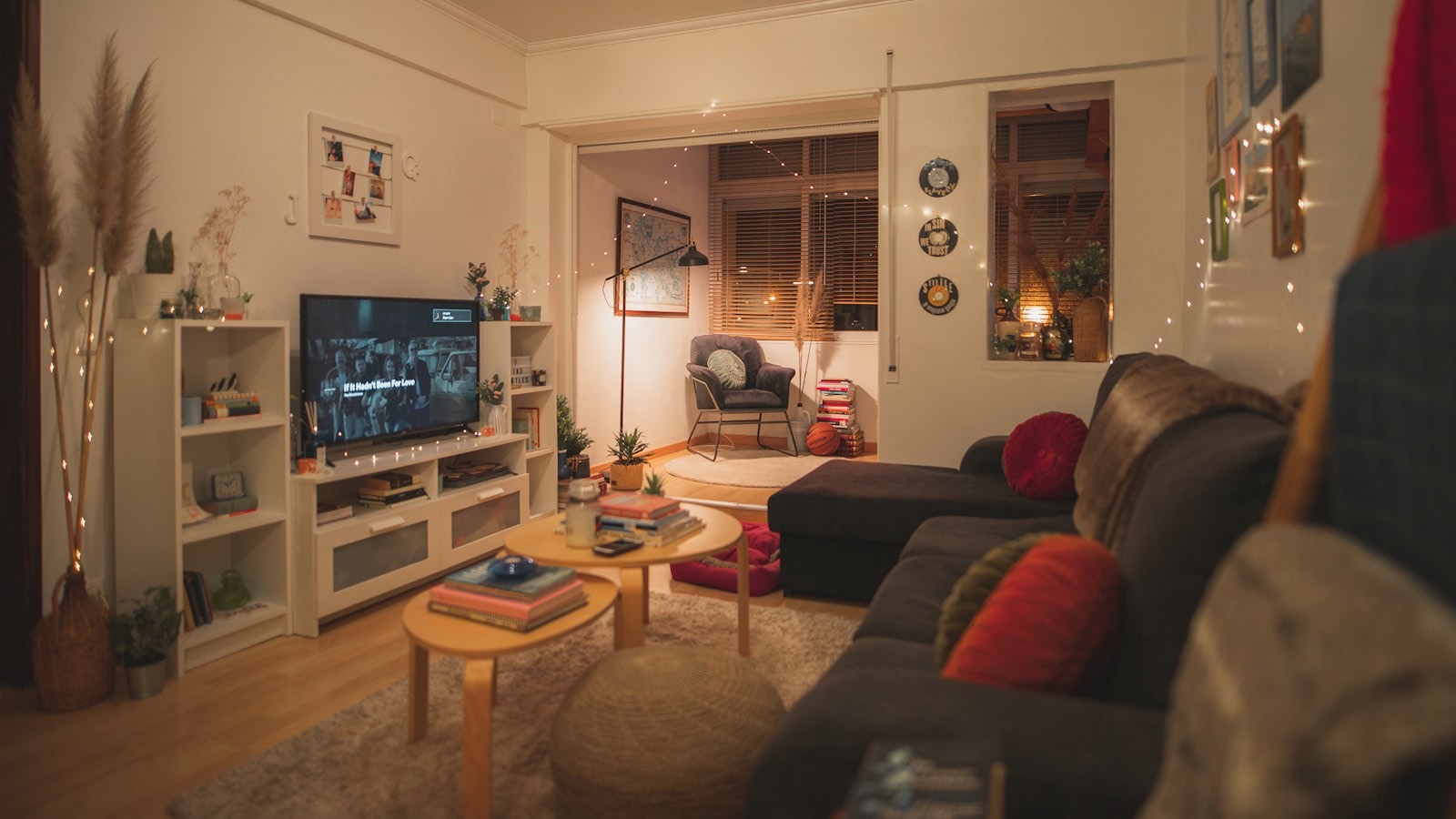
Most rooms that feel unwelcoming have a single problem: one bright ceiling light doing all the work.
Overhead light alone flattens a room, casts shadows straight down, and gives you exactly one setting. The fix costs less than most furniture and changes how a space feels more than repainting it.
Here is how lighting layers work, what height lamps should be, and which bulbs to put in them.
The Three Layers
| Layer | Job | Typical sources | Without it |
|---|---|---|---|
| Ambient | General light to move around safely | Ceiling fixture, recessed lights, uplighting floor lamp | The room is unusable after dark |
| Task | Directed light for reading, work, cooking | Table lamp, adjustable floor lamp, under-cabinet strip | Eye strain; you sit in your own shadow |
| Accent | Highlights art, plants, texture | Picture light, uplighter, shelf lamp, LED strip | The room reads as flat and unfinished |
A well-lit living room typically has five to seven separate light sources across those three layers. That sounds excessive until you realise a single overhead fixture is doing the job of all seven badly.
The most valuable single upgrade is a dimmer on the main ceiling light. It turns one fixed setting into a range, and it costs very little.
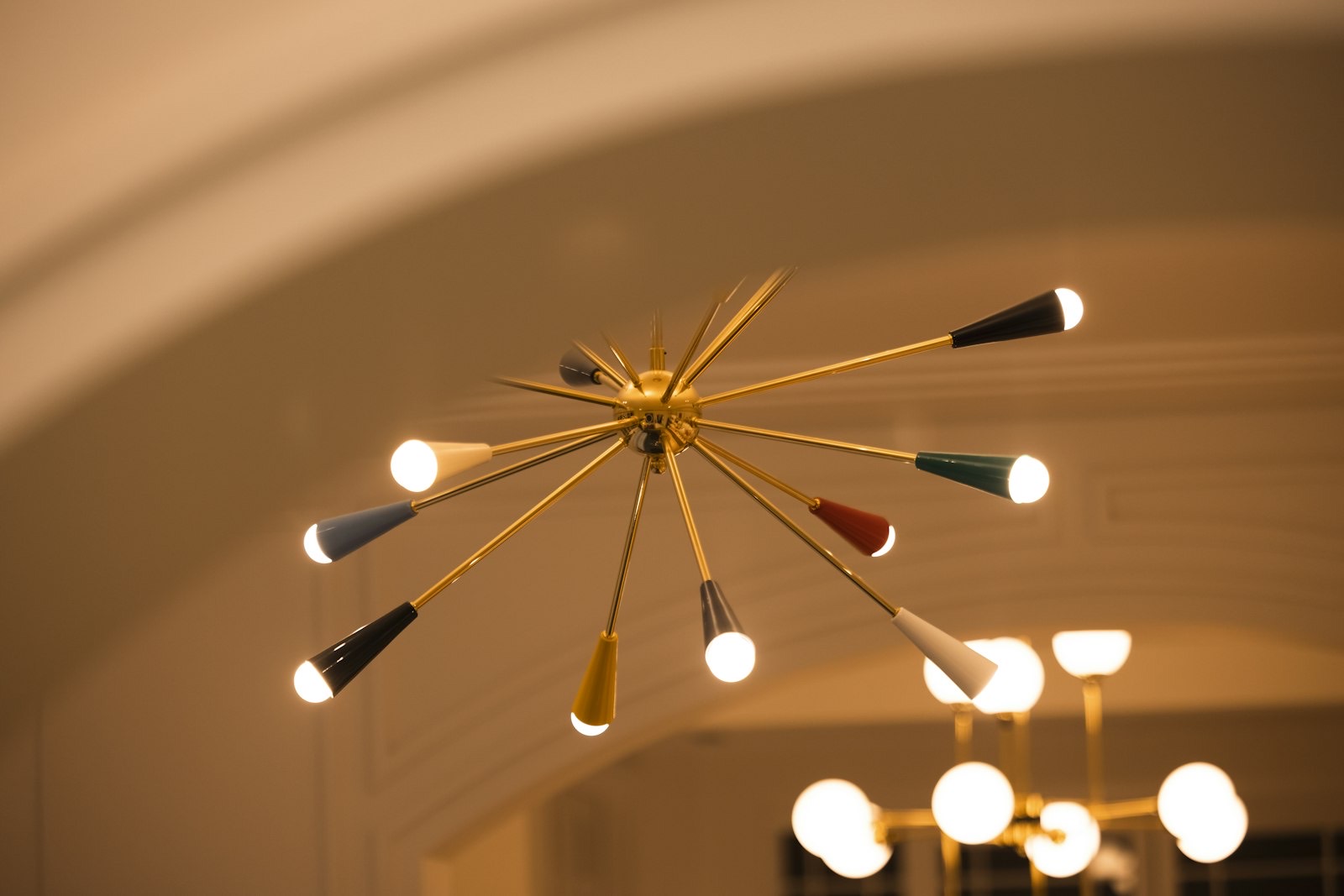
How Much Light Does a Room Need?
Brightness is measured in lumens, not watts. Watts describe energy used, which stopped being a useful proxy once LEDs arrived.
| Room | Total lumens | Notes |
|---|---|---|
| Living room | 1,500–3,000 | Spread across several sources, not one |
| Bedroom | 1,000–2,000 | Lower; bias toward bedside task light |
| Dining room | 3,000–4,000 | Concentrated over the table; always dimmable |
| Home office | 3,000–6,000 | Highest requirement; task light is essential |
| Hallway | 500–1,000 | Enough to move safely |
Split the total across multiple fixtures. Three 800-lumen lamps produce a far better room than one 2,400-lumen ceiling light, even though the arithmetic is identical.
Colour Temperature: Get This Right
| Temperature | Appearance | Use in |
|---|---|---|
| 2200–2400K | Candlelight, very warm | Accent lamps; evening mood lighting |
| 2700K | Warm white — the domestic standard | Living rooms, bedrooms, dining rooms |
| 3000K | Soft white, slightly crisper | Kitchens, bathrooms, hallways |
| 4000K | Neutral, office-like | Garages, utility, workshops |
| 5000K+ | Daylight, blue-toned | Task-specific only — makeup, detailed work |
For living spaces, stay at 2700K. Mixing temperatures within one room is the most common lighting error there is — a warm lamp beside a cool one makes both look wrong.
The exception is a vanity, where accurate colour rendering matters more than atmosphere. Our guide to choosing a makeup vanity explains why 5000K belongs there and nowhere else in a bedroom.
For deeper technical guidance on lighting design, the Illuminating Engineering Society is the body that publishes the standards professional lighting designers work to.
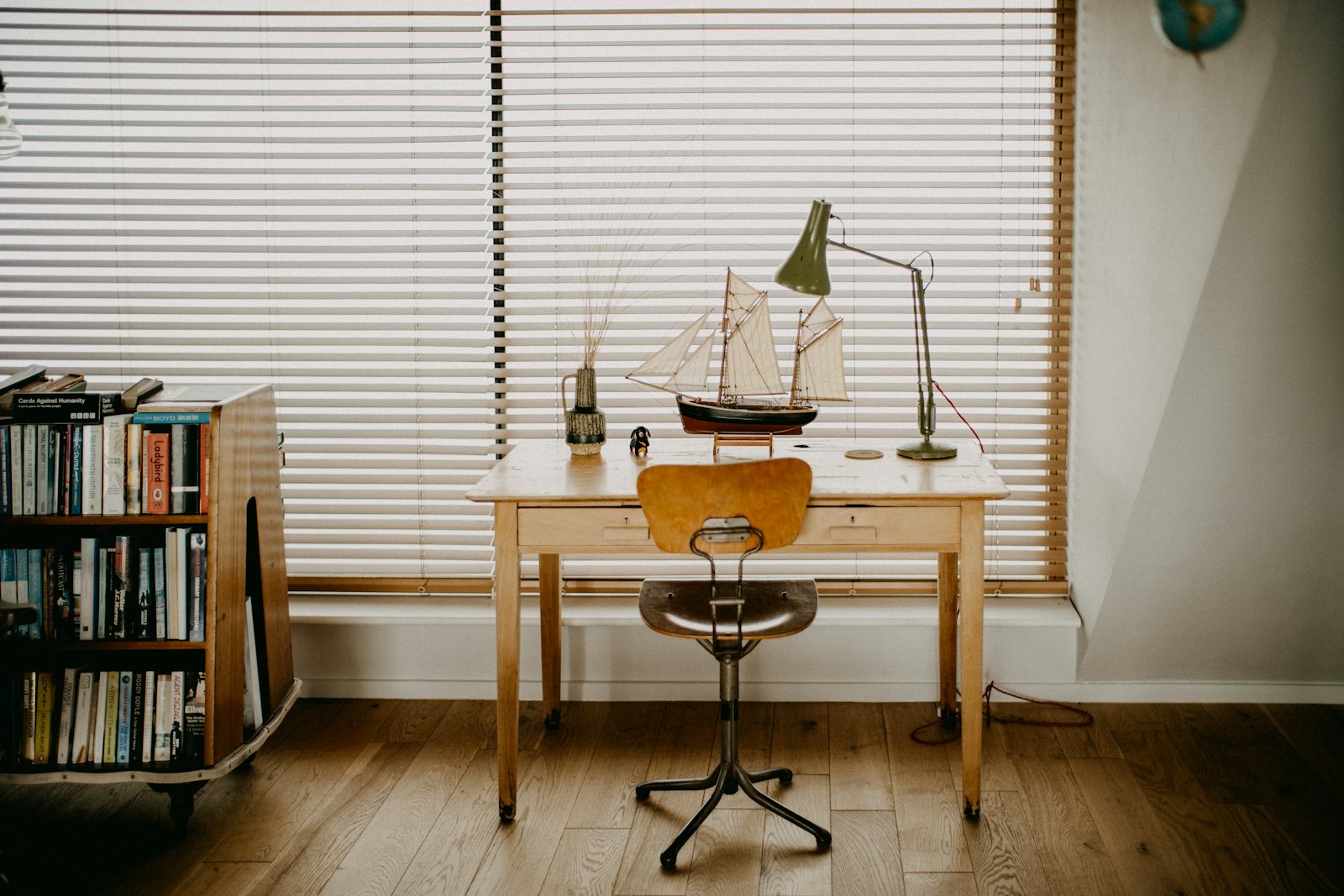
Lamp Heights That Work
The governing principle: the bottom of the shade should sit at roughly eye level when you are seated. Higher and the bulb glares at you; lower and the light pools uselessly on the table.
| Lamp position | Target height | Measured how |
|---|---|---|
| Table lamp on an end table | 58–64″ total | Floor to top of shade, table included |
| Bedside lamp | 24–28″ lamp | On a standard 24–25″ nightstand |
| Reading floor lamp | 58–64″ | Shade bottom just above shoulder when seated |
| Arc floor lamp | 65–80″ | Head positioned over the seat, not beside it |
| Dining pendant | 30–36″ above the table | Bottom of shade to tabletop |
Shade proportions matter too: the shade should be roughly twice the width of the lamp base, and never wider than the table it stands on.
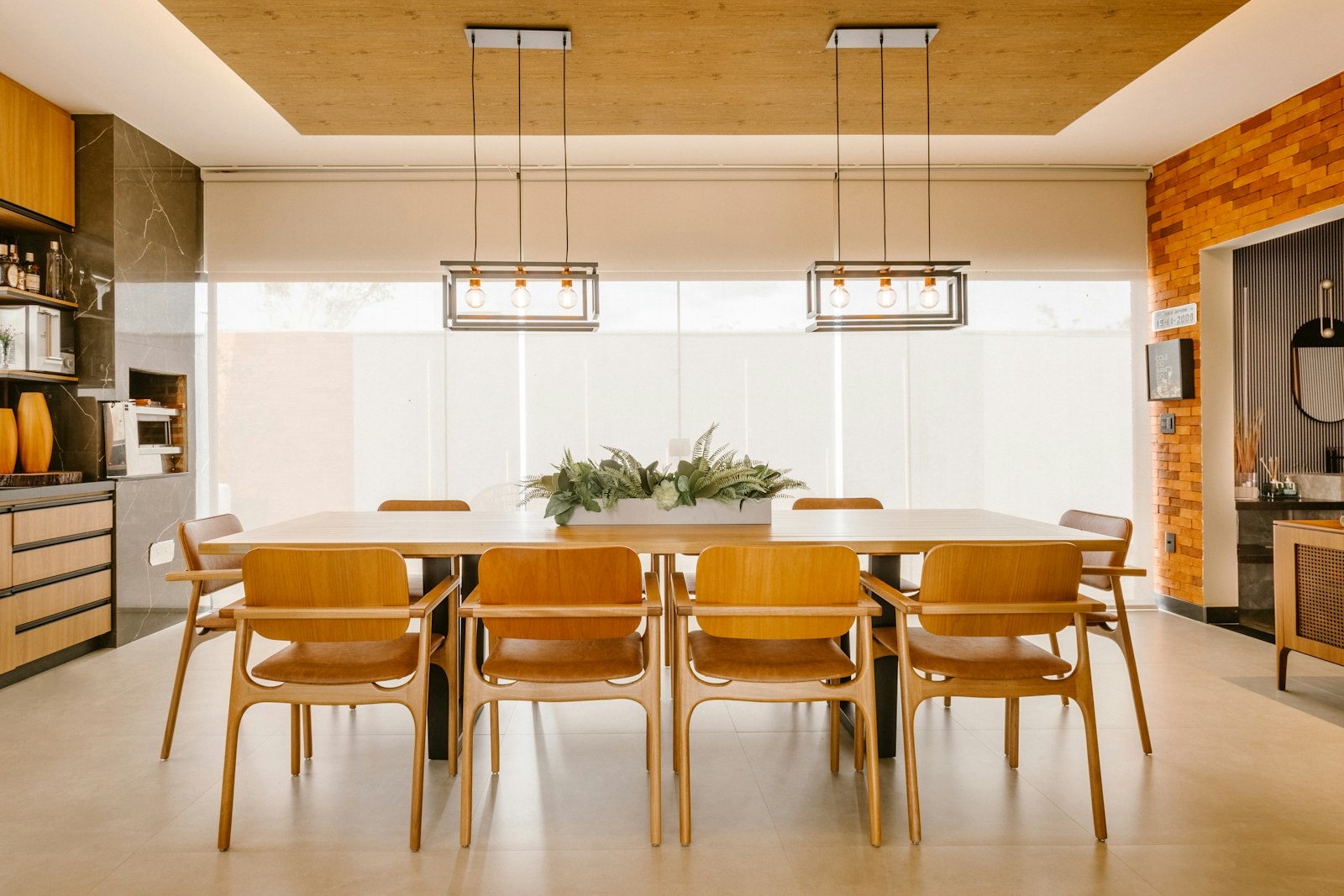
The 30 to 36 inch pendant height is worth measuring properly. Too high and it lights the room rather than the table; too low and it blocks the sightline across dinner. Our dining table guide covers the table dimensions beneath it.
Building the Layers Room by Room
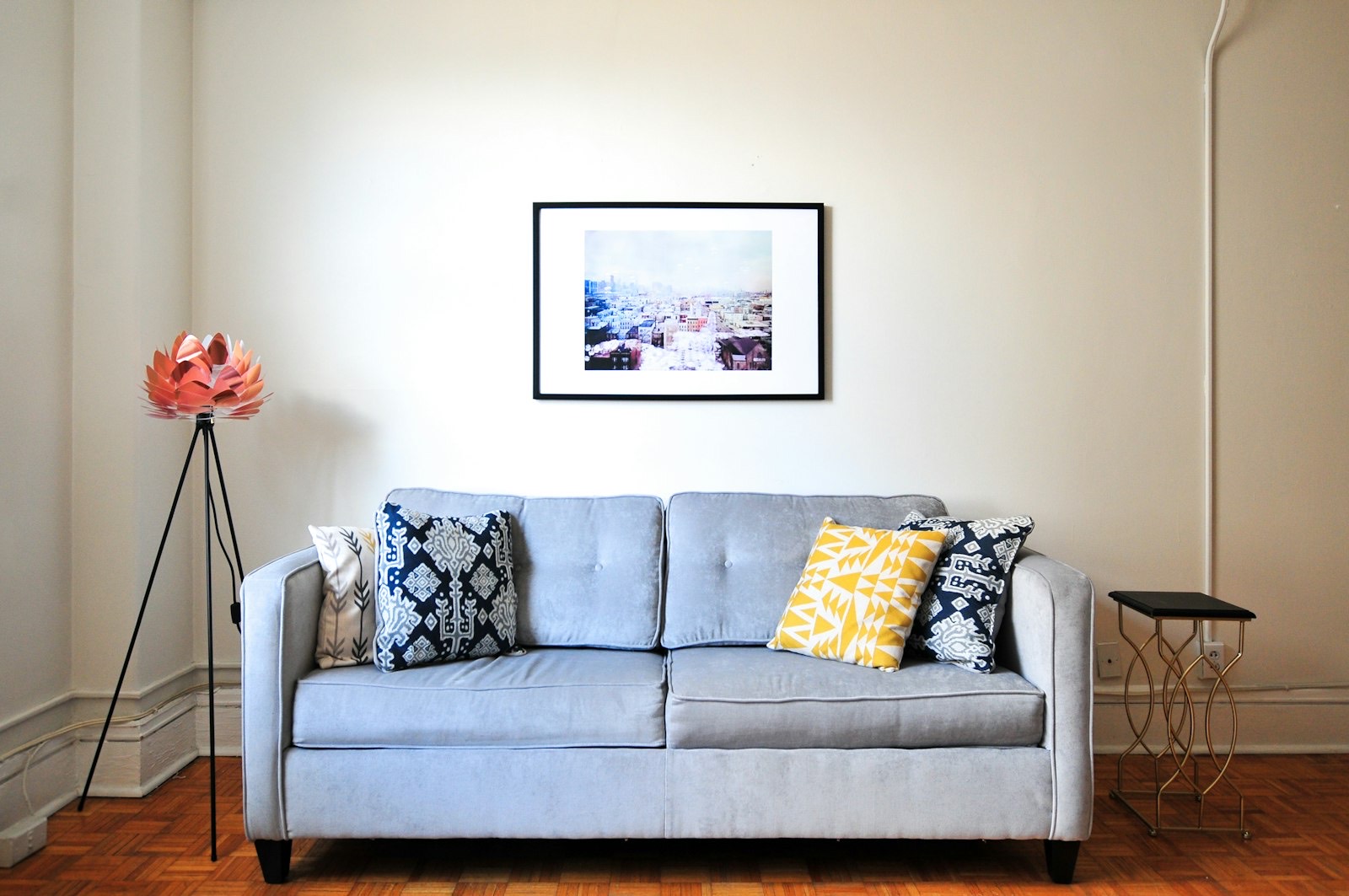
- Living room — dimmable ceiling fixture, a table lamp at each end of the seating, one floor lamp for reading, plus something small on a shelf
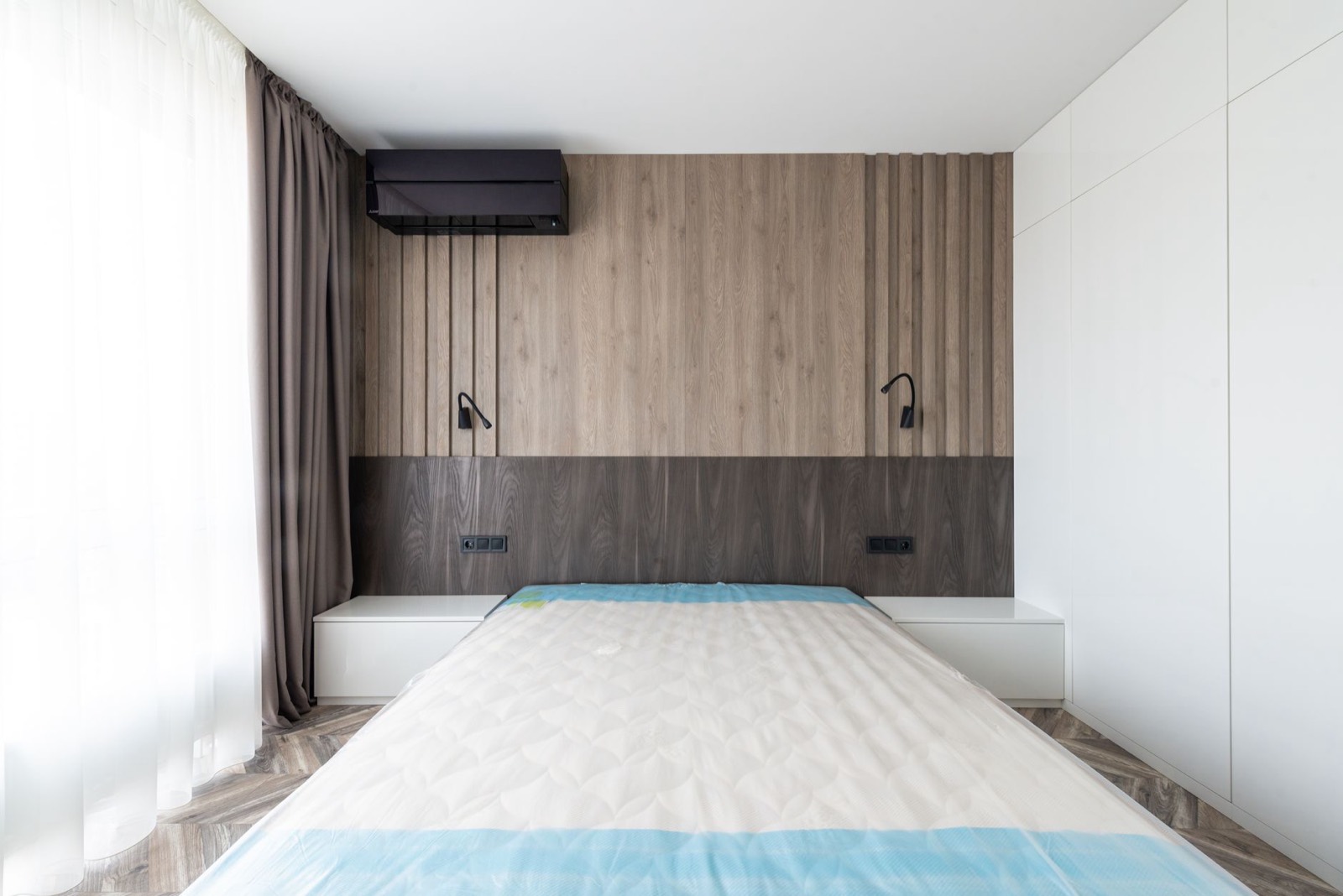
- Bedroom — dimmable overhead, a lamp on each nightstand, and a low accent lamp for late evenings
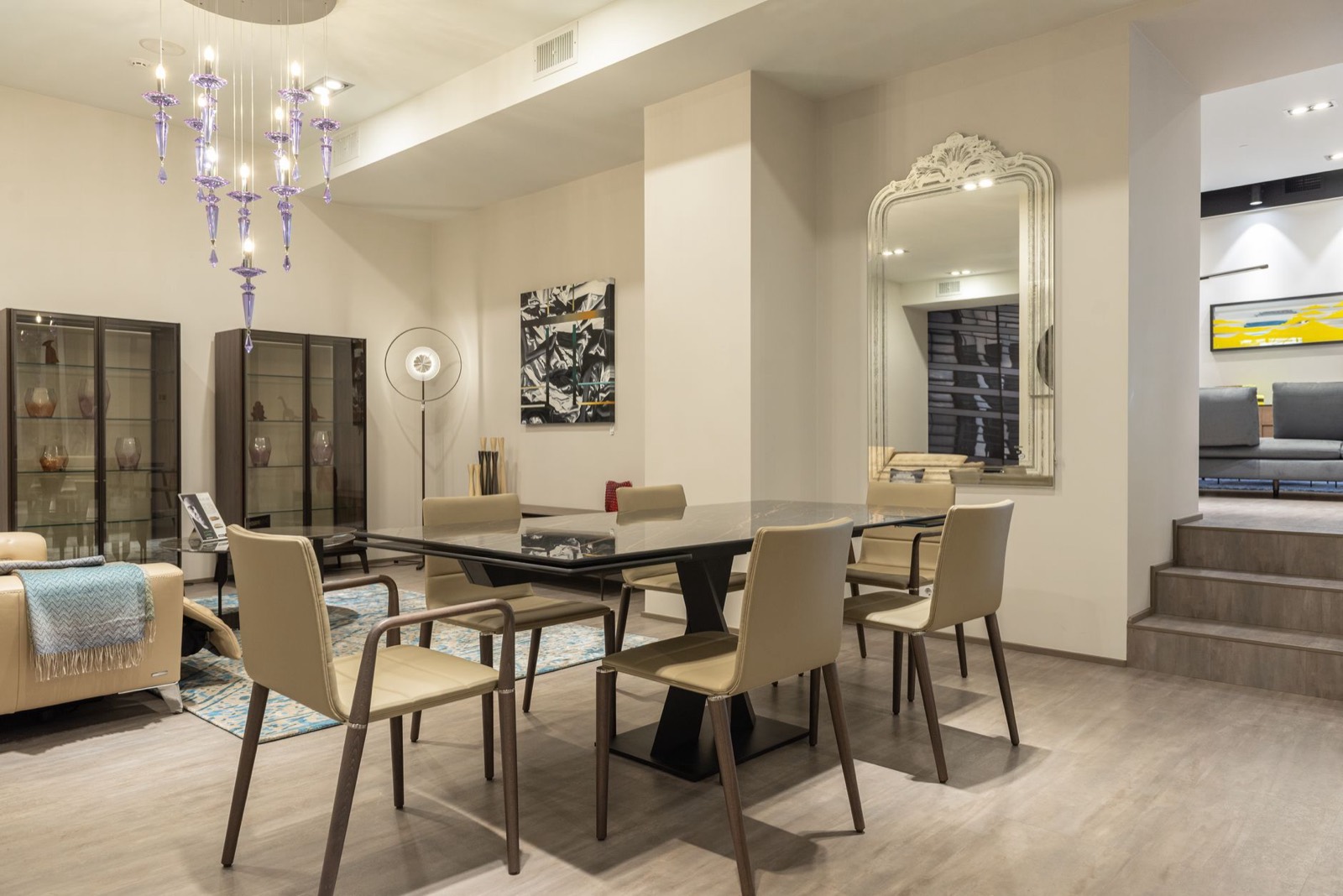
- Dining room — pendant over the table on a dimmer, plus a lamp on a sideboard so the room is not a spotlit island
- Home office — bright ambient plus a dedicated adjustable task lamp positioned to avoid screen glare
- Entryway — one overhead and one lamp on a console; the second source is what makes it feel like a room
A useful test: can you light the room adequately without switching on the ceiling fixture? If yes, the layering is working.
Fixing a Room That Feels Wrong
If a room is unpleasant to sit in at night, the cause is usually one of five things — and none of them requires rewiring.
| Symptom | Likely cause | Fix |
|---|---|---|
| Room feels clinical | Bulbs too cool (4000K+) | Swap to 2700K throughout |
| Harsh shadows on faces | Overhead light only | Add two lamps at seated height |
| Glare when seated | Shade bottom above eye level | Lower the lamp or use a taller shade |
| Corners feel dead | No accent layer | Add an uplighter or shelf lamp |
| Only one brightness | No dimmer | Fit a dimmer switch or dimmable bulbs |
Changing every bulb in a room to a single warm temperature is the cheapest of these, takes twenty minutes, and fixes more rooms than any other item on the list.

Frequently Asked Questions
How tall should a table lamp be?
Table and lamp together should measure 58 to 64 inches from the floor to the top of the shade. That puts the shade bottom near eye level when seated, which is where it needs to be.
What colour temperature is best for a living room?
2700K warm white. It matches what people expect from domestic lighting. Keep every bulb in the room to the same temperature — mixing warm and cool is what makes a room feel off.
How many lumens does a living room need?
Between 1,500 and 3,000 in total, spread across five to seven sources rather than concentrated in one ceiling fixture. Multiple modest sources beat one bright one every time.
How high should a dining pendant hang?
Thirty to thirty-six inches from the tabletop to the bottom of the shade. Lower blocks the view across the table; higher lights the room instead of the food.
What size lampshade do I need?
Roughly twice the width of the lamp base, and never wider than the surface it sits on. The shade should also fully conceal the bulb and fitting when you are seated.
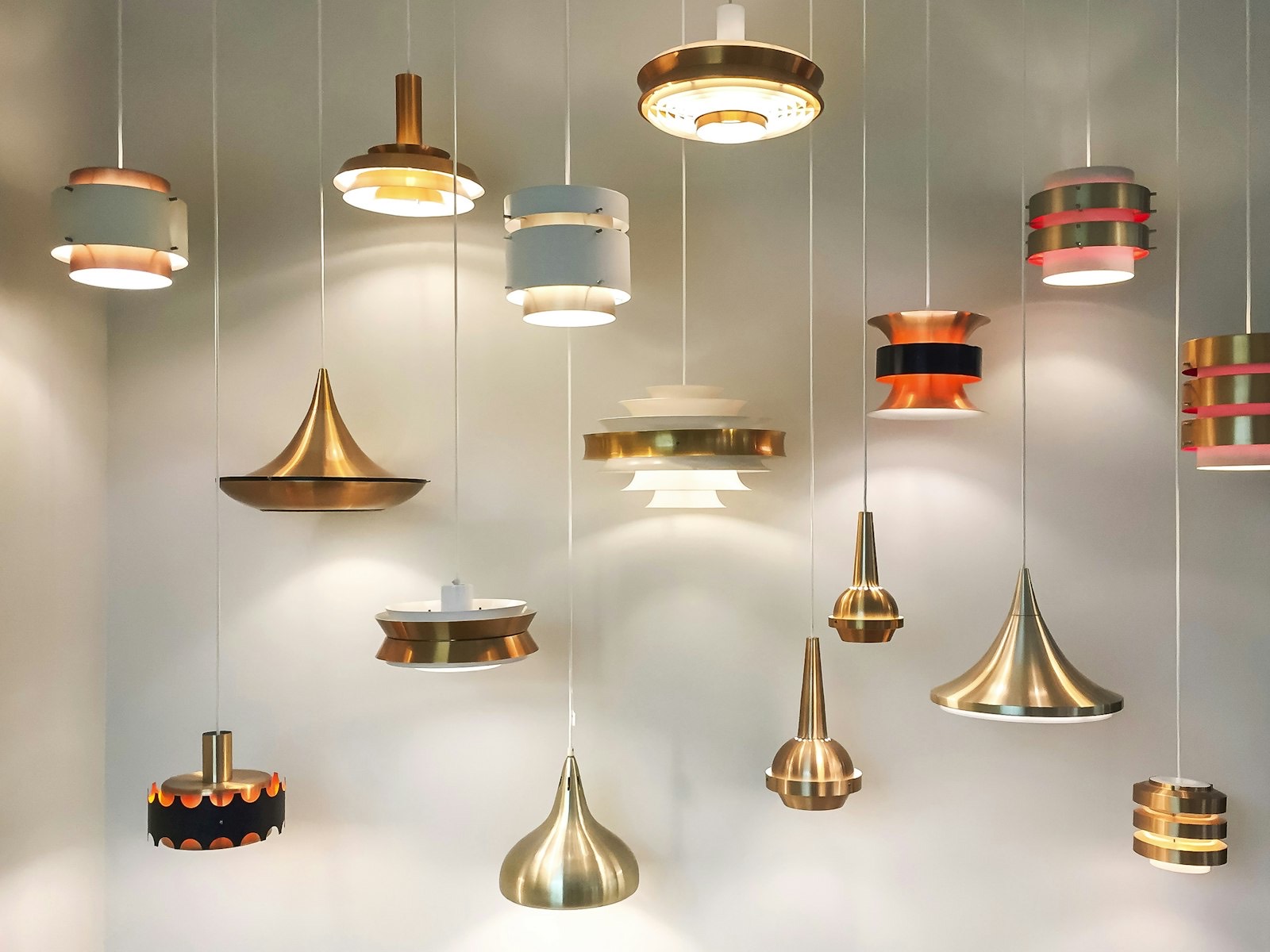
See the Light, Not the Spec
Lumens and Kelvin numbers describe light but do not convey it. Standing beside a lit lamp tells you in a second what a spec sheet cannot.
Our home accents, mirrors and lighting range in Newport News carries table lamps, floor lamps and accent pieces, so you can judge shade proportions against real furniture.
Building a room from scratch? Match lamps to the furniture beneath them using our guides to nightstand heights, coffee and end table proportions and bookcase shelving for accent placement.
Browse living room, bedroom and dining room furniture to see how the pieces and the lighting work together.
Check clearance and specials, spread the cost with no-credit furniture financing, and see our delivery guide. Planning a whole room’s lighting? Ask our Newport News team.