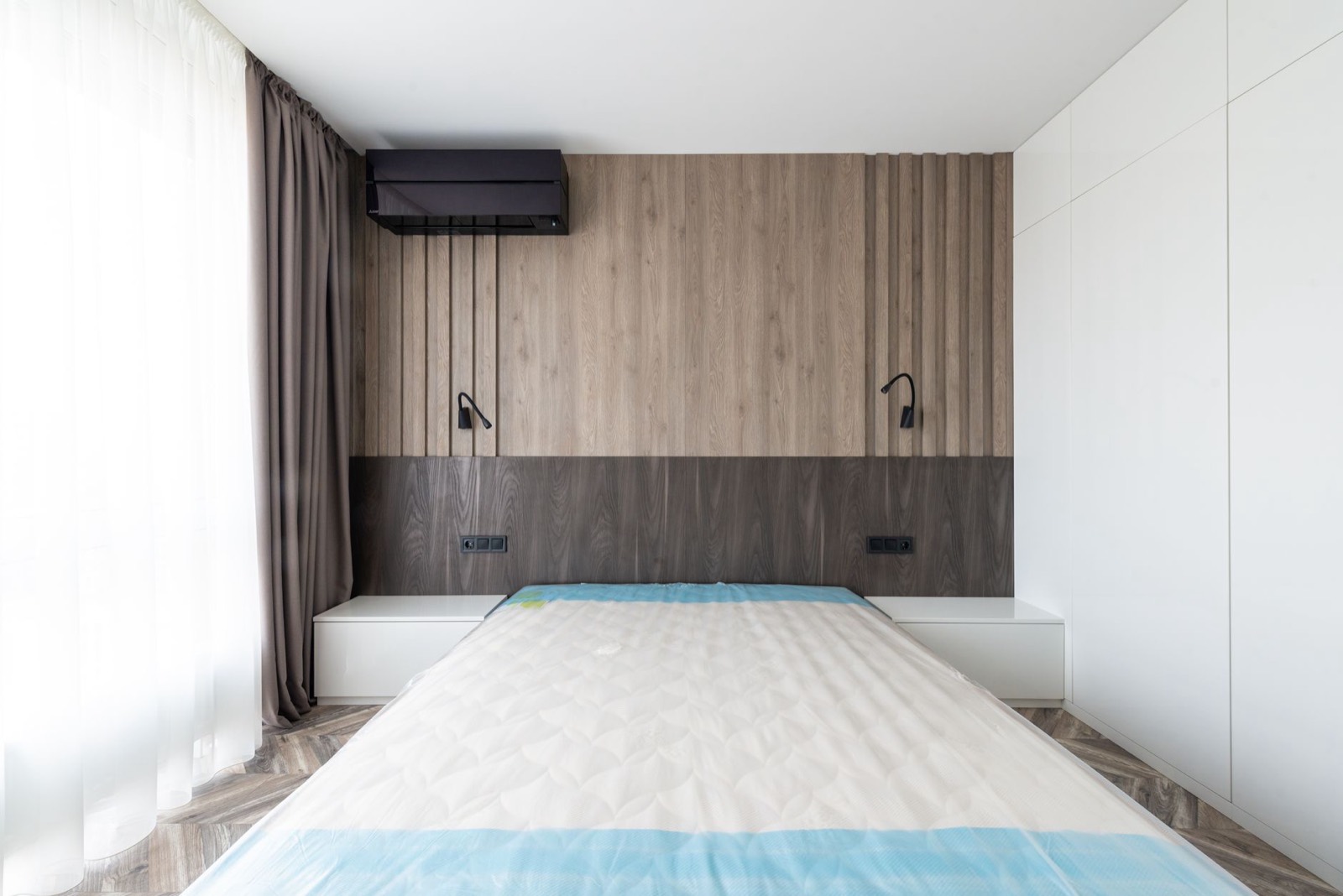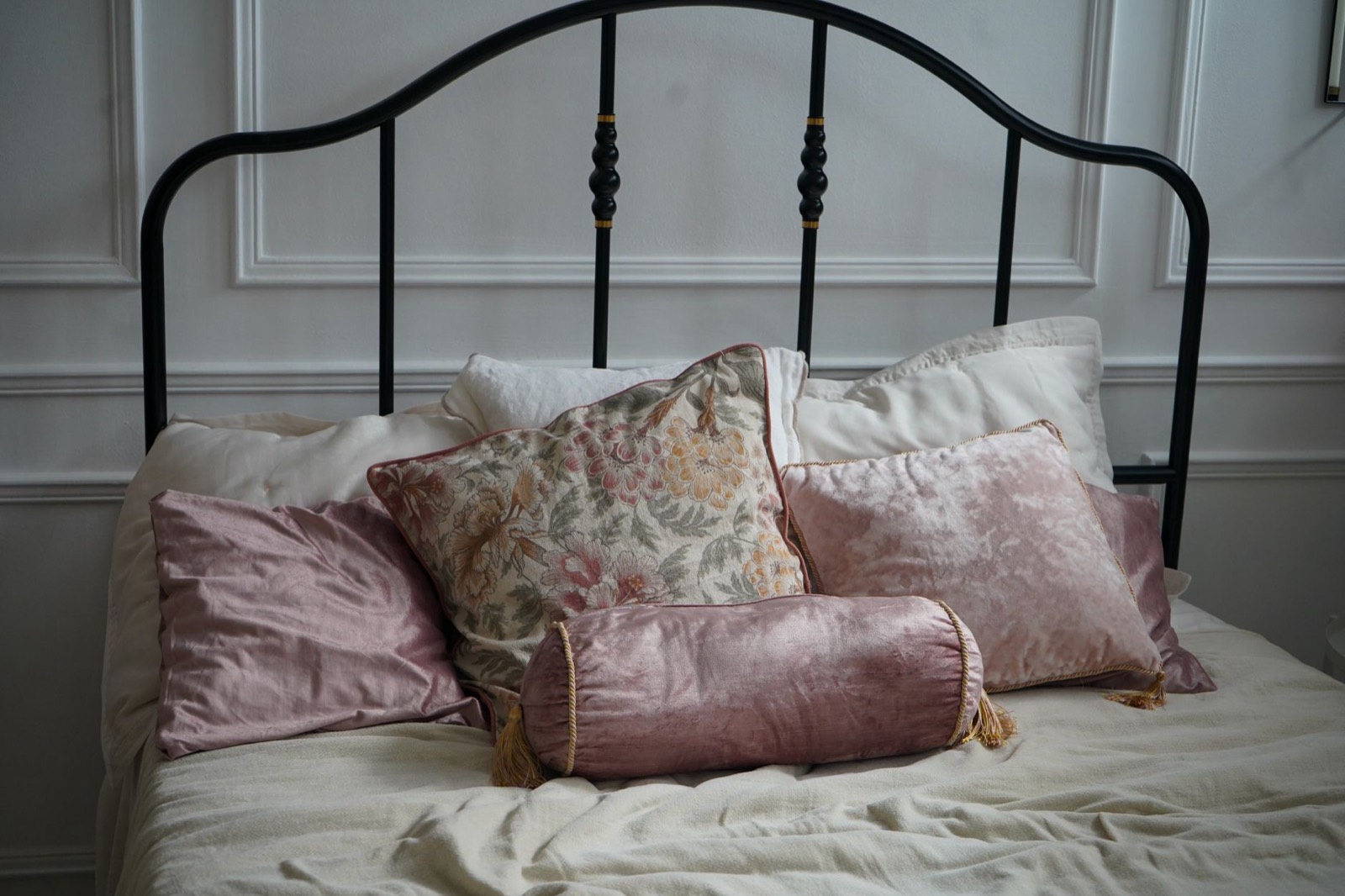
Bed frames are described by style names that tell you almost nothing about what matters: whether you need a box spring, how high the bed sits, and whether anything fits underneath.
Those three answers change the cost of the whole setup, not just the frame.
Here is what separates the main frame types, and how to choose a height that suits the people getting in and out of it.
The Main Frame Types
| Type | Box spring needed? | Typical height | Character |
|---|---|---|---|
| Platform | No — slats or solid deck | Low | Minimal, modern, lowest total cost |
| Panel | Usually yes | Standard to high | The most common American frame; decorative headboard |
| Sleigh | Traditionally yes | Standard | Curved scrolled head and footboard |
| Upholstered | Varies by model | Standard | Padded headboard; comfortable to sit against |
| Storage | No | Standard to high | Drawers built into the base |
| Canopy | Varies | Standard | Four posts; needs ceiling height and floor space |
The box spring column is the one with a price attached. A platform bed removes that cost entirely; a panel or sleigh bed usually assumes it, and the proportions can look wrong without one.
Sleigh frames are the clearest example. The curve of the headboard is calibrated around a mattress sitting at roughly 24 to 26 inches, so dropping the box spring leaves the bed looking sunken inside its own frame.

Platform Beds and Slat Spacing
Platform beds carry the mattress directly, which makes the slat spacing a specification worth checking rather than assuming.
- Look for slats spaced no more than 2 to 3 inches apart, or a solid deck
- Wider gaps let foam mattresses sag between the slats within months
- Many mattress warranties specify a maximum slat gap — check before buying either piece
- A centre support rail with legs is essential on queen and larger
- Slats that simply rest in place will shift; look for fixed or strapped slats
If the frame you like has gaps wider than three inches, a thin bunkie board solves it without raising the bed noticeably. Our guide to bunkie boards and the slat-gap test covers exactly when that is needed.
Bed Height: More Important Than Style
| Profile | Mattress top height | Suits | Trade-off |
|---|---|---|---|
| Low | 16–20″ | Younger adults; small rooms | Harder to rise from; no under-bed storage |
| Standard | 22–25″ | Most households | The safe default |
| High | 26–30″ | Easier standing; maximum storage beneath | Can require a step for shorter users |
The usable test: sitting on the edge, your feet should rest flat on the floor with knees at roughly a right angle. That is comfortable for almost everyone.
Height matters most for anyone with limited mobility, where a bed that is too low is genuinely difficult to rise from. The US Access Board’s accessible design guidance is a useful reference if you are planning a room around long-term accessibility rather than style.
Remember that mattress thickness is part of this figure. A 14-inch mattress on a standard frame produces a noticeably higher bed than a 10-inch one on the same frame.
Headboards
| Headboard type | Height above mattress | Best for |
|---|---|---|
| Low panel | 10–20″ | Low ceilings; minimal rooms |
| Standard panel | 20–30″ | Most bedrooms |
| Tall or statement | 30–48″ | High ceilings; making the bed a focal point |
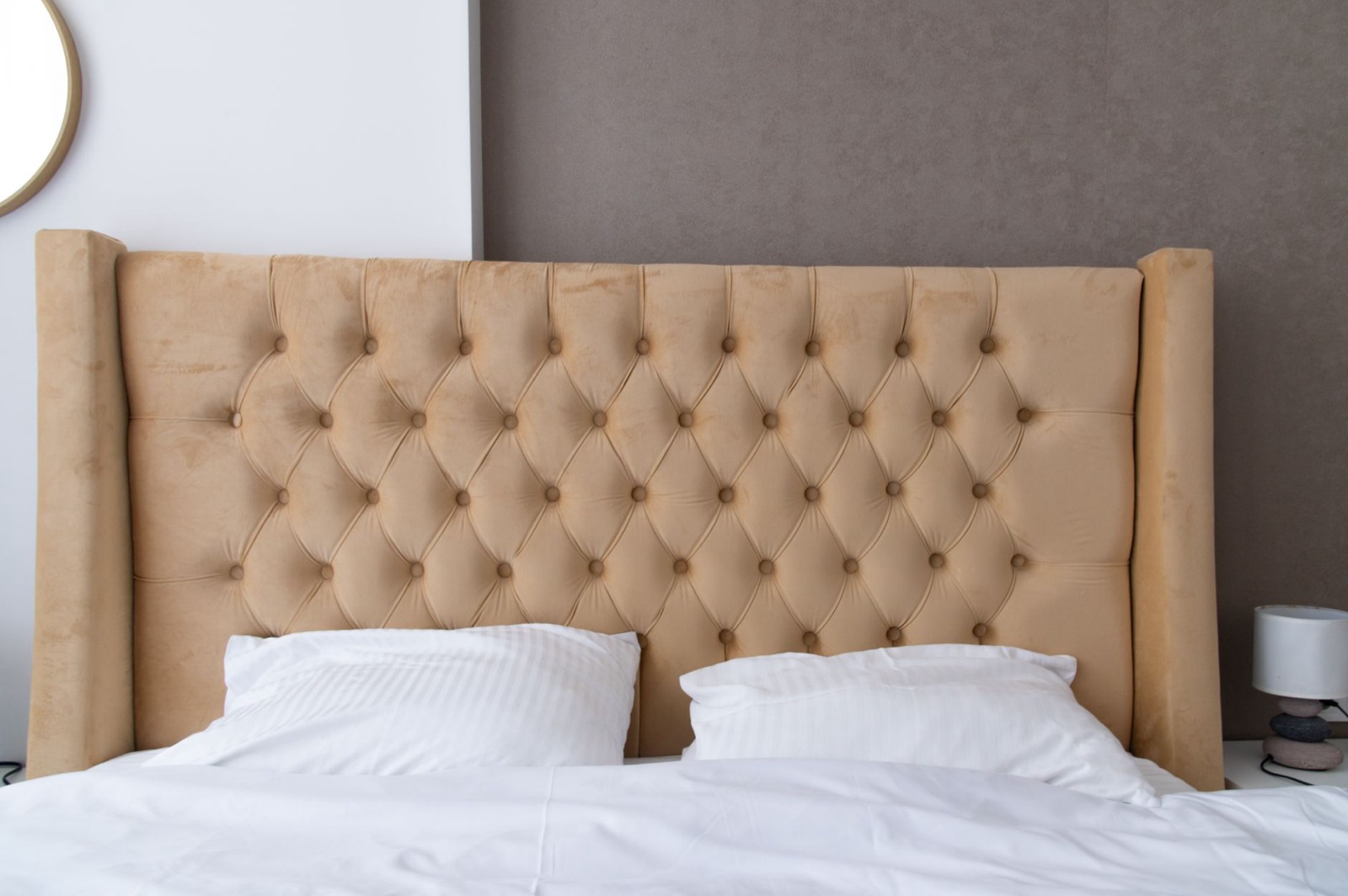
| Upholstered | 24–40″ | Anyone who reads or watches TV in bed |
| Storage headboard | 24–36″ | Rooms with no space for nightstands |
If you sit up in bed regularly, an upholstered headboard is the one genuine comfort upgrade in this category. A wooden panel at the same height is decorative rather than supportive.
Check how the headboard attaches. Many mount to a metal frame with bolts, some are freestanding against the wall, and a few need wall fixing — which matters if you rent.

Storage Beds: Worth It?
Built-in drawers turn dead space into the equivalent of a small dresser, which is transformative in a room without much closet.
- Side drawers need 24–30 inches of clear floor beside the bed to open fully
- Footboard drawers need the same clearance at the end of the bed
- A lift-up gas-strut base holds the most, but requires clearing the bed to access
- Storage frames are heavier and harder to move; check the assembly before delivery day
- They rarely work with an adjustable base — the two occupy the same space
That clearance point defeats storage beds in small rooms more often than anything else. A drawer you cannot open past halfway is not storage.
If you are considering an adjustable base instead, our adjustable bed base guide explains why the two are usually an either-or choice.
Assembly and Noise
A squeaking bed is almost always an assembly problem rather than a manufacturing fault, and it is worth understanding before you blame the frame.
- Assemble on a level floor — a frame twisted by an uneven surface will creak at the joints.
- Tighten every bolt fully, then go round a second time once the mattress is on.
- Check the centre support legs actually touch the floor; many are adjustable and left short.
- Add felt pads under the feet on hardwood to stop the frame walking and marking.
- Re-tighten after the first month, then annually.
Metal-on-metal joints are the usual culprit on a noisy frame. A washer or a strip of felt at the contact point silences most of them without any structural change.
Frequently Asked Questions
Do I need a box spring with a platform bed?
No. A platform bed supports the mattress directly on slats or a solid deck. Adding a box spring raises the bed unnecessarily and usually looks wrong against the frame’s proportions.
What is the difference between a panel bed and a platform bed?
A panel bed has a headboard, footboard and side rails and normally expects a box spring beneath the mattress. A platform bed carries the mattress directly and sits lower, with no box spring required.
How high should a bed be?
Sitting on the edge, your feet should be flat on the floor with knees at roughly a right angle — usually a mattress top of 22 to 25 inches. Higher suits anyone who finds standing difficult.
How far apart should bed slats be?
No more than two to three inches for a foam mattress. Wider gaps allow sagging between slats and may void the mattress warranty; a bunkie board fixes an existing frame cheaply.
Are storage beds worth it?
In rooms short on closet space, yes — they add dresser-equivalent storage in the bed’s own footprint. Check you have 24 to 30 inches of clear floor beside or in front of the drawers first.

Sit on the Edge Before You Buy
Frame style is a matter of taste. Bed height is a matter of daily comfort, and it takes ten seconds sitting on the edge of a display bed to know whether it is right.
Our bedroom furniture range in Newport News covers platform, panel, sleigh, upholstered and storage frames in every standard size, with headboards you can lean against before deciding.
Sizing the room first? Check our mattress size chart with minimum room dimensions, then match the nightstand height to the finished mattress top — a taller frame changes that figure.
Choosing the mattress alongside it? Compare memory foam, innerspring and hybrid construction and browse the full mattress range.
Check clearance and specials, spread the cost with no-credit furniture financing, and see our delivery guide — headboards and rails are long, rigid and awkward on stairs. Unsure which frame suits your room? Ask our Newport News team.