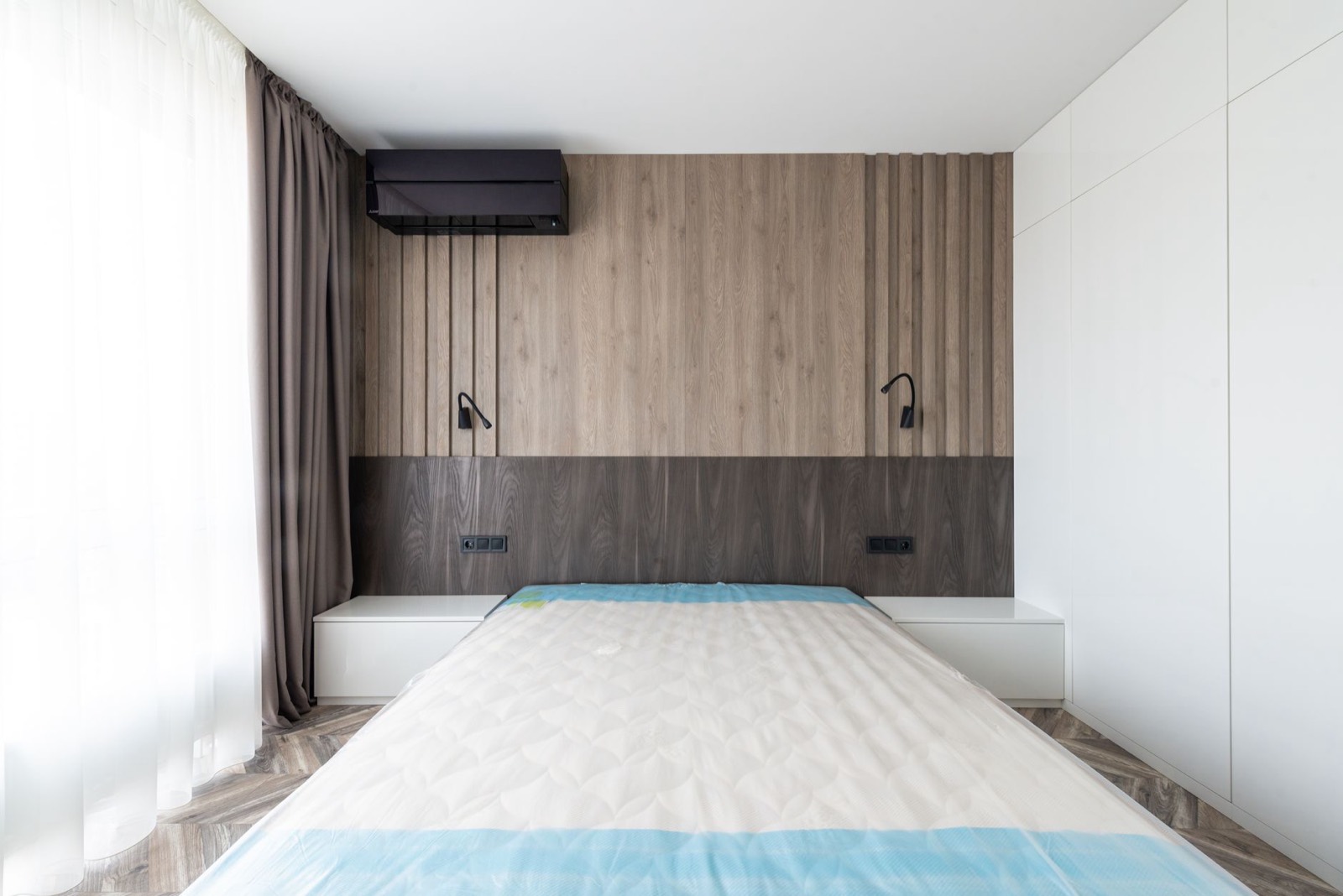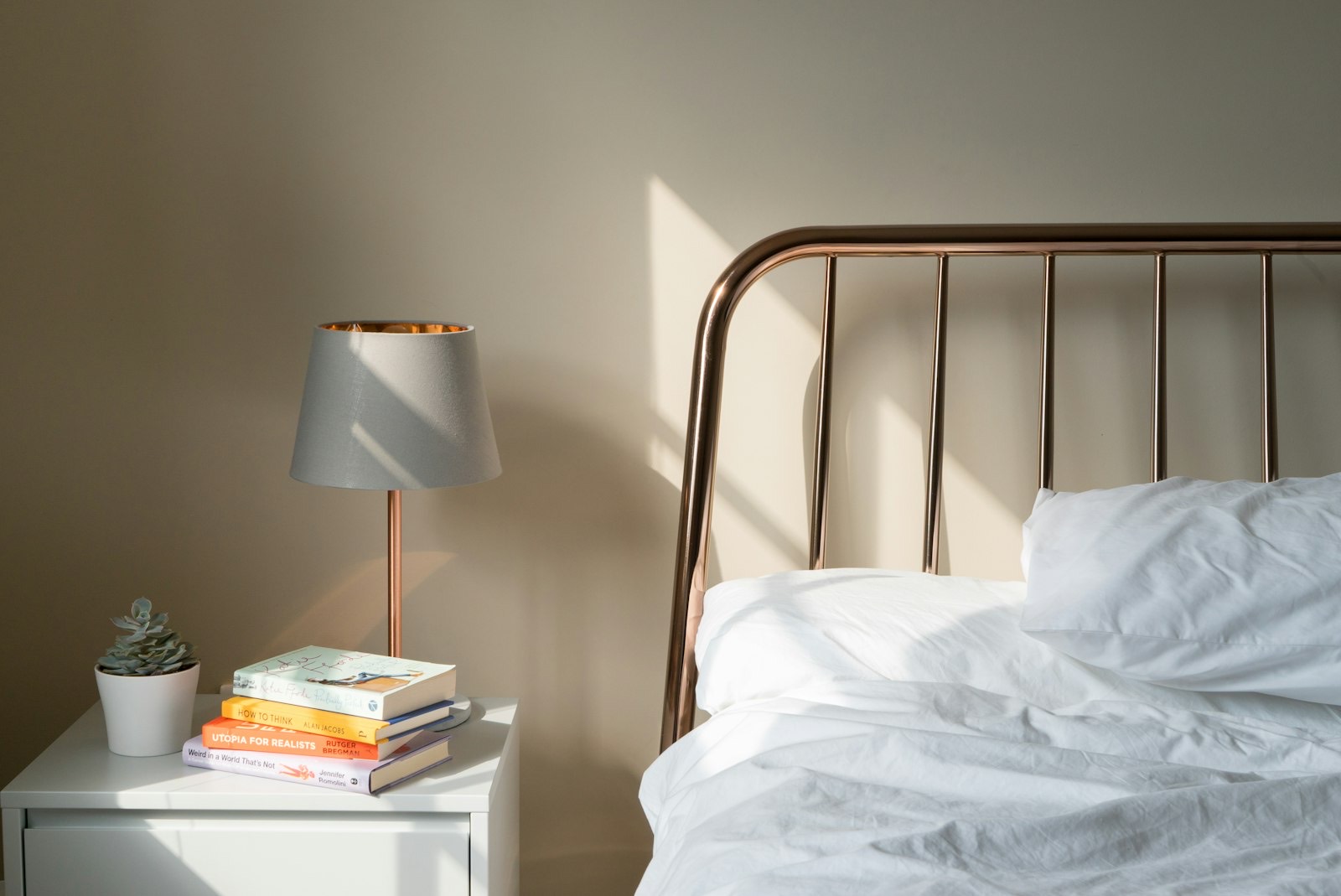
A nightstand is the piece of furniture you use most while barely awake. That is the whole design brief, and it explains why height matters more than looks.
Reaching up for a glass of water in the dark, or groping downward for a phone, is the daily consequence of getting the proportions wrong.
Here is how to size one to your bed, how much storage you actually need, and where it should sit.
Height: Match the Top of the Mattress
The tabletop should be level with the top of your mattress, or one to two inches below it. That puts everything within an easy sideways reach.
| Floor to top of mattress | Nightstand height | Common with |
|---|---|---|
| 18–20″ | 18–20″ | Platform beds; low modern frames |
| 22–24″ | 22–24″ | Standard frames without a box spring |
| 25″ (average) | 23–25″ | The most common setup |
| 28–30″ | 26–28″ | Tall frames; mattress plus box spring |
| 32″+ | 28″ plus a riser, or a taller chest | Very high beds; adjustable bases |
The tolerance is about five inches either way before it becomes genuinely annoying. Most standard nightstands run 23 to 28 inches tall, which suits the average 25-inch mattress height well.
Measure to the top of the mattress, not the frame. Adding a thick mattress or a foundation can raise the sleeping surface by six inches and leave a previously perfect nightstand sitting too low.

Width and Depth
Proportion matters visually. A narrow nightstand beside a king bed looks like an afterthought; an oversized one beside a twin swamps it.
| Bed size | Nightstand width | Notes |
|---|---|---|
| Twin (38″) | 14–18″ | Often only room for one |
| Full (54″) | 16–22″ | Two is tight in most rooms |
| Queen (60″) | 18–24″ | The standard pairing |
| King (76″) | 24–30″ | Larger stands keep the wall balanced |
| California King (72″) | 24–28″ | As king, but the room is often narrower |
Depth typically runs 16 to 20 inches, which is enough for a lamp, a book and a charging point without projecting further into the room than the bed does.
Keep the nightstand no deeper than the bed. Anything that sticks out past the mattress edge becomes something you walk into in the dark.
If you are still choosing the bed itself, our mattress size chart with minimum room dimensions shows how much wall you will have left on each side.
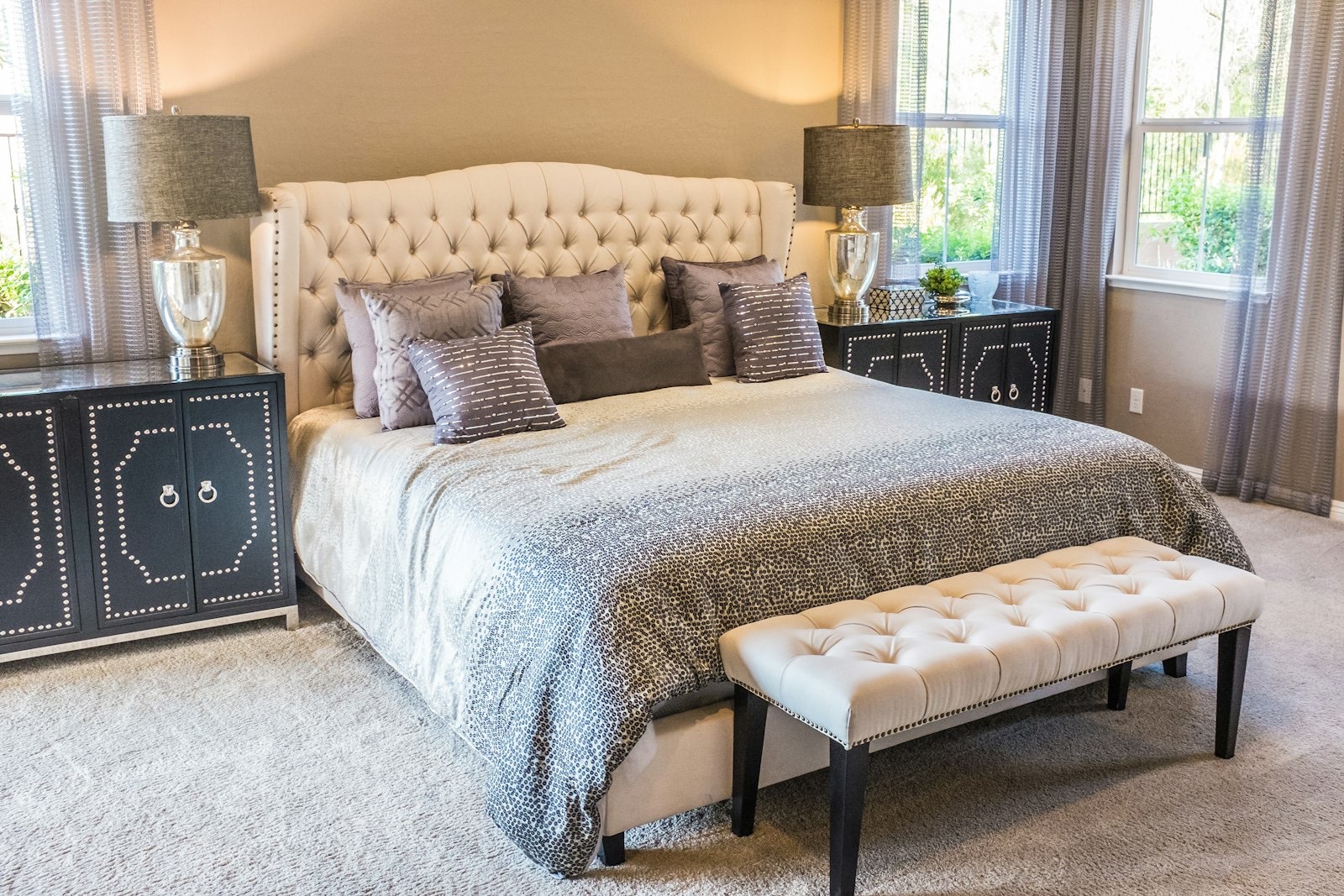
How Much Storage Do You Need?
| Type | Holds | Best for |
|---|---|---|
| Open shelf only | Books, a lamp, a glass | Minimal rooms; guest bedrooms |
| One drawer plus shelf | Small items hidden, books on show | The most popular configuration |
| Two or three drawers | Medication, chargers, personal items | Primary bedrooms with limited storage |
| Cabinet door | Bulkier items out of sight | Rooms where tidiness matters visually |
| Chest-style tall stand | Substantial storage | High beds; small rooms with no dresser space |
One drawer plus an open shelf covers most people. The drawer hides the things you would rather not see from the doorway; the shelf takes whatever you are currently reading.
If bedroom storage is genuinely short, a taller chest-style nightstand adds meaningful capacity — our dresser buying guide covers the larger options in the same room.
Placement and Clearances
- Leave 2–4 inches between the nightstand and the bed frame — close enough to reach, far enough to make the bed
- Allow 24–30 inches of walking space on the outer side
- Check the drawer clears the bed frame when fully open
- Position within reach of an outlet, or plan for a cable run
- In a small room, a floating wall-mounted shelf frees the floor entirely
One nightstand or two?
Two matching stands create symmetry and are the conventional choice for a shared bed. One is perfectly reasonable against a wall, in a small room, or where only one side is used.
Mismatched pairs work too, provided they are the same height. Height is what the eye reads; style differences are far more forgiving than a three-inch step between the two.
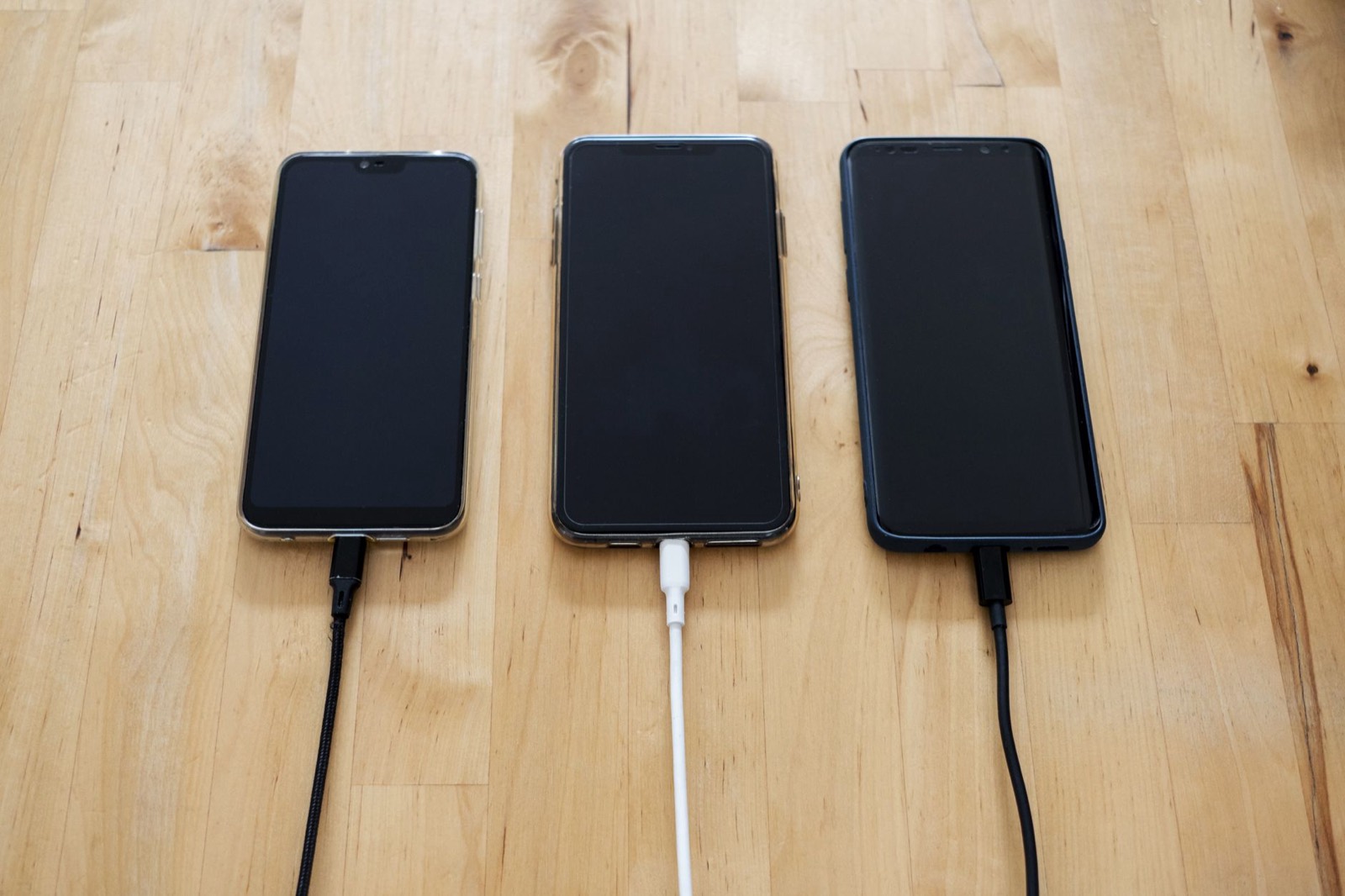
Charging Devices Safely
Nightstands have become charging stations, and that brings a genuine safety consideration that furniture guides rarely mention.
- Never charge a phone or laptop under a pillow or on bedding — trapped heat is the risk
- Charge on a hard surface with air around the device
- Avoid running a cable under a rug or trapping it in a drawer
- Use the manufacturer’s charger where possible
- Do not overload a single bedroom outlet with a chain of adapters
Bedrooms are among the most common locations for home fires to begin, and the US Fire Administration’s home fire prevention guidance covers the electrical habits worth changing.
Practically, this is an argument for a nightstand with an open surface and a cable pass-through, rather than one where everything charges shut inside a drawer.
Getting the Lamp Right
The lamp is what the nightstand exists to hold, and its proportions follow their own rule.
| Consideration | Target | Why |
|---|---|---|
| Total lamp height | 24–28″ on a standard stand | Shade bottom near seated eye level in bed |
| Combined stand plus lamp | Around 58–64″ from the floor | Light falls on your book, not in your eyes |
| Shade diameter | No wider than the nightstand | Overhang looks unbalanced and catches sleeves |
| Bulb warmth | 2700K warm white | Cooler daylight bulbs suppress wind-down |
If you read in bed, a shade that directs light downward beats a bare decorative bulb every time. A touch-dimmable base is worth paying for when one partner sleeps earlier than the other.
Frequently Asked Questions
How tall should a nightstand be?
Level with the top of your mattress, or one to two inches lower. For the average 25-inch mattress height, that means a stand of roughly 23 to 25 inches.
What size nightstand for a queen bed?
Between 18 and 24 inches wide, and 16 to 20 inches deep. That keeps it proportionate to a 60-inch bed without projecting past the mattress edge.
Do nightstands have to match?
No, but they should be the same height. The eye notices a height difference immediately and forgives a style difference easily, so mismatched pairs work as long as the tops line up.
How far should a nightstand be from the bed?
Two to four inches. Close enough to reach without stretching, with enough gap to tuck in bedding and to stop the two pieces knocking together.
What can I use instead of a nightstand?
A small chest, a stool, a wall-mounted floating shelf, or a compact vanity that doubles as bedside storage. The only real requirement is that the surface lands near mattress height.
Bring Your Mattress Height
One measurement — floor to the top of your mattress — settles the height question, and height is what makes a nightstand pleasant or irritating to use.
Our bedroom furniture range in Newport News carries nightstands from compact single-drawer designs to taller chest-style stands, alongside the beds and dressers they need to sit with.
Planning the whole room? Our guides to mattress sizes and room dimensions, choosing a dresser and fitting a vanity into a small bedroom cover the rest of the layout.
For a child’s room, our kids furniture range includes lower stands suited to bunk and twin heights, and bedside lamps and accents finish the setup.
Check clearance and specials, spread the cost with no-credit furniture financing, and see our delivery guide. Unsure what height you need? Send our Newport News team your mattress height.